Putin–US Ukraine Talks: Why a Three-Day Kyiv Pause is No Peace Deal
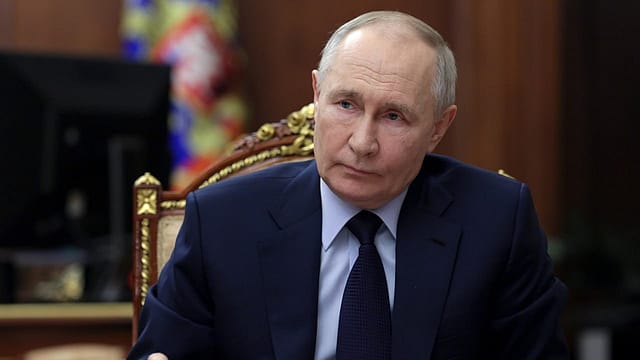
Russia has offered three descriptions of Vladimir Putin’s latest talks with Donald Trump’s envoys: substantive, constructive and extremely frank. What it has not announced is a peace agreement.
After three hours and 10 minutes in Moscow, Steve Witkoff and Jared Kushner were due to carry the conversation to Kyiv on September 6. The immediate opening is limited: a temporary halt to attacks on the two capitals to facilitate diplomacy. Putin himself said Russia had not agreed to a broader ceasefire, according to TASS.
That distinction matters. A quieter sky over Kyiv would bring relief. It would leave the central dispute unresolved: how much Ukrainian territory Moscow demands, and what would prevent another war after any settlement.
Here is what the talks mean, what each side is saying and what would count as progress.

Losing Memory
16 Oct 2026 - Vol 05 | Issue 42
The making of a medical and social emergency
What happened at the Putin–Witkoff–Kushner meeting?
Putin met US envoys Steve Witkoff and Jared Kushner at the Kremlin on September 5 to discuss possible routes towards ending Russia’s war in Ukraine. Kremlin aide Yury Ushakov said the discussions continued over dinner and lasted three hours and 10 minutes, TASS reported.
Ushakov’s positive description established that the channel remains open. It did not establish that the sides had narrowed their differences. Reuters reported that no breakthrough was indicated in the Kremlin’s account. The distinction is between a useful meeting and an agreed outcome. So far, the public evidence supports the first.
Has Putin agreed to a ceasefire in Ukraine?
He has agreed to a limited pause in strikes on Kyiv. A ceasefire across Ukraine has not been announced. Speaking to the US envoys, Putin explicitly said Moscow had not accepted Ukraine’s proposal for a broader three-day ceasefire, according to TASS. The undertaking described by Russia was tied to protecting the negotiations and those taking part.
On the Ukrainian side, Zelenskyy said Kyiv was ready to refrain from attacking Moscow through the end of Monday, September 7, and expected reciprocal restraint towards Kyiv. His office published that position after his call with the envoys on September 5. The arrangement does not amount to a halt in frontline fighting or a blanket ban on strikes elsewhere. Geography is the crucial qualification.
What is Trump’s new peace proposal?
Its detailed terms have not been made public in the statements following the meeting. Trump said before the trip that his envoys were carrying a proposal to end the war. After the talks, a White House official told Radio Free Europe/Radio Liberty that the sides had discussed substantive next steps, with announcements expected in the coming weeks. Ushakov said the Americans had put forward several possible routes to a settlement.
That leaves the questions that matter unanswered: what happens to occupied territory, when fighting stops, what security commitments Ukraine receives and whether sanctions relief forms part of the bargain. It would be premature to describe the discussions as agreement on a peace plan.
Why are Witkoff and Kushner conducting these talks?
They are acting as Trump’s envoys. Witkoff is a businessman and presidential envoy; Kushner is Trump’s son-in-law and a former senior White House adviser. Their involvement gives the negotiations a direct channel to the US president. This mission is also an attempt to restart a stalled process. The Associated Press reported that their previous known Moscow visit was in January, and that Washington’s peace effort had lost momentum while US attention shifted towards the Iran war. Access to Putin can keep diplomacy moving. Only changes in the negotiating positions can turn that access into a settlement.
What does Putin mean by the war’s “root causes”?
It is Moscow’s shorthand for demands extending beyond where the shooting stops. Russia has sought to block Ukrainian NATO membership and restrict Ukraine’s military capacity. Putin’s June 2024 conditions also included Ukrainian withdrawal from the entirety of Donetsk, Luhansk, Kherson and Zaporizhzhia, along with an end to Western sanctions, Reuters reported at the time. Those demands remain central to the dispute. On September 4, Kremlin spokesman Dmitry Peskov described Putin’s position on the four regions and NATO as “unshakeable”, according to Reuters. Calling these demands “root causes” presents Russia’s preferred settlement in Moscow’s own language. It does not make that account an agreed explanation of the war.
Why is territory such a difficult obstacle?
Because Russia wants Ukraine to surrender land that Russian forces have not fully conquered. Moscow claims all four regions named in Putin’s conditions, although it has not established complete control over them, as Reuters noted in August. Ukraine continues to reject handing over territory it has defended, the agency reported ahead of these talks.
Freezing fighting along existing positions and requiring Ukrainian forces to withdraw from additional territory are fundamentally different proposals. The latter would give Moscow through negotiation something it has yet to secure on the battlefield. That is why the location of a ceasefire line, control of territory and formal recognition of sovereignty cannot be treated as interchangeable details. Each would carry different consequences for a settlement.
What does Ukraine need beyond a halt in fighting?
Security against another attack is a central concern. Ukraine’s search for guarantees predates this visit. In December 2025, Zelenskyy said the US was offering a 15-year security commitment and that he wanted a longer one, according to AP. That was an earlier negotiating proposal; it should not be assumed to be the package currently under discussion. The practical questions remain: who would help defend Ukraine, what would trigger assistance and how quickly would support arrive? A promise of security becomes meaningful only when those obligations are clear. The September Moscow readouts did not announce an agreed answer.
Do Russia’s battlefield claims mean it has the upper hand in negotiations?
They show the position Putin wants the Americans to take seriously. They require independent scrutiny. Ushakov said Putin highlighted Russian advances and expressed confidence in achieving Moscow’s objectives, TASS reported. The negotiating implication is that Russia believes continued fighting can improve its position.
But the US-based Institute for the Study of War’s September 5 assessment recorded no advances by either side that day and disputed several Russian claims of territorial gains. One day’s assessment cannot settle the direction of an entire war. It does demonstrate why confidence expressed at the negotiating table should not be mistaken for independently verified military momentum.
Why were US–Russia business projects discussed alongside Ukraine?
Because the conversation also covered the future of the relationship between Moscow and Washington. Ushakov said potential large-scale economic projects benefiting both countries were discussed in detail. Such projects could, in principle, give the two governments an additional incentive to reach a settlement. They also raise a question about sequencing: would improved economic relations follow enforceable peace commitments, or begin while the territorial and security disputes remain unresolved? The public readout does not establish an agreed exchange of economic concessions for Russian military or political concessions.
What happens next, and what would count as a breakthrough?
The next scheduled stop is Kyiv. Zelenskyy said he was ready for substantive discussions with Witkoff and Kushner, while the Americans were expected to convey Putin’s assessments, according to RFE/RL. The tests are concrete: whether restraint extends beyond the capitals, whether both sides accept the same ceasefire terms, and whether they agree on monitoring and consequences for violations. A settlement would also need workable answers on territory and Ukraine’s future security. “Constructive” describes the conversation. An agreed text, verifiable restraint and commitments accepted by Ukraine would show how far it has travelled.
With inputs from ANI & agencies