Pakistan Army Chief Asim Munir, Iran FM Araghchi Discuss Escalating West Asia Conflict
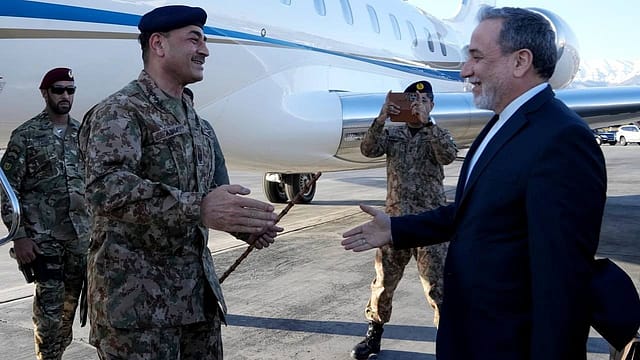
As tensions continue to rise across West Asia, Iran and Pakistan have stepped up high-level diplomatic engagement amid fears of further military escalation involving the United States and the Strait of Hormuz.
Iranian Foreign Minister Abbas Araghchi met Pakistan Army Chief General Asim Munir in Tehran, where both sides exchanged views on the deteriorating regional security situation and the ongoing Iran conflict.
According to Iran’s Tasnim News Agency, the discussions extended late into Friday night and focused on diplomatic efforts aimed at preventing a broader regional crisis. Stability and security across West Asia were also central themes during the talks.
The meeting comes at a time when regional powers are increasingly concerned about the possibility of a wider conflict involving Iran, the United States, and key maritime routes crucial to global energy supplies.
Why are diplomatic efforts intensifying now?
The latest round of diplomacy comes amid reports that the administration of US President Donald Trump is preparing contingency plans for possible new military strikes against Iran.
According to CBS News, officials familiar with the matter said preparations were underway for a fresh round of strikes, although no final decision had yet been taken.
At the same time, Iran has continued engaging with international diplomatic channels. During a phone conversation with United Nations Secretary-General Antonio Guterres, Araghchi reportedly blamed Washington’s approach for obstructing peace negotiations.

Open Minds 2026
26 Jun 2026 - Vol 05 | Issue 26
The power of ideas and arguments in 50 portraits
Araghchi said the United States' “excessive demands” remained the main barrier to ongoing truce talks. He also accused Washington of repeatedly undermining diplomacy through “broken promises, contradictory positions and military aggression,” while insisting that Iran was still participating in negotiations.
Guterres, according to reports cited by Al Jazeera, rejected the use of force against any country’s sovereignty and called for diplomacy to help restore regional stability.
What is Iran saying about the nuclear dispute?
The nuclear issue remains one of the biggest flashpoints between Tehran and Washington.
Iranian Foreign Ministry spokesperson Esmaeil Baghaei said there were still major disagreements between both sides and reiterated Tehran’s commitment to a previously submitted 14-point proposal.
“The reason we don't talk about the details of nuclear-related discussions is clear. We have done this twice, and the other party's greed led us into war. We cannot ignore this experience,” Baghaei said, as quoted by Al Jazeera.
“Regarding nuclear issues, the matter is very clear - we are a member of the NPT [Nuclear Non-Proliferation Treaty] and we have the right to use nuclear energy for peaceful purposes,” he added.
Iran has consistently maintained that its nuclear programme is intended for civilian and peaceful purposes, while Western powers have repeatedly raised concerns over potential military dimensions.
Why is the Strait of Hormuz becoming a major concern?
Another critical issue emerging from the crisis is the security of the Strait of Hormuz, one of the world’s most important oil shipping routes.
US Secretary of State Marco Rubio said he had consulted NATO allies regarding contingency planning in case navigation through the strait is disrupted.
Speaking during a ministerial summit in Helsingborg, Sweden, Rubio stressed the need for alternative plans if maritime tensions escalate further.
“We have to have a plan B for if someone is shooting” in the strategic waterway, Rubio told journalists.
“At some point, ideally, they open the strait,” Rubio said in reference to Iran, before adding, “Plan B needs to be, what if Iran says, 'No, we refuse to open the Strait?'”
The Strait of Hormuz is considered one of the world’s most strategically sensitive maritime chokepoints, with a significant share of global oil shipments passing through it every day. Any disruption could have major consequences for international energy markets and regional security.
(With inputs from ANI)