‘Our Indian Friends are in Safe Hands’: Iran Assures India on Strait of Hormuz Safety
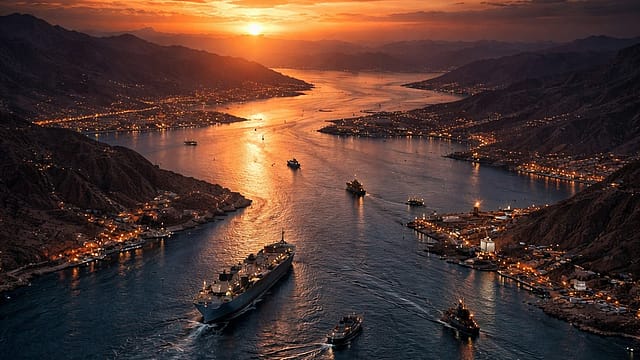
Iran has sought to reassure India over disruptions in the Strait of Hormuz, saying that its “Indian friends” do not need “to worry” despite ongoing tensions following attacks by Israel and the United States on Tehran on February 28.
“Our Indian friends are in safe hands, no worries,” the Embassy of Iran in India said in a post on X on Thursday.
Iran controls the Strait of Hormuz, a crucial shipping route through which 20 per cent of the world’s energy supplies are transported.
Since the conflict began last month, very few ships have been allowed to pass through the narrow channel.
Tehran has said it has permitted “friendly nations”, including India, China, Russia, Iraq and Pakistan, to use the route. Despite this, the blockade has caused severe disruptions in energy supply to several countries, including India.
At least eight Indian ships have exited the strait so far. These include two LPG carriers, BW TYR and BW ELM, carrying a combined cargo of about 94,000 tonnes. Officials said 19 ships carrying LPG, crude oil and LNG meant for India remain stranded in the Strait of Hormuz.

Open Minds 2026
26 Jun 2026 - Vol 05 | Issue 26
The power of ideas and arguments in 50 portraits
How Many India-Bound Vessels Are Stranded in the Strait of Hormuz?
At an inter-ministerial briefing on March 30, Rajesh Kumar Sinha, Special Secretary in the Ministry of Ports, Shipping, and Waterways, said 10 foreign-flagged vessels carrying energy cargo for India are currently stranded.
These include three LPG carriers, four crude oil tankers and three LNG carriers.
In addition, several Indian-flagged vessels are also affected. These include three LPG tankers, one LNG carrier and four crude oil tankers. One empty tanker is in the process of being filled with LPG.
The vessels are among about 500 ships that have been struck in the narrow strait amid the conflict.
Reacting to US President Donald Trump’s recent address on the ongoing conflict, former Ambassador to Iran Dinkar P Srivastava cautioned that the evolving US strategy risks deepening instability in West Asia while offering little scope for a diplomatic breakthrough.
In an interview with ANI, Srivastava said Washington appears to be avoiding a full-scale ground offensive while preparing for intensified aerial bombardment within a self-imposed operational window of two to three weeks.
He said this indicates a limited but high-impact military approach rather than a prolonged war involving US troops on the ground.
He also pointed to a critical gap in the strategy, noting that responsibility for securing and reopening the Persian Gulf through the Strait of Hormuz has effectively been shifted to US allies, many of whom remain reluctant to engage militarily in what they view as “not their war”.
(With inputs from ANI)