Is Doom Scrolling Giving You a Ruined Attention Span?
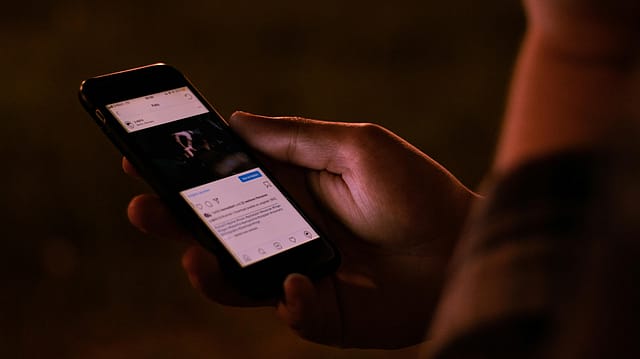
Swipe, scroll, repeat.
What feels like a harmless habit is now being linked to a ruined attention span by researchers worldwide.
Doom scrolling is not simply wasting time; it is actively rewiring how the brain focuses, retains information, and tolerates stillness.
The science is no longer ambiguous, and the implications are significant.
Here's what you should know.
What Is Doom Scrolling and Why Is It So Hard to Stop?
Doom scrolling exploits dopamine release in ways reportedly similar to gambling.
As per DataReportal and GWI's 2025 figures, the average internet user spends 2 hours and 21 minutes on social media daily, a number the algorithm is engineered to push higher with every session.

The Vanguard
21 Aug 2026 - Vol 05 | Issue 34
BJP Rearmed for 2029
Is Mindless Scrolling Actually Rewiring the Brain?
By design, yes.
A 2025 study in Perspectives in Public Health confirmed that mindless scrolling operates through variable reward schedules, the same dopamine-driven mechanism that makes slot machines addictive.
Every swipe fatigues the prefrontal cortex, the brain's centre for decision-making and focus, making sustained attention progressively harder to maintain.
How Serious Is the Low Attention Span Crisis?
Deeply serious.
As per Dr. Gloria Mark, Chancellor's Professor of Informatics at the University of California, Irvine, the average time a person spends focused on a single screen before switching tasks has collapsed from 150 seconds in 2004 to just 47 seconds today, a finding replicated across multiple independent studies and populations.
The low attention span crisis, in other words, is not anecdotal. It is measured.
Are Younger Generations Paying the Steepest Price?
Disproportionately so. A January 2026 study published in Humanities and Social Sciences Communications, analysing data from over 50,000 US children and adolescents aged 6 to 17, found that daily screen time exceeding 4 hours was associated with a 45% higher risk of anxiety, a 61% higher risk of depression, and a 21% higher risk of ADHD symptoms compared to those with lower exposure.
Low attention span in this age group is no longer a soft concern. It is a clinical pattern.
Does a Ruined Attention Span Affect Mental Health Too?
Directly. Regular doom scrolling has been linked to elevated cortisol levels, disrupted sleep architecture, and reduced emotional regulation across multiple peer-reviewed studies.
Research published in Psychology Today in February 2025 confirmed that for those already struggling with anxiety or depression, doom scrolling functions as a maladaptive coping mechanism that feeds rather than relieves the stress cycle.
What Does Low Attention Span Cost at Work?
Significantly more than most organisations acknowledge.
As per Asana's latest Anatomy of Work Index, which surveyed over 10,000 knowledge workers globally, employees now spend 60 percent of their workday on fragmented busywork such as chasing updates, switching between tools, and attending unnecessary meetings, leaving barely a quarter of the day for skilled, meaningful output.
Creativity, retention, and deep work are the clearest casualties.
Can You Actually Reverse a Ruined Attention Span?
Yes. As Dr. Gloria Mark notes, the ability to focus is not lost, only changing.
A 2025 study in Brain Research confirmed that neuroplasticity continues throughout the lifespan, supporting recovery from attention fatigue.
Reduced doom scrolling, screen-free periods, and single-task practice are where reversal begins. A ruined attention span was learned. It can be unlearned.
(With inputs from yMedia)