No Visit, No Reset: Why Tarique Rahman's India Trip Is Stuck and What It Means for India-Bangladesh Ties
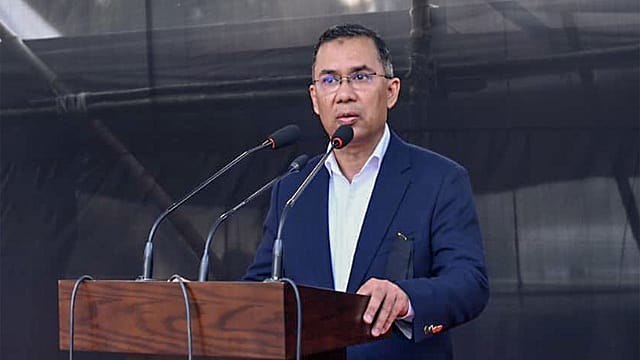
For weeks, diplomats in New Delhi and Dhaka were quietly working towards a symbolic moment.
Bangladesh Prime Minister Tarique Rahman, who swept to power earlier this year after the dramatic political upheaval that followed Sheikh Hasina's fall, was expected to make his first official visit to India. The trip was seen as an opportunity to reset a relationship that has been under strain since the student-led uprising of 2024.
But the visit never happened.
And in South Asian diplomacy, sometimes the trips that do not take place tell a bigger story than the ones that do.
Why Was Tarique Rahman's India Visit So Important?
This was never just another bilateral visit.
Tarique Rahman is not only Bangladesh's prime minister. He is also the son of former Prime Minister Khaleda Zia and the political heir of the Bangladesh Nationalist Party (BNP), which has historically had a more complicated relationship with India than Sheikh Hasina's Awami League.
Zeroing In on ECI
09 Oct 2026 - Vol 05 | Issue 41
Constitutional legitimacy versus political opportunism
When Rahman took office in February 2026 after a landslide election victory, many observers viewed his proposed India visit as a chance to establish a working relationship with Prime Minister Narendra Modi and signal that Dhaka wanted stable ties despite the political transition.
Instead, the trip has become a reminder of how difficult it has been for both countries to move beyond the events of the past two years.
What Actually Stopped the Visit?
Officially, there is no cancellation.
Unofficially, there is no date either.
Reuters reported that Bangladesh has not taken a final decision on the visit and is waiting for India's response to its requests regarding former Prime Minister Sheikh Hasina and other individuals sought by Dhaka.
The immediate trigger appears to have been a virtual media interaction by Sheikh Hasina from India earlier this month. Bangladesh's Foreign Ministry publicly stated that the event had damaged the atmosphere surrounding Rahman's proposed visit and argued that a more "conducive environment" was needed before the trip could move ahead.
That transformed what was supposed to be a diplomatic reset into another chapter in the Hasina dispute.
Why Is Sheikh Hasina Still at the Centre of India-Bangladesh Relations?
Because she never really left the story.
After being ousted during the 2024 student-led uprising, Hasina fled to India, where she has remained in exile. Bangladesh's current government has repeatedly sought her extradition. In November 2025, she was sentenced to death in absentia over charges linked to the crackdown on anti-government protests, allegations she has dismissed as politically motivated.
For Dhaka, Hasina's continued presence in India has become both a legal and political issue.
For New Delhi, the matter is significantly more complicated.
Indian officials have maintained that extradition requests must be examined through legal and judicial processes rather than political negotiations. According to reports in The Indian Express and statements from the Ministry of External Affairs, India is reviewing Bangladesh's requests under its domestic legal framework.
That difference in expectations lies at the heart of the current impasse.
Has the Relationship Become Bigger Than the Hasina Issue?
Yes—and no.
The Hasina question dominates headlines, but several other issues have added friction to the relationship.
Bangladesh has raised concerns over India's border fencing projects and deportation policies. At the same time, India has emphasised that bilateral ties must be guided by "mutuality of interests and reciprocity", language that many analysts see as a signal that New Delhi is unwilling to make unilateral concessions.
There is also a broader geopolitical dimension.
Since Rahman took office, Bangladesh has sought to diversify its diplomatic relationships, engaging more actively with China, the United States and other regional partners. Analysts quoted by multiple publications note that Dhaka is trying to demonstrate a more independent foreign policy than many associated with the Hasina era.
What Is India Saying Publicly?
New Delhi has been notably cautious.
External Affairs Ministry spokesperson Randhir Jaiswal has repeatedly said India wants a "positive, constructive and forward-looking relationship" with Bangladesh based on mutual interests and reciprocity.
India has also stressed that it does not endorse political statements made by Sheikh Hasina from Indian soil.
In other words, India is trying to keep the door open while avoiding becoming directly involved in Bangladesh's internal political battles.
What Happens Next for India-Bangladesh Relations?
That depends on whether both sides can separate the future from the past.
The proposed visit has not been scrapped. Diplomatic conversations continue, and officials from both countries remain engaged behind the scenes. Reuters and other reports indicate that discussions over a future visit are still ongoing.
But the episode has revealed an uncomfortable reality.
Nearly two years after Sheikh Hasina's dramatic exit from power, India and Bangladesh are still negotiating around her shadow.
The irony is hard to miss. Tarique Rahman's visit was meant to inaugurate a new chapter in bilateral relations.
Instead, its delay has shown just how difficult it is for both countries to turn the page.
(With inputs from yMedia and agencies)