‘Negotiation No Longer on the Table’: Iran Rules Out Fresh Talks with US
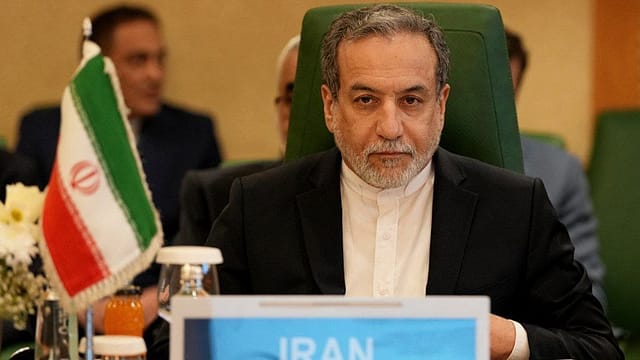
Iran’s Foreign Minister Syed Abbas Araghchi has ruled out the possibility of renewed diplomatic negotiations with the United States, citing past experiences of broken promises and military aggression.
"But I don't think the question of talking with Americans or negotiation with Americans once again would be on the table, because we have a very bitter experience of talking with Americans,” Araghchi said in an interview with PBS News.
Araghchi said Tehran agreed to continue talks despite its concerns. "And we finally accepted. But, again, after three rounds of negotiation, and after the American team in the negotiation said itself that we made a big progress, still they decided to attack us. So I don't think talking with Americans anymore would be on our agenda anymore."
His comments come as the military confrontation involving Iran, the United States and Israel entered its tenth day.

Youth Issue 2026
24 Apr 2026 - Vol 04 | Issue 68
50 Portraits of Icons and Achievers
Did Iran foreign minister Abbas Araghchi say US and Israel failed to achieve rapid victory?
Araghchi claimed that attempts by Washington and Tel Aviv to secure a rapid victory had failed. "Well, actually, they tried to achieve some targets, some of their goals, but they failed. They thought that, in a matter of two or three days, they can go for a regime change, they can go for a rapid, clean victory, but they failed," he remarked.
Addressing concerns about disruptions to global oil supplies and rising energy prices, the foreign minister rejected suggestions that Tehran was deliberately targeting energy markets.
"Well, this is not our fault. This is not our plan. The oil production, the transportation of oil has been slowed down or stopped not because of us, because of the attacks and aggression made by Israelis and Americans against us,” he said.
He also denied that Iran had closed the Strait of Hormuz and blamed regional insecurity on foreign intervention.
"This is why the tankers, the ships are scared to pass through the Strait of Hormuz. We have not closed that strait. We have not -- we are not preventing them to navigate in that strait. But this is the result of the aggression by Israelis and Americans, which has made the whole region insecure, unstable," he said.
Did Iran foreign minister Abbas Araghchi blame US missile for deadly Minab girls' school strike?
Responding to accusations over a deadly strike on a girls' school in Minab that killed more than 170 people, Araghchi rejected US denials of responsibility.
"Well, this is ridiculous. I think all U.S. medias and different sources from American intelligence and American media, everybody have admitted that this is done by an American missile."
Defending Iran’s military actions against neighbouring states, he described them as acts of self defence.
"Well, actually, this is a war imposed on us. And what we are doing is only defending ourselves. We are facing an act of aggression, which is absolutely illegal. And what we are doing is the act of self-defense, which is legal and legitimate," Araghchi maintained.
He also insisted that Tehran would continue its military response if required. "Well, if they have all rights to take all necessary measures to protect their facilities, I think we are even -- we have more rights to take all necessary measures to defend ourselves, to protect our people," he said, while reaffirming that Iran is "well prepared to continue attacking them with our missiles as long as needed and as long as it takes."
What did Abbas Araghchi say about Mojtaba Khamenei becoming Iran’s new Supreme Leader?
The foreign minister also commented on the recent internal leadership transition following the selection of Mojtaba Khamenei as Iran’s new Supreme Leader, describing the development as a sign of "the continuity and some sort of stability at the same time."
He said it was still too early to understand the new leader’s policy direction. "Well, first of all, it's too soon for him to make any comment. We are all waiting for his speeches and comments, which will come later on," Araghchi explained.
Meanwhile, Iran’s exiled Crown Prince Reza Pahlavi has praised the courage of Iranians participating in what has been described as the Lion and Sun Revolution, calling their actions the "ultimate praise of heroism."
The Lion and Sun Revolution (2025-2026) is a protest movement led largely by members of the Iranian diaspora and symbolised by the country’s pre 1979 flag as a sign of opposition to the current Islamic Republic.
Speaking in an interview with the 60 Minutes programme on CBS News, Pahlavi pointed to an incident involving a firefighter that he said had become a powerful symbol of the movement.
Why did Reza Pahlavi call the Lion and Sun Revolution an “ultimate praise of heroism”?
"This is the ultimate praise of heroism. A firefighter who was carrying an injured person who had been shot in the street, and they killed him too. That image is a symbol for me," Pahlavi stated.
The exiled leader continues to monitor the developments in Iran from abroad and has repeatedly called for a transition to a secular democracy following the recent escalation in the region.
Following the appointment of the new Supreme Leader by Iran’s Assembly of Experts, Pahlavi urged the country’s armed forces to side with the public and abandon the ruling establishment.
In a post on X, he said many Iranians support efforts by the United States and Israel to weaken the Islamic Republic’s security apparatus and accused the leadership of using civilians as "human shields."
"The American and Israeli resolve to decimate the Revolutionary Guards and dismantle the Islamic Republic's infrastructure of terror has the broad support of the Iranian people," the exiled crown prince stated in his post.
"The current regime's despicable use of Iranians as human shields is a crime against humanity. The safety of civilians and the protection of Iran's vital, national infrastructure must remain a priority," he added.
Addressing members of Iran’s military directly, Pahlavi called on them to support the protest movement. "To Iran's own military: lay down your arms and join the people. If you do, there will be a place for you in a free Iran," Pahlavi added.
(With inputs from ANI)