Modi’s Six Proposals to Help the Global South
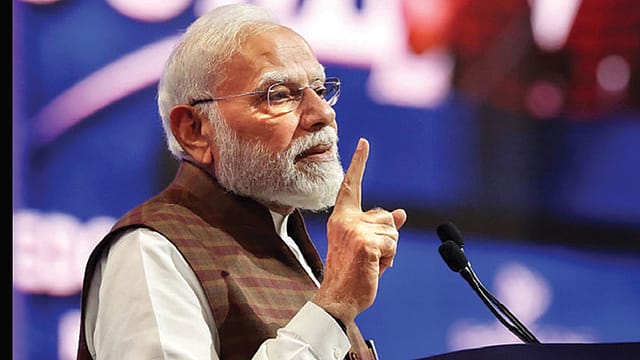
As the year ends amidst global uncertainties deepened by the prolonged conflict in Ukraine and the impact of tariff wars on international trade and commerce, India has proposed several initiatives that seek to forge new networks to make the developing countries of the global South less vulnerable to the challenges of energy and food shortages and governance deficits.
Prime Minister Narendra Modi set out a vision for cooperative action at the G 20 summit held in South Africa in November where he presented six proposals on sharing traditional wisdom, skill training for Africa, a global health response team, making satellite data accessible to developing nations, a critical minerals plan and an anti-narcotics action agenda
The ideas Modi put forward reflect a progression of initiatives rolled out during India’s G 20 presidency in 2023 when the African Union was made a member of the grouping. With development of modern technologies like artificial intelligence largely driven by developed nations, India voiced the need to pay attention to addressing data shortfalls retarding development in much of the global South.
India has been of the view that the G 20 can be a useful forum to advance proposals for global networking, finance and knowledge sharing that can help cushion poorer nations against the economic and social shocks due to the disruption in global supply chains and uncertainties in trade.

India's Action Hero
27 Mar 2026 - Vol 04 | Issue 64
Riding the Dhurandhar Wave
Leveraging G 20 resources
The meshing of G 20 resources that account for an estimated 60% of the global Gross Domestic Product (GDP) even excluding the European Union and Africa can provide effective means to improve the lives of millions of people in Africa, Asia and south America that continue to experience slow or arrested development.
The US is, of course, a key presence and driver of the G 20 and now holds the presidency. India’s suggestions can form the basis of future action and while the Trump administration has pulled back from multilateral engagements and re-write alliances, the G 20 forum offers opportunities for Washington to advance agendas on the basis of shared and mutually relatable issues.
Modi’s push for a pool of one million certified trainers for skilling African youth is aimed at creating long-term capabilities and sustain development initiatives that have been rocked by events since the 2020-21 Covid pandemic. “This initiative will have a powerful multiplier effect. It will strengthen local capacity and significantly contribute to Africa’s long-term development,” the PM told the summit.
Traditional and Modern Solutions
The Prime Minister’s reference to a “global traditional knowledge repository” is not a casual mention but reflects a belief in the validity of organic solutions to modern day problems. “There are several communities that have preserved their traditional and eco-balanced ways of life. These traditions not only embody sustainability, but also reflect profound cultural wisdom, social cohesion and deep reverence for nature,” he said.
The proposal for a global health response team is highly relevant in the light of the destruction of economies and livelihoods witnessed during the Covid pandemic. “This team would comprise trained medical experts from G 20 nations and be prepared for rapid deployment in the event of any global crisis,” Modi said at the summit.
The Prime Minister dealt with the threat of drugs at length, pointing to the spread of highly lethal substances like fentanyl that is a serious challenge to public health and social stability. Modi proposed that G 20 can collaborate on using financial and governance instruments against the international drug trade.
Data for Development
The Prime Minister’s views on “open satellite data partnership” are particularly timely as providing developing nations with the information and resources of the space programmes of the G 20 can be immensely useful in directly improving the lives of millions of people around the globe. Developing the capacities of governments in developing countries
Similarly, the future of sustainable clean energy is tied in with the supply of critical minerals. “India proposes a G 20 critical minerals circularity initiative that can drive innovations like recycling, urban mining and second-life batteries,” Modi said.