Japan PM Takaichi Condemns Iran, Supports US Efforts to Secure Strait of Hormuz
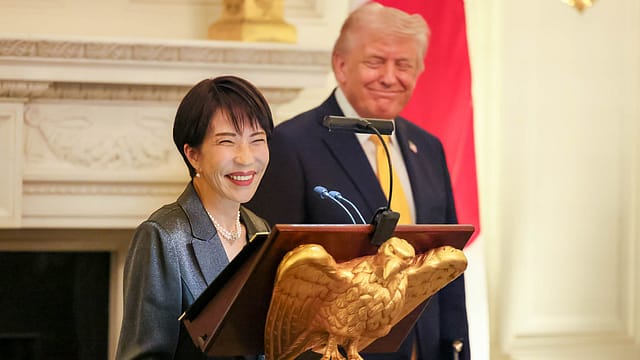
Japan’s Prime Minister Sanae Takaichi on Thursday expressed deep concern over the deteriorating global security environment, highlighting the need for coordinated international efforts to address conflicts in the Middle East and beyond, while placing confidence in US President Donald Trump to play a central role in advancing peace.
"In the Middle East and also the entire world, we are experiencing a severe security environment,” she said.
Takaichi also reaffirmed Japan’s firm stance against nuclear proliferation, particularly regarding Iran.
"Speaking of the situation in Iran, Iran's development of nuclear weapons must never be allowed, and this is why we have been urging them and also reaching out to other partners of the world," she added.
"Japan condemns Iran's actions, such as attacking the neighbouring regions and also the effective closure of the Strait of Hormuz. Our Minister also urged the Iranian Foreign Minister to stop such activities. The security environment in the Indo-Pacific region is also becoming increasingly severe," she said.

Youth Issue 2026
24 Apr 2026 - Vol 04 | Issue 68
50 Portraits of Icons and Achievers
Responding to Takaichi’s remarks, President Trump emphasised the strength of US-Japan ties and welcomed Tokyo’s proactive role.
"We've had tremendous support and a relationship with Japan on everything. I believe that, based on statements that were given to us yesterday and the day before yesterday, having to do with Japan, they are really stepping up to the plate," Trump said.
The exchange comes amid heightened tensions in the Middle East, particularly over Iran's nuclear ambitions and disruptions in key maritime routes such as the Strait of Hormuz, a critical artery for global oil shipments.
Takaichi’s visit marks her first trip to Washington since assuming office in October 2025. Days after becoming Japan’s first woman Prime Minister, she held her first summit with Trump in Tokyo.
Her Liberal Democratic Party secured a landslide victory in a snap parliamentary election in February this year.
Why is Japan releasing oil reserves?
While Japan has not commented on US and Israeli military actions, Tokyo has condemned Tehran for attacks in West Asia resulting in civilian casualties.
Japan, heavily dependent on oil imports, has faced rising oil prices and supply restrictions due to the Strait of Hormuz blockade.
The government has begun releasing oil from strategic reserves and plans subsidies to offset surging prices, according to The Washington Post.
Historically, Japan has maintained friendly relations with Israel and Arab countries and positioned itself as a neutral intermediary in Middle East conflicts.
Its constitution restricts overseas military operations, with Self-Defence Forces deployed only in April 1991 after the Gulf War ceasefire, the Post reported.
How is Japan addressing rising tensions with China and Taiwan?
Takaichi’s visit also coincides with rising tensions between Japan and China. On November 7, she stated in parliament that a military attack on Taiwan or a naval blockade by Beijing might constitute a "survival-threatening situation" for Japan, implying the potential invocation of collective self-defence.
On troop deployments, Trump said he was not planning to send more soldiers to the Middle East.
"I'm not putting troops anywhere," he said. "If I were, I certainly wouldn't tell you. But I'm not putting troops. We will do whatever is necessary to keep the price."
How did Trump reference Pearl Harbor in his discussion with Takaichi?
During a meeting with Takaichi in the Oval Office, Trump drew a parallel between Japan's attack on Pearl Harbor and US strikes on Iran.
"We wanted a surprise. Who knows better about surprises than Japan? Why didn't you tell me about Pearl Harbour?" he said when asked why he had not informed allies of his war plans.
Takaichi’s eyes widened as Trump continued, "You believe in surprise, I think much more so than us."
The Japanese attack on Pearl Harbor on December 7, 1941, killed 2,390 Americans, prompting the United States to declare war on Japan the next day. U.S. President Franklin D. Roosevelt called it "a date which will live in infamy."
The U.S. defeated Japan in August 1945, days after atomic bomb attacks on Hiroshima and Nagasaki killed hundreds of thousands of civilians.
At the White House, Trump praised Japan for “stepping up” on Iran while criticising NATO as less supportive.
He pushed for allied efforts to secure shipping through the Strait of Hormuz, with Tokyo backing moves to stabilise energy markets and ensure safe passage while maintaining diplomatic outreach to Iran.
Reuters reported on Wednesday that the Trump administration is considering deploying thousands of U.S. troops to reinforce operations against Iran, citing a U.S. official and three other people familiar with the matter.
(With inputs from ANI)