Iran Says Persian Gulf Future Will Be “Without America”: What It Means
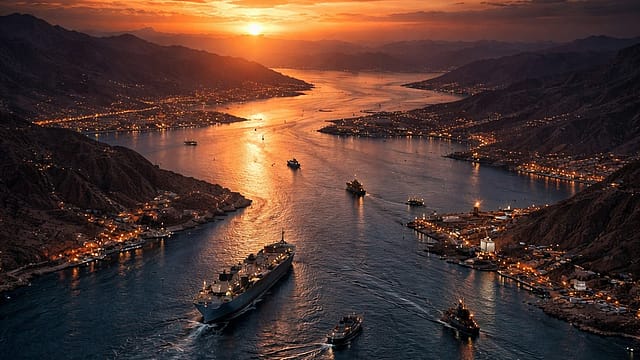
On Persian Gulf Day, Iran’s Supreme Leader Ayatollah Mojtaba Khamenei delivered a sharply worded message about the region’s future. He asserted that the Persian Gulf would eventually be free of American presence, framing it as part of a broader geopolitical shift.
“By God's grace and power, the bright future of the Persian Gulf region will be a future without America and in the service of the progress, comfort, and prosperity of its peoples. We share a ‘fate’ with our neighbours in the waters of the Persian Gulf and the Sea of Oman, and the foreigners who greedily commit evil in it from thousands of kilometers away have no place in it except in the depths of its waters. And the chain of this victory, which has been achieved by the grace of God Almighty in the shadow of the measures and policies of the resistance and the strategy of a strong Iran, will be the beginning of a new order in the region and the world,” the Supreme Leader said.
Why is Persian Gulf Day significant?
Persian Gulf Day commemorates a historic moment in 1622 when Iranian forces, under Abbas I, expelled Portuguese colonial forces from Hormuz Island. The event ended decades of foreign dominance in the Gulf and remains a symbol of sovereignty in Iranian political messaging.
The anniversary is often used by Iranian leaders to reinforce themes of independence and resistance against external powers.
Look Who's Talking Regime Change
23 Oct 2026 - Vol 05 | Issue 43
What does Iran mean by a “new order” in the region?
Khamenei described the current moment as the beginning of a “new order” shaped by Iran’s resistance policies and shifting regional dynamics. His remarks suggest a vision where regional countries manage their own security without intervention from distant global powers like the United States.
This framing ties into Iran’s long-standing strategic goal of reducing Western military influence in key waterways such as the Strait of Hormuz, a critical global oil transit route.
How does Iran justify its position?
The Supreme Leader pointed to what he described as growing national strength across multiple sectors, including science, industry, and military capabilities.
“Today, the miraculous awakening of the Iranian nation is not limited to the tens of millions who sacrificed their lives in the fight against Zionism and the bloodthirsty America. In front of the united ranks of the sent Islamic nation, ninety million zealous and noble Iranian compatriots inside and outside the country have considered all the capacities of identity, spirituality, humanity, science, industry, and basic and new technologies - from nano and bio to nuclear and missile - as their national capital and will guard them like water, land, and air borders,” Khamanei said.
What’s the broader geopolitical context?
The remarks come amid heightened tensions between Iran and United States, particularly over influence in the Gulf and control of maritime routes. The Persian Gulf remains one of the world’s most strategically sensitive regions due to its energy resources and shipping lanes.
Iran’s leadership has consistently argued that regional security should be managed by countries bordering the Gulf, while the United States maintains that its presence ensures stability and freedom of navigation.
What could this mean for the region?
Khamenei’s statement signals continued resistance to foreign military presence and reinforces Iran’s push for a regional order led by local powers. While largely rhetorical at this stage, such messaging reflects deeper strategic competition that could shape future diplomacy and security arrangements in the Gulf.
(With inputs from ANI)