US and India Re-engage the Terms of Trade Have Changed
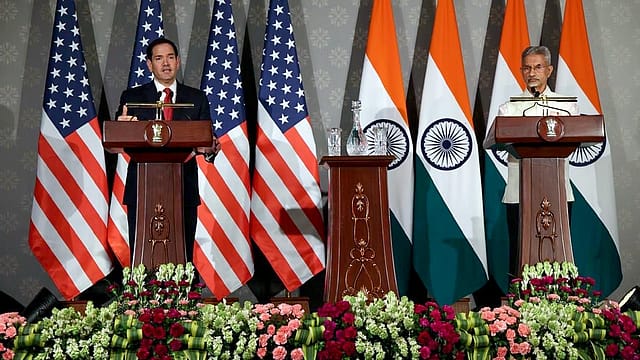
With the possibility of the truce in the Middle East becoming less fragile and oil again flowing through the Strait of Hormuz, there might be an opportunity to restore momentum in India-US ties. United States secretary of state Marco Rubio’s remarks in New Delhi asserting that America does not see ties with any other country coming at the cost of India is a welcome development. Rubio’s presence in India for a QUAD foreign ministers meeting at a time when an US-Iran deal is hopefully being sewed up point to a much-needed re-engagement.
The big question is how will the India-US bilateral trade deal, which has been near finalization, progress in next couple of months. A US trade team is to visit India next month and continue discussion on a framework which was agreed upon in February. But since then, the US Supreme Court struck down the Trump tariffs as unconstitutional and a messy war in the Middle East forced US to suspend sanctions on not only Russian oil but also Iran’s crude. Now the nub of the matter is what is the incentive for India to accept an 18% tariff that was agreed on but not signed?
Tariff Threat Eases
The 10% tariff that Trump announced after the legal setback runs out in July and there is no certainty on what might follow. So, since there is no threat, at least in the immediate future, of a stiff tariff being reimposed on India, it makes sense to wait to see what follows once the blanket tariff imposed under Section 122 of the 1974 US trade act runs its course. It would also be necessary to evaluate the tariff rates for India’s trade competitors. Will the advantages anticipated in February when the US agreed to reduce the tariff for India from 25% and scrapped an additional 25% imposed after India flatly refused to endorse President Donald Trump’s overblown claims on India-Pakistan hostilities still hold true?

Open Minds 2026
26 Jun 2026 - Vol 05 | Issue 26
The power of ideas and arguments in 50 portraits
A tariff rate is of course still on the table but the menace of coercive measures that could render Indian exports to the US unviable has receded. For one, the shock of the 50% tariff sent Indian exporters scrambling for other suppliers and markets and they were able to achieve diversification to a surprising extent. The pinch of a punitive tariff does not hold the same sting as before. The annual inflation rate in the US has accelerated to 3.8% and more trade disruptions will not be welcome. Trump’s comment at a rally that crude prices will “tumble” once he is done with Iran is an admission that the Hormuz blockade matters despite claims that America had its own oil.
India’s Other Trade Deals
As the trade talks with the US dragged on, other things happened. India concluded a very significant free trade agreement with the European Union with Brussels relenting on the Carbon Border Adjustment Mechanism (CBAM). Some commentators, particularly in the western press, insisted that no exemption was made for India. This is incomplete and misleading as it chooses to miss that point that EU and India found a creative solution on an issue that could well have been a deal breaker. The promised “technical discussions” are a way to find an agreed solution. There is little doubt that Trump’s tariff tantrums and his string arm measures made EU much more amenable to finding a way forward and concluding a big trade deal with India.
The hard times during Covid had made Indian exporters much more prepared to deal with the disruption of the US market. For one they moved to access markets in countries like Brazil, Australia and Malaysia and, interestingly enough, have found benefits in trading with Isreal right through the current war. The FTA with the United Kingdom has seen Indian businesses open offices and trading centers in England which they hope will facilitate further movement of goods to mainland Europe. The cooperation envisaged during Modi’s recent visit to the Scandinavian countries in areas of energy security, green transition and deep tech is seen opening new vistas for India businesses including start ups that are more agile than traditional industrial houses.
A US-Iran Deal
Even when the 50% tariff was in force, Indian exporters and their clients in the US often enough agreed to split this between them and this resulted in higher costs for the American consumer. Indian businesses definitely felt the pinch but weathered on with the help of the government taking steps such as quicker realization of duty drawbacks. Stung by the Trump administration’s extractive and capricious behavior, both the government and Indian manufacturers realized they could no longer place all their eggs in one basket and diversification was the name of the game.
The war in the Middle East brought its own challenges and costs of inputs are indeed rising. There is a gradual price rise but so far it has not affected sectors like automobiles that continue to do brisk business. The hikes in pump prices do as yet seem to have impacted travel and use of private transport. Any moderation will be a consequence of how individuals and businesses adjust to cost increases and the extent they take note of Modi’s call for reducing discretionary spending on foreign travel and purchase of precious metals.
The sharp increase in crude oil prices and the squeeze on India’s trade with the Gulf Arab nations increased pressure on the rupee that has fell 11% in the past year. The Current Account Deficit also widened. If reports that an expanded truce in the Middle East will allow freer trade in Iranian oil, it should reduce India’s oil import bill and, ironically enough, further lessen the pressure on the Modi government to seek a trade deal with the US on terms that are unequitable.