US Envoys Jared Kushner and Steve Witkoff to Hold Iran Talks in Doha Amid Hormuz Tensions
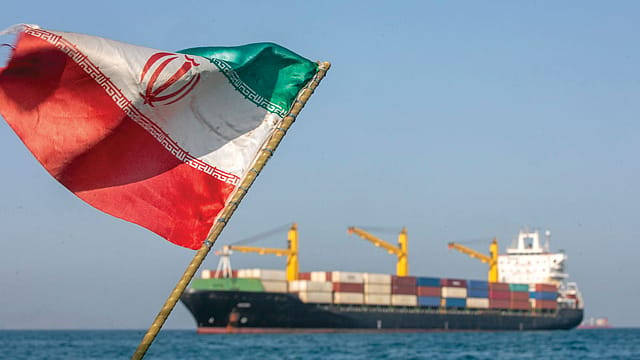
The United States has announced that senior officials Jared Kushner and Steve Witkoff will travel to Doha on Tuesday for discussions with Iran, signalling continued diplomatic engagement despite recent military tensions over the Strait of Hormuz. However, the announcement has been met with scepticism from Tehran, which has denied reports that formal technical negotiations are scheduled to begin this week.
The planned talks come after a fragile ceasefire framework emerged following a series of confrontations linked to maritime security and vessel movements through one of the world's most strategically important waterways.
White House Says Iran Requested the Meeting
White House Press Secretary Karoline Leavitt confirmed that Special Envoy Steve Witkoff and Senior Adviser Jared Kushner would travel to Qatar for discussions with Iranian representatives.
The Vanguard
21 Aug 2026 - Vol 05 | Issue 34
BJP Rearmed for 2029
"I just spoke with the president. Iran requested a meeting. Jared Kushner and Steve Witkoff will travel to Doha to discuss the memorandum of understanding. On the sidelines of high-level talks, there will be technical talks," Leavitt said.
Leavitt stressed that Washington remains committed to maintaining the ceasefire arrangement while warning that any future attacks would be met with a response.
"We're holding up our end of the ceasefire. Violence will be met with violence. There were attacks on vessels that the president responded to, and that will continue to happen. Hope we don't see that," she said during her interaction with Fox News.
She also said President Donald Trump wants diplomatic efforts to continue and urged Iran to reach an agreement with the United States following the signing of a 14-point Memorandum of Understanding (MoU) aimed at ending hostilities in West Asia.
"The president wants to see the peace process play out, and Iranians would be best to sign a good deal with the United States of America," she said.
Earlier in the day, Trump announced the planned talks on Truth Social, writing:
"IRAN HAS REQUESTED A MEETING. IT WILL TAKE PLACE TOMORROW IN DOHA!"
According to reports, the discussions are expected to focus on disputes surrounding the Strait of Hormuz, where recent incidents have raised concerns about the security of maritime traffic and energy supplies.
A senior US official was quoted as saying, "We decided to stop all the kinetic activity," using a military term for strikes and attacks.
Another official said both sides would stand down "for now" and that "vessels can move freely" while diplomatic contacts continue.
Iran Pushes Back Against Reports of Immediate Technical Talks
While US officials have projected optimism about the Doha engagement, Iranian authorities have publicly disputed reports suggesting that technical-level negotiations are already underway.
Iran's Deputy Foreign Minister for Legal and International Affairs, Kazem Gharibabadi, told state broadcaster IRIB that no such meetings have been scheduled this week.
"No technical working group meetings are scheduled for this week," Gharibabadi said in response to media queries.
He acknowledged that consultations with Qatar remain ongoing but rejected claims that technical working group discussions are currently taking place in Doha.
"Although consultations with Qatar, including regarding the follow-up on the implementation of the other party's commitments, are ongoing as usual, some media reports that technical working group discussions are being held in Doha cannot be confirmed," he said.
According to Gharibabadi, formal technical talks will only begin once the necessary groundwork has been completed and all parties agree on logistical arrangements.
"The first round of technical talks will be held within the framework of the designated working groups, once conditions are in place and after an agreement is reached on the date and location, and consultations in this regard are continuing through the intermediary countries," he said, as quoted by IRIB.
Qatar's Role and the Road Ahead
Qatar continues to play a central mediating role between Washington and Tehran, facilitating communication as both sides attempt to preserve the ceasefire framework and reduce tensions in the Strait of Hormuz.
The differing public statements from the United States and Iran highlight the delicate nature of the diplomatic process. While Washington has portrayed the Doha meeting as a significant step forward, Tehran has sought to temper expectations by insisting that technical negotiations have not yet formally begun.
Even so, the planned engagement underscores ongoing efforts by both sides to prevent renewed escalation and maintain stability in a region critical to global trade and energy markets.
(With inputs from ANI)