“It Will Work Out. It Always Works Out. It’s Like a Chess Game”: Trump Plays the Long Game on Iran
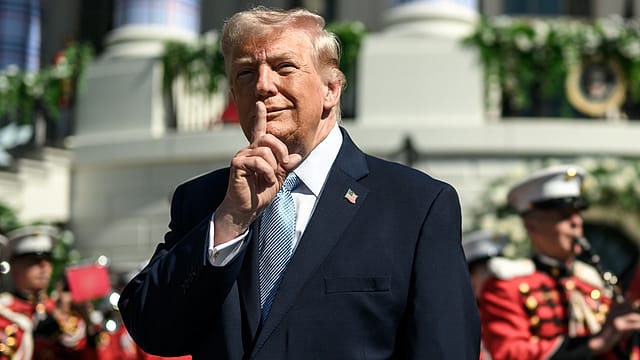
Donald Trump says he is playing chess. Iran is preparing for a fight. And the Strait of Hormuz remains the board on which both sides are making their moves.
Trump said that Washington was deliberately taking a “low-key” approach towards Tehran and was not currently looking to launch another major military offensive. “We are low keying it,” Trump told Axios, saying the US was only “semi-negotiating” with Iran while watching its economy deteriorate. “We are just watching Iran with its huge inflation and the fact they have no money,” he said.
Then came the line that perhaps best captured his approach to the confrontation: “It will work out. It always works out. It’s like a chess game.”
The problem is that the other side is not exactly signalling a willingness to fold.
While Trump talks about keeping things low-key, the US military is continuing to tighten its grip around Iran's maritime trade. US Central Command said on Monday that American naval forces had redirected 55 commercial vessels, disabled two and boarded two as part of the enforcement of the US blockade. More than 30 vessels carrying humanitarian aid have been allowed through, CENTCOM said, while more than 20 US warships remain deployed in the region. The USS Ross and the USS Abraham Lincoln carrier strike group are among the assets involved in maintaining the US military posture.

The Health and Wellness Issue
25 Sep 2026 - Vol 05 | Issue 39
So the message from Washington is complicated. No immediate new offensive. But no easing of pressure either.
The Pentagon is also pushing defence contractors to accelerate weapons production. The Washington Post reported that Deputy Defence Secretary Steve Feinberg had given companies 21 days to submit plans for faster deliveries or increased production of critical military capabilities.
Tehran isn't talking directly
Iran, meanwhile, says there are no direct negotiations with Washington.
Foreign Minister Abbas Araghchi said Tehran is communicating through intermediaries and that several countries are attempting to create conditions for renewed talks.
But Iran has conditions of its own. Araghchi said Tehran would not return to direct negotiations until Washington addresses what Iran describes as its previous violations and provides compensation.
And then there is the Strait. Iran and Oman are reportedly close to an agreement on a new legal and technical mechanism governing traffic through Hormuz, according to Araghchi. But Tehran says reopening the waterway remains conditional on additional issues, including compensation.
The existing traffic separation system is also no longer acceptable to Iran, he said, meaning any reopening could require a new route and a complicated technical and legal arrangement.
That is where diplomacy and military pressure collide. “If they set foot in Iran, we will cut them off” Iran's military rhetoric is hardly conciliatory. Brigadier General Ali Jahanshahi, commander of Iran's army ground forces, issued a direct warning to Washington against any ground intervention.
“If any US military personnel set foot in Iran, we will cut them off,” he said, according to Iranian state media. He added that Iranian ground forces remained at full combat readiness and were monitoring movements and threats along the country's borders.
It is a reminder that while the diplomatic channels are flickering, the military ones remain very much switched on.
There may be a way out through Oman
There is one potentially significant thread running through all three developments: Oman. Iran says negotiations with Muscat over a new framework for managing shipping through Hormuz are nearing completion.
A US official told Reuters on Friday that progress had been made between Iran and Oman and that an agreement could lead to the reopening of the Strait and the restoration of disrupted oil exports.
The official said that once commercial shipping could resume without impediments, Washington would lift its blockade of Iranian ports.
That creates the outlines of a possible bargain. Iran gets a pathway towards reopening Hormuz. The US gets unrestricted commercial shipping and a restoration of energy flows. Neither side, however, appears ready to concede the larger political fight. And that is why Trump's chess-game metaphor may be more revealing than it first sounds. Washington is applying economic and maritime pressure without immediately opening another military front. Tehran is keeping indirect diplomatic channels alive while maintaining military readiness and using Hormuz as leverage. Oman is trying to find the narrow space between them. The next move may not be a missile. It may be a shipping route.
(With inputs from ANI)