Trump says higher oil prices are ‘small price to pay’: Is another US-Iran showdown looming?
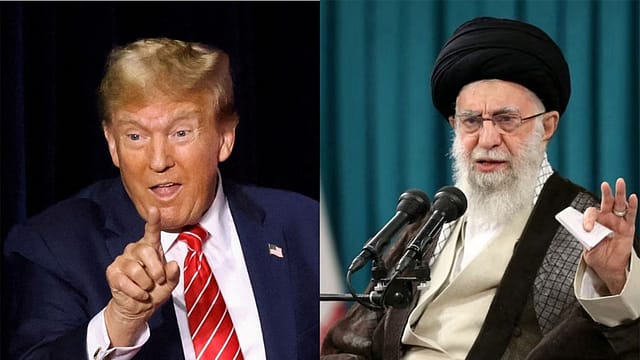
For Donald Trump, the argument is straightforward: preventing Iran from acquiring a nuclear weapon is worth the economic pain caused by the conflict. But for American households paying more for fuel, and Republican candidates facing voters on November 3, the calculation may not be quite so simple.
Speaking at a campaign rally in Dubuque, Iowa, on Sunday, the US President described the rise in oil prices as a “very small price to pay” for American and global security. He insisted that the military intervention had prevented Iran from obtaining a nuclear weapon and predicted that oil prices would fall sharply once the conflict ended.
Yet, even as Trump talks about an eventual end to the war, reports of renewed military planning and pressure from Israel suggest that the next phase of the conflict remains uncertain.
Why is Trump defending the Iran war despite rising oil prices?
Trump's message is that the security benefits outweigh the economic costs. At the Iowa rally, he said he had expected oil prices to rise much further and argued that stopping Iran's nuclear ambitions justified the intervention.

The Era of Forever Wars
30 Oct 2026 - Vol 05 | Issue 44
Coping with an explosive Middle East
He also claimed that Iran's military capabilities had been severely weakened, saying its navy, aircraft and air-defence systems had been destroyed. These were the President's claims at the rally, rather than independently verified assessments of Iran's remaining military strength.
The economic consequences, however, are not confined to the United States. Reuters reported on November 2 that global energy reserves have been significantly depleted since the conflict disrupted shipping through the Strait of Hormuz. Nearly one billion barrels have been drawn from global oil inventories, while Brent crude was trading around $110 a barrel, roughly 50 per cent above its pre-war February level.
Is Netanyahu pushing Trump to launch fresh strikes against Iran?
That is one of the biggest developments shaping the next phase of the conflict.
According to a November 1 report, Israeli Prime Minister Benjamin Netanyahu urged Trump to resume military strikes against Iran immediately after the US midterm elections. The two leaders spoke by telephone on Saturday about negotiations with Tehran and the possibility of renewed combat.
The report described the conversation as difficult: an Israeli source called it “tough”, while a US source described it as “direct”. Netanyahu reportedly wants military action sooner, while Trump is inclined to give diplomacy more time.
Trump confirmed that he had spoken to Netanyahu, describing their conversation as a “very good talk”, but did not disclose details.
Are the US and Iran still trying to negotiate?
Yes. Washington appears to be keeping diplomatic channels open even as it prepares for the possibility of renewed military action.
Qatar's mediators had met Iranian officials for a third consecutive day in an effort to restart direct negotiations. US Vice-President JD Vance had also sent a letter to Iran's national security chief, Mohsen Rezaei, about resuming talks.
Iranian Foreign Minister Abbas Araghchi said discussions were continuing but no agreement had been reached. Tehran was waiting for Washington to respond to its outstanding questions.
Trump, meanwhile, said negotiations were “going fine” and that he was not in a hurry to resume strikes. However, he also referred to suspected nuclear sites, including the underground facility at Pickaxe Mountain, as targets that Washington still needed to address.
How could the US midterm elections influence Trump's Iran strategy?
The November 3 elections will determine control of both chambers of Congress, making the conflict an important political issue for the President and Republican candidates.
The economy and affordability have become central campaign concerns, with higher fuel prices adding to voter anxiety. In its November 1 poll, NBC News found that 52 per cent of registered voters preferred a Democrat-controlled Congress, against 45 per cent who favoured Republican control. Trump's approval rating stood at 40 per cent, while 60 per cent disapproved of his performance.
The results will not automatically determine whether the US launches further strikes. But they could shape the political room Trump has to manoeuvre.
For now, Washington is sending two messages at once: it is willing to negotiate with Tehran, but it has not ruled out returning to combat. Whether diplomacy can prevent another escalation may become clearer after the midterm vote.
(With inputs from ANI)