QUICK TAKE | Lahore Is the World’s Most Polluted Major City Again: Seven Things to Know
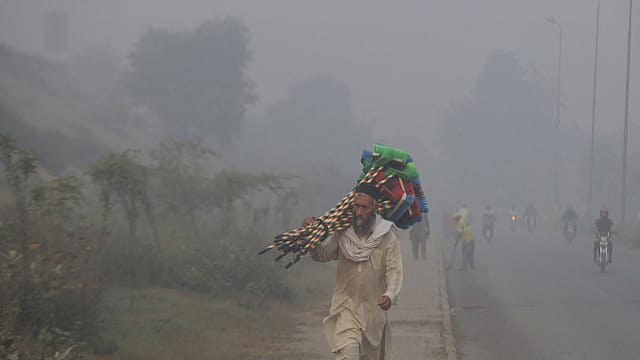
1. How polluted was Lahore’s air?
Lahore recorded an AQI of 538 between 9 am and 10 am local time on November 22, according to IQAir data reported by Dawn. That places it in IQAir’s “hazardous” category, indicating serious health risks across the population.
2. Does that make it the world’s most polluted city?
Lahore topped IQAir’s live global ranking on Sunday morning with an AQI of 538. Delhi followed at 207, while Karachi recorded 180, Mumbai 177 and Cairo 162. Rankings change throughout the day as pollution levels fluctuate.
3. Why does pollution worsen during winter?
Cooler conditions, weak winds and temperature inversions restrict the dispersal of emissions. An inversion acts like a lid, trapping polluted air near the surface. NASA identifies vehicle exhaust, industrial activity, construction and burning among the sources contributing to the region’s seasonal haze.
4. Is crop burning the only cause?
Lahore has multiple pollution sources operating throughout the year. Punjab’s environmental department identifies transport, industry, dust, crop-residue burning and domestic fuel use as contributors. Seasonal agricultural fires add to that existing load. Establishing each source’s contribution requires location-specific evidence, rather than attributing every episode to one activity.

The Wealth Issue 2026
06 Nov 2026 - Vol 05 | Issue 45
Portraits of Dreamers and Doers under 35
5. Why is the report’s description of AQI 266 incorrect?
On IQAir’s US-based scale, 201–300 is “very unhealthy”; “hazardous” begins at 301. The report incorrectly calls Saturday’s 266 reading hazardous. AQI is also an index of health risk, not a pollutant concentration, so 538 should not be described as a PM2.5 measurement.
6. What are authorities doing?
Punjab officials report penalties against smoke-emitting vehicles, uncovered construction-material loads and unfit vehicles. Environmental authorities also report kiln inspections, closures, demolitions and fines. These are enforcement counts supplied by officials. They do not independently demonstrate how much emissions have fallen or whether air quality has improved.
7. What does this mean for residents?
At hazardous levels, IQAir advises avoiding outdoor activity. Fine particulate pollution can penetrate deep into the lungs and contribute to cardiovascular and respiratory harm. The immediate concern extends beyond visibility: prolonged exposure creates health risks even when residents cannot see a dense layer of smog.