Inside Arrest of El Chapo Isidro, Mexican drug lord on FBI's 10 most wanted list
At Kuroda Park on Friday night, the Algodoneros de Guasave were playing the Venados de Mazatlán when people began getting up from their seats. Video published by the Sinaloa newspaper El Debate showed some spectators hurrying through the stands as others rose to follow. Across Guasave, residents could hear gunfire. The game was suspended. Mexican forces had come for a man the United States had been pursuing for fourteen years.
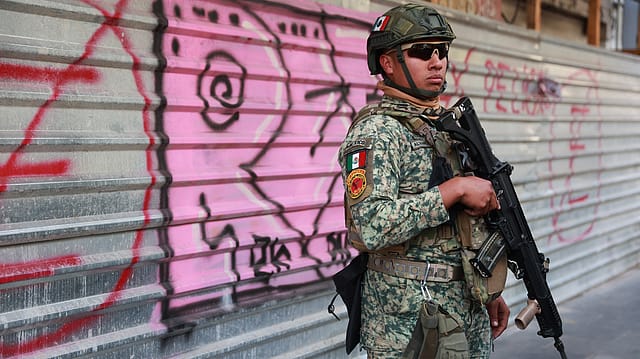
They took Fausto Isidro Meza Flores into custody on November 20. Getting him out of Guasave took until four the next morning, a Mexican federal official told the Associated Press. Mexico’s Defence Ministry put the toll at four soldiers and seven suspected gunmen dead. “The fighting was happening all over Guasave,” Alma Camacho, a local journalist who lives in the city, told AP.

The Wealth Issue 2026
06 Nov 2026 - Vol 05 | Issue 45
Portraits of Dreamers and Doers under 35

Thirteen years earlier, the US Treasury had published an unusually domestic inventory of Meza Flores’s power in Guasave. It named his wife, his parents, his sister and three uncles. All three businesses it identified were in the same city where soldiers would eventually find him. One hauled grain. Another sold petrol. The third was a construction company. Treasury alleged that all three worked for the family’s trafficking organisation. It also named the enemy the family had been fighting in a bloody turf war. That enemy was the Sinaloa Cartel.
On Saturday, the US Justice Department announced that Mexico had captured an alleged senior leader of the Sinaloa Cartel. Somewhere between the sanctions notice and the arrest announcement, Washington had placed the same man on the other side of his own war. The explanation begins with two men who shared a nickname, two families who shared a cartel and a third family in Guasave that could still choose a side.
The other El Chapo
The El Chapo who became famous around the world was Joaquín Guzmán Loera. He and Ismael “El Mayo” Zambada were founding figures of the Sinaloa Cartel. The El Chapo arrested on Friday was a different man, whose early career the FBI describes as that of an independent trafficker. Meza Flores, now 44, rose through the Beltrán Leyva organisation and came to command a group known in Mexico by the name of his city, the Guasave Cartel. The distinction becomes important when Guzmán’s sons enter the story.
In 2008, the Beltrán Leyva organisation broke with the Sinaloa Cartel. A fight over control of the narcotics trade followed. By January 2013, when Treasury issued its first sanctions against Meza Flores’s group, US officials counted it among the Sinaloa Cartel’s principal rivals in the state. Treasury linked the feud to a rise in kidnappings and arson. It accused the Guasave organisation of supplying the US with heroin, cocaine, marijuana and methamphetamine in a business stretching back to 2000.
The family details help explain what Washington believed it was up against. One of the uncles on its list had already been arrested in Mexico. The other relatives ranged across two generations and both sides of Meza Flores’s family. Treasury accused them of acting for him or for the organisation. Its order generally barred Americans from doing business with those designated and froze assets under US jurisdiction. For a Guasave company named in the order, the consequences extended to dealings with an American customer. For the US authorities, however, a financial sanction still left the problem of arresting a fugitive on Mexican soil.
In the years after the 2008 split, Mexican authorities captured or killed the brothers who had founded the Beltrán Leyva organisation. Their surname survived them as a source of criminal authority. In December 2023, during a visit to Mexico City, US Treasury Secretary Janet Yellen announced sanctions against a new generation of alleged operators. Treasury identified three men at the top, including Meza Flores. It described an organisation that had supplied cocaine to the US for decades and had expanded into fentanyl as the American opioid market grew. Ten years after Washington named him an enemy of the Sinaloa Cartel, it was still placing him in a separate organisation.
The sons go to war
On July 25, 2024, the US Justice Department announced that two men were in American custody. One was El Mayo Zambada. The other was Joaquín Guzmán López, a son of El Chapo Guzmán. The announcement brought together an ageing founder of the Sinaloa Cartel and an heir to the family with which he had built it. Back in Mexico, their followers would soon be fighting over what the fathers had left behind.
In a subsequent US plea agreement, Guzmán López admitted kidnapping a man identified in the document as “Individual A” and having him flown to the United States. He acknowledged hoping to earn credit with American authorities for himself and his brother. By September 2024, open fighting had broken out between Los Chapitos, the faction associated with Guzmán’s sons, and the Zambada camp, known as Los Mayos or La Mayiza. On the Zambada side was another son, Ismael Zambada Sicairos, known as Mayito Flaco. Each family now had reason to seek allies who could bring armed men and influence of their own.
Guasave had grounds to keep out of it. Gunmen associated with Meza Flores and men aligned with the Zambadas had fought one another years earlier, the Mexican newspaper Milenio reported. In December 2024, people close to Meza Flores’s faction told the paper that their group intended to remain neutral. It was a credible position for a man whose power in his own territory predated the quarrel between the sons. It lasted barely five months as the faction’s public position.
On May 7, 2025, Milenio reported from Culiacán that officials in Mexico’s federal prosecutor’s office had confirmed an alliance between La Mayiza and the Guasave Cartel against Los Chapitos. A statement circulating on social media in the groups’ names accused Guzmán’s sons of betraying their allies. That was the explanation the factions chose to give. The newspaper’s independent reporting established the alignment. The private terms between Meza Flores and Zambada Sicairos remain unknown.
Students in Sinaloa learned something of the pact’s consequences that same week. After shootings and blockades across several municipalities, the Autonomous University of Sinaloa moved classes online in affected communities, Milenio reported. The newspaper recorded bullet damage to homes and abandoned vehicles in residential neighbourhoods. Its account of how two armed groups had settled an old difference ran alongside the list of places where students could no longer safely get to class.
The split helps resolve the apparent contradiction in the American records. Meza Flores could send his men to fight alongside Zambada’s son while continuing to lead the organisation he had built in Guasave. Indeed, the force he already commanded helps explain why he was worth having as an ally. By the time of his arrest, AP described him as a key ally of Los Mayos. How much authority he exercised over other branches of the Sinaloa Cartel is a separate claim, and one with considerably higher stakes since Washington changed the law-enforcement terms of the fight.
How the American case changed
The first US indictment against Meza Flores dates to May 2012, in Washington, DC. In 2019, a federal grand jury returned a revised indictment alleging a conspiracy involving four drugs over fourteen years, as well as a firearms offence. In February 2025, the FBI added him to its Ten Most Wanted list. The State Department offered up to $5 million for information leading to his arrest and conviction. By then, nearly thirteen years had passed since prosecutors first brought charges.
That February, the US also designated the Sinaloa Cartel a foreign terrorist organisation. On September 25, 2026, a federal grand jury in Washington returned another indictment against Meza Flores. This one included charges of narcoterrorism, conspiracy to provide material support to a terrorist organisation, running a continuing criminal enterprise, money laundering and firearms offences. Prosecutors allege that his men killed rival traffickers and Mexican police officers and that the organisation sent fentanyl and other drugs into the US. Those allegations await adjudication.
The new case gives the competing descriptions of his job a significance they lacked on a wanted poster. The US Justice Department calls him a Sinaloa Cartel leader. In Mexico, broadcaster N+ reported that the Defence Ministry identified him at the time of capture as head of the Beltrán Leyva organisation. Mexican reporters had documented a pact between two men who brought distinct organisations to it. All three accounts concern the same defendant. Only a court can decide whether the conduct prosecutors can prove amounts to the crimes in their indictment.
The morning after in Guasave
Mexican soldiers made the arrests, with American intelligence assistance. Among those detained was Germán Rolando Gálvez Meza, known as El Serafín, whom Mexican reporting identified as the group’s second-in-command. Defence Ministry footage showed soldiers escorting detainees onto an aircraft bound for Mexico City. In Washington, FBI Director Kash Patel counted Meza Flores as the eleventh Ten Most Wanted fugitive captured under the Trump administration. In Sinaloa, officials were still counting the roads they had to clear.
On November 21, the US Consulate General in Hermosillo issued a security alert covering Ahome, Guamúchil, Guasave and Navolato. According to ANI’s account of the notice, Americans in affected areas were advised to shelter in place, limit non-essential travel and avoid Federal Highway 15 between Los Mochis and Culiacán. The consulate warned of possible disruption to flights and buses. Sinaloa already carried the State Department’s highest travel warning, Level 4. What changed overnight was the immediate question of whether people already there could safely set out for home.
On the highway between Guamúchil and Guasave, AP photographer Martín Urista photographed firefighters turning a hose on a burning cargo truck. Back at Kuroda Park, Friday’s suspended game had been the first of a series. On Saturday, the Mexican Pacific League announced its decision. It cancelled the rest of the series, too.