QUICK TAKE | Seven Things to Know About the Fake Nuclear Alerts in Ukraine & Russia
1. What happened?
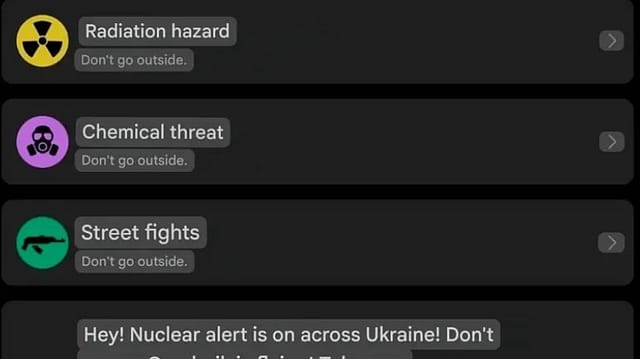
Ukraine’s Air Alert app sent false warnings about radiation, chemical danger and street fighting late on November 1. Ukraine’s Air Force said there was no radiation threat. Early on November 2, Russia reported a cyberattack on its own emergency-alert app.
2. Who was behind the attacks?
Ukraine’s Centre for Strategic Communications blamed Russia. The attackers’ identities have not been independently established, and no proven connection between the two incidents has emerged. Their timing alone does not demonstrate retaliation or coordination.
3. Did every warning system stop working?
Officials said wider warning arrangements remained operational. Ukraine’s street sirens and separate Kyiv Digital app were available. Russia said its national public-alert system was unaffected. A compromised mobile app does not mean every emergency-warning channel has failed.
4. Does the app detect incoming missiles?
Air Alert delivers warnings entered through an official notification system. Regional operators receive and issue alerts; subscribed phones display them. The app itself does not independently detect missiles, radiation or chemical threats.

The Era of Forever Wars
30 Oct 2026 - Vol 05 | Issue 44
Coping with an explosive Middle East
5. Can another app repeat the same fake warning?
Yes. Volunteer service eTryvoga said false alerts reached it through the compromised source it used. Its own service was not hacked. Checking two apps offers limited reassurance if both depend on the same underlying information feed.
6. Does receiving an alert mean your phone was hacked?
A false notification alone does not establish that someone controls your phone. Ukrainian emergency officials advised residents to follow local authorities and street-warning signals, avoid suspicious links and stop sharing unverified messages. Disregarding identified fake warnings does not mean ignoring future genuine alerts.
7. How does India send emergency warnings?
India’s SACHET system distributes geographically targeted disaster alerts. Cell broadcast can deliver warnings simultaneously to phones within a selected area, separately from installed-app notifications. The lesson is to preserve alternative channels and correct false messages quickly; these incidents establish no breach of India’s system.