A Check or a Challenge? Donald Trump after Tomorrow's US Midterms
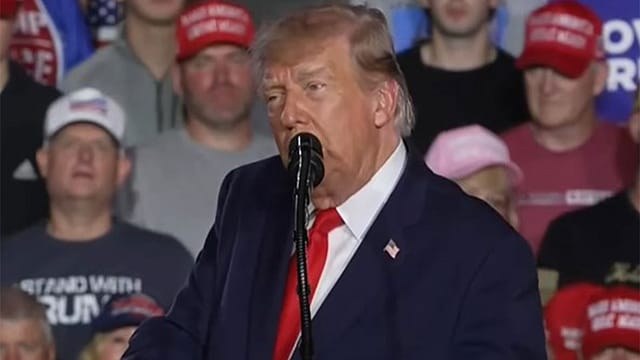
The US midterm elections are supposed to punish the party holding the White House. The pattern is dependable and doesn’t count as news in itself. But what makes the November 3 vote unusual is the burden it has been made to carry. For two years, Congress has largely watched while the president governed by proclamation, leaving the courts as the only institution still willing to say no—and not always. In February, the Supreme Court ruled, six votes to three, that an emergency statute gave Donald Trump no power to impose tariffs. But within hours he had reached for a different law and imposed a global levy anyway. This became another pattern, this time of Trump’s M.O.: a rebuke absorbed, a workaround found. That has been Trump’s second presidency in miniature.
The stakes tomorrow, then, are institutional rather than merely partisan. Trump's allies argue that a gridlocked Congress left him no alternative, and that voters endorsed bold action when they elected him in 2024. And yet, a mandate to govern is not a licence to dispense with the legislature, and the midterm is the one occasion when the electorate may say what it meant. The ballots tomorrow will answer that, provided the polls, so often wrong in the US’ recent history, aren’t wrong again. For Democrats, that would mean not being disappointed again.

The Era of Forever Wars
30 Oct 2026 - Vol 05 | Issue 44
Coping with an explosive Middle East
Few midterms have altered how much latitude a president enjoys. The 1994 midterms gave Congress to Republicans and forced Bill Clinton to reinvent himself as a centrist. Four years later, voters punished the party that impeached him, a reminder that congressional excess can cost as dearly as its presidential version. In 2006, Democrats took both chambers on the back of Iraq, and George W Bush lost his defence secretary and his freedom to manoeuvre. Barack Obama’s 2010 “shellacking” ended his legislative ambitions; he turned to executive action, and did so more boldly after losing the Senate in 2014.
The closest precedent, however, is 2018: a Democratic House, subpoenas, impeachment, and a president who answered by declaring a national emergency to fund his border wall. Joe Biden’s narrow loss of the House in 2022 closed the door on new legislation too. Whether the polls are right or wrong, midterms rarely work out well for the incumbent in the Oval Office.
This time the forecasts make Democrats heavy favourites for the House, with the Senate close to a coin toss (most polls give the House at about 85-95 per cent to Democrats while the Senate ranges from a toss-up to modestly Democratic-leaning). A Democratic House would hold the gavels, the subpoenas and, above all, the purse. Party leaders have already signalled that investigation will come first, with impeachment kept in reserve. And Trump, of course, has predicted the sequel: “I'll get impeached.” Republicans will certainly call all this vengeance in procedural dress—notwithstanding the irony of a president using the Department of Justice to ‘hunt’ his political enemies—and some will quietly hope that Democrats overreach. Without the Senate, the House can summon witnesses and force votes but it cannot override a veto.
So, will Trump become a lame duck or remain undeterred? History would say the latter is likelier. Presidents who lose Congress seldom fall silent; they change instruments. We should expect Trump to double down because both his instincts and his February precedent point that way. But doubling down will cost more. Every emergency declaration becomes a hearing, every tariff a refund dispute, every dismissed watchdog a witness. But it should be remembered that the sharper constraints will be the courts and the calendar, not Congress, which merely supplies the evidence—and the embarrassment. A president denied legislation may still rule by fiat. But he will no longer do so unobserved.