Israeli scholar Raz Segal’s genocide essay goes viral after a US settlement
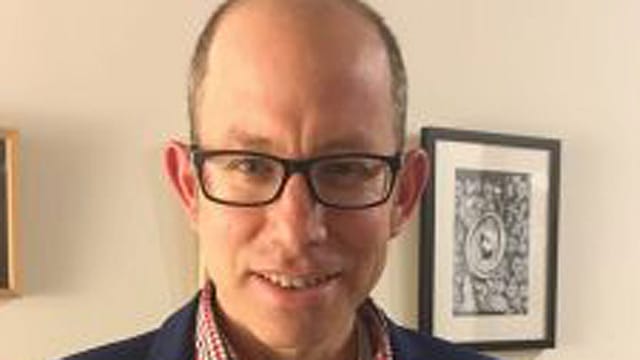
What did Israeli-American scholar Raz Segal, who has now been paid $250,000 in settlement by the University of Minnesota, do that forced the institution to withdraw a job offer they had made him within five days?
An op-ed criticising Israel which is now being read and shared widely.
Although the university has admitted no wrongdoing till date, this settlement, which comes more than two years after rescinding a job offer, is as good as an admission of guilt, several academics feel. While it is clear that pro-Israel lobby groups and scholars within the university had put extreme pressure on them to withdraw the offer made to Segal, how did the grandchild of four Holocaust survivors, who holds US and Israeli citizenships, become a victim of such pressure groups?

The Health and Wellness Issue
25 Sep 2026 - Vol 05 | Issue 39
That is because as a scholar of the Holocaust and genocide, Segal wrote an op-ed in The Jewish Currents shortly after the October 7, 2023 attacks on southern Israel by Hamas and others, specifying the ways in which the Israel Defence Force (IDF) was carrying out a genocide in Gaza in the name of revenge.
In a write-up titled “A Textbook Case of Genocide”, Segal wrote on October 13, 2023, that Israel’s campaign to displace Gazans (and potentially expel them altogether into Egypt) is yet another chapter in the Nakba, in which an estimated 750,000 Palestinians were driven from their homes during the 1948 war that led to the creation of the State of Israel.
He described in the article that the assault on Gaza was a textbook case of genocide unfolding in front of our eyes. “I say this as a scholar of genocide, who has spent many years writing about Israeli mass violence against Palestinians. I have written about settler colonialism and Jewish supremacy in Israel, the distortion of the Holocaust to boost the Israeli arms industry, the weaponisation of antisemitism accusations to justify Israeli violence against Palestinians, and the racist regime of Israeli apartheid. Now, following Hamas’s attack on Saturday (October 7) and the mass murder of more than 1,000 Israeli civilians, the worst of the worst is happening.”
Segal added, quoting international law, that the crime of genocide is defined by “the intent to destroy, in whole or in part, a national, ethnical, racial or religious group, as such,” as noted in the December 1948 UN Convention on the Prevention and Punishment of the Crime of Genocide. The UN Genocide Convention lists five acts that fall under its definition.
According to the scholar, Israel was doing three of them: Killing members of the group. Causing serious bodily or mental harm to members of the group and deliberately inflicting on the group conditions of life calculated to bring about its physical destruction in whole or in part.
“Israel’s goal is to destroy the Palestinians of Gaza. And those of us watching around the world are derelict in our responsibility to prevent them from doing so,” he pointed out in his article.
In fact, even UN Secretary-General António Guterres described the post-October 7 violence as something that “grows out of a long-standing conflict, with a 56-year-long occupation and no political end in sight.” Top-notch UN officials have also described Israel’s occupation of Palestinian territory (the West Bank, including East Jerusalem, and Gaza) as having no legal validity, although it had been in place since 1967.
The University of Minnesota had made an offer to him to lead its Center for Holocaust and Genocide Studies in June 2024 before going back on its word after the search committee decided after a rigorous process that he was the most suitable candidate for the post. According to a report, members of the search committee praised his scholarship while one of them called his presentation “breathtaking”. Segal is Associate Professor of Holocaust and Genocide Studies and Endowed Professor in the Study of Modern Genocide at Stockton University. An author of multiple books on genocide, Segal is an alumnus of Bar-Ilan University, Tel Aviv University and Clark University.