EXPLAINED | Is Netflix Worried About ‘Zombie Subscribers’?
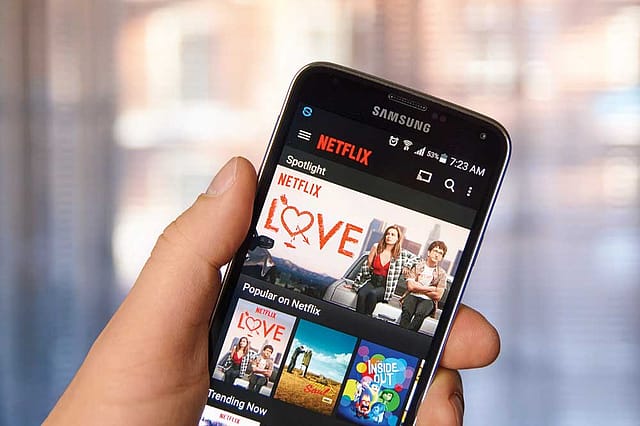
Why Is Netflix Worried if people are still paying? For a subscription business, this might sound like an enviable problem: customers are watching less, but the payments keep coming.
Until you ask what happens next.
A recent report highlighted precisely this tension at Netflix: weaker engagement in the US alongside low cancellations. It described the phenomenon as “subscription zombies”.
The concern is what those apparently loyal customers might do when they next examine the bill.
Netflix’s own shareholder letter acknowledged investor concerns about viewing-hours growth. The company maintained that engagement remained healthy, pointing to customers’ response to price increases, while saying it wanted viewing hours to grow faster.

Look Who's Talking Regime Change
23 Oct 2026 - Vol 05 | Issue 43
That gap between keeping a customer and keeping their attention is where this story begins.
WHAT IS A ZOMBIE SUBSCRIBER?
In a paid subscription business, the term generally describes someone whose membership continues despite little or no use.
Think of the streaming subscription bought for one series, or a fitness app that has survived several abandoned exercise resolutions.
There is no universal inactivity threshold. Businesses use different measures and periods.
The label also needs care when applied to Netflix’s current situation. Watching less does not necessarily mean watching nothing. Neither weaker engagement nor low cancellations establishes how many Netflix customers are paying for a service they never use.
“Zombie subscribers” describes a possible pattern. It is not a disclosed Netflix subscriber category.
CAN NETFLIX’S TOTAL VIEWING RISE WHILE INDIVIDUALS WATCH LESS?
Yes. A growing audience can produce more viewing overall even if the average member watches less.
Imagine 100 customers watching ten hours each: 1,000 hours. Then imagine 120 customers watching nine hours each: 1,080 hours.
Total viewing rises 8%. Viewing per customer falls 10%.
Those are illustrative figures.
Netflix said members watched more than 97 billion hours globally in January–June 2026, its highest half-year total. That aggregate figure does not settle questions about viewing per member or engagement in an individual country.
The number of customers, their viewing habits and their location all matter.
BUT IF THE REVENUE IS ARRIVING, WHERE IS THE BUSINESS PROBLEM?
The immediate payment remains valuable. What becomes uncertain is the next renewal.
Someone who regularly enjoys a service has a reason to keep it. Someone who barely uses it may reconsider when a higher price, an attractive rival or a household budget review draws attention to the charge.
For advertising-supported streaming, viewing has another role: people need to watch for advertisements to reach them.
That is the business risk. Reduced engagement may weaken future retention and advertising opportunities, even while subscription payments continue.
It is a risk to examine, rather than proof that a wave of cancellations is inevitable.
WHAT DOES NETFLIX SAY IN ITS DEFENCE?
Its financial results do not describe a business that has stopped growing.
Netflix reported third-quarter revenue of approximately $12.9 billion, up 12% year-on-year. It said cancellations had improved globally and in the US compared with a year earlier.
The company also argues that engagement encompasses the quality and variety of viewing alongside the number of hours.
The concerns of the analysts, however, revolve around one question: how durable Netflix’s customer relationships is. Low cancellations are evidence of retention today; they cannot guarantee tomorrow’s viewing habits.
DID NETFLIX INVENT THE ZOMBIE SUBSCRIBER?
The expression has an earlier documented history.
In March 2013, Digital Music News discussed inactive Deezer registrations as “zombie accounts”, drawing on analysis presented by music analyst Mark Mulligan.
By April 2016, Mulligan was explicitly discussing “zombie subscribers”, including inactive music subscriptions through telecom bundles.
That establishes earlier usage, although it does not identify a definitive first coinage.
It also reveals a distinction: unused access included in a telecom bundle is different from a forgotten standalone payment. Both have attracted the label.
DOES THIS HAPPEN BEYOND STREAMING?
News publishing provides a documented example.
Northwestern University’s Medill research reported in 2021 that 20% of digital-only subscribers in its study had not visited the website they paid for during a month.
That finding concerned the news subscribers studied. It cannot be applied to Netflix or the entire subscription economy.
Low recorded activity also needs interpretation. Someone may read through another channel or deliberately subscribe to support journalism. A household account may have an active user other than the person paying.
The useful question is whether the subscription still provides value to its buyer.
WHY DO PEOPLE KEEP PAYING FOR SOMETHING THEY NO LONGER VALUE?
Forgetting, postponing cancellation and expecting to return can all play a part.
Researchers have examined the economics of that inertia.
In Selling Subscriptions, published in the American Economic Review in May 2025, Liran Einav, Ben Klopack and Neale Mahoney found substantially higher cancellation rates in months when replacement payment cards required an active renewal decision.
Their models estimated that cancellation frictions roughly doubled seller revenues on average, holding initial subscribers fixed.
That estimate concerns the services and models studied. It is not a calculation of Netflix’s revenue from inactive customers.
DIDN’T NETFLIX ONCE OFFER TO CANCEL UNUSED MEMBERSHIPS?
Yes. In May 2020, Netflix announced that it would contact members who had watched nothing for a year after joining, and those who had stopped watching for more than two years.
Without confirmation that they wanted to continue, their subscriptions would be cancelled.
That historical initiative concerned prolonged inactivity. The current debate also encompasses people who still watch, but watch less.
IS THE SAME NETFLIX PROBLEM SHOWING UP IN INDIA?
Netflix’s latest disclosures show a different picture in India.
The company said viewing hours rose 24% year-on-year in the third quarter, while viewing per member increased by a low-to-mid-single-digit percentage. It also reported its largest quarterly paid net additions in India.
Those figures give us grounds to avoid projecting the US engagement concern onto India.
For individual subscribers, however, the wallet question travels easily: which services do you still want?
Check bank statements, app-store subscriptions and UPI AutoPay mandates, including annual renewals. Complete the provider’s cancellation process and retain confirmation. Netflix explicitly warns that deleting its app or signing out does not cancel membership.
A subscription can renew automatically. Whether it still deserves your money is a decision worth making again.