Israel Strikes Tehran on Persian New Year; Iranian Drones Hit Kuwait Refinery
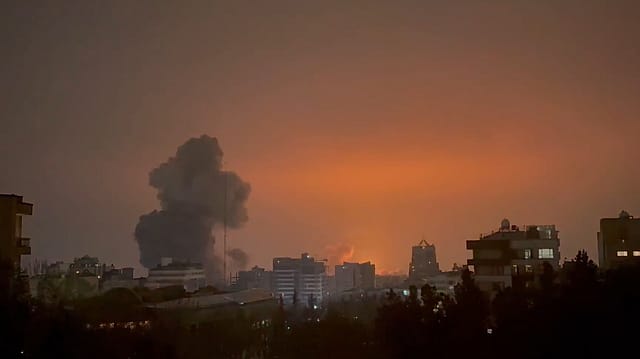
Israel carried out fresh airstrikes on Tehran on Friday as Iranians marked Nowruz (Persian New Year), underscoring the intensifying conflict that has rattled the global economy and heightened fears of a wider regional war.
Activists reported hearing strikes across the Iranian capital, a day after Israel pledged to refrain from targeting a key gas field while Iran escalated attacks on oil and natural gas infrastructure in the Gulf.
Explosions were also reported in Dubai early Friday as air defence systems intercepted incoming projectiles over the city. The incident occurred as residents observed Eid al-Fitr, with mosques making the first call to prayers.
Iran continued its barrage against Israel, triggering sirens across northern regions from Haifa to the Galilee and areas along the Lebanese border. The escalation followed a day in which more than a dozen missiles were launched, according to the Israeli military.
In Kuwait City, the state oil company KPC said its Mina Al-Ahmadi refinery was struck by multiple drone attacks early Friday, sparking fires in some units. No casualties were initially reported.
Firefighters responded swiftly, and several units were shut down as a precaution to ensure worker safety.
Global energy markets have come under mounting pressure amid Iran’s control over the Strait of Hormuz, through which a fifth of the world’s oil supply passes.
The Abandoned Kejriwal
01 May 2026 - Vol 04 | Issue 69
Brain drain from AAP leaves Arvind Kejriwal politically isolated
Israeli Prime Minister Benjamin Netanyahu said late Thursday that, at the request of US President Donald Trump, Israel would refrain from further strikes on Iran’s offshore South Pars gas field.
Iranian retaliatory attacks have driven already elevated global energy prices even higher, prompting Gulf allies to urge Washington to restrain Israel’s military actions.
Since the US and Israel launched the war on February 28, Iran’s top leadership has been decimated and its military capabilities significantly weakened.
Netanyahu said in a televised address that Iran no longer has the ability to enrich uranium or produce ballistic missiles, although he did not provide evidence.
Despite the setbacks, Iran, now led by the son of its supreme leader killed at the start of the war, continues to carry out missile and drone strikes.
What is the human toll of the Israel-Iran war across Iran, Israel, and Lebanon?
The conflict has taken a heavy toll. More than 1,300 people have been killed in Iran. Israeli operations against the Iran-backed Hezbollah in Lebanon have displaced over 1 million people, with the Lebanese government reporting more than 1,000 deaths.
Israel says it has killed more than 500 Hezbollah militants.
In Israel, 15 people have been killed in Iranian missile attacks, while four others died in the occupied West Bank following a missile strike overnight. At least 13 US military personnel have also been killed.
The war has sent shock waves through global energy markets. Brent crude oil briefly surged above $119 per barrel, marking a rise of over 60 per cent since the conflict began.
European natural gas prices have also climbed sharply, roughly doubling over the past month.
(With inputs from ANI)