A Strait, a Ban, and a Ticking Clock: How Asia's Food Supply Became a Powder Keg
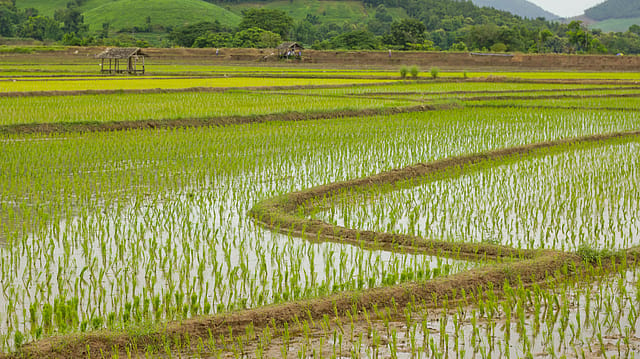
A conflict thousands of kilometres away from Asia's rice paddies is now its most consequential food security crisis in years.
With the Strait of Hormuz effectively shut and China's fertiliser gates closed, Southeast Asia's farming economies face a dual supply shock that analysts say has no quick fix.
Beijing’s Selective Fuel Exports Highlight Growing Energy Vulnerability in Southeast Asia
The consequences are already being sown into the ground, in the form of seeds that may never be planted.
How Did The Iran War Empty Asia's Fertiliser Shelves?
According to the UN, roughly one-third of the world's fertilisers, including urea, potash and phosphates, move through the Strait of Hormuz.
Fertiliser prices have soared 80% since the conflict began. Svein Tore Holsether, chief executive of Yara, told the BBC the disruption has left 500,000 tonnes of nitrogen fertiliser unproduced every week globally.
How Did China's Export Ban Make Everything Worse?
China accounts for 25% of global fertiliser output and exported over $13 billion worth last year. In March, Beijing banned exports of several key types.
According to a Reuters analysis of Chinese customs data, between 50% and 80% of its fertiliser exports are now restricted, driven by a 2023 national food security law prioritising domestic supply.

Open Minds 2026
26 Jun 2026 - Vol 05 | Issue 26
The power of ideas and arguments in 50 portraits
Which Asian Economies Are Most at Risk?
Vietnam, a major global rice exporter, sourced over half its fertiliser from China in Q1 2026 alone, more than 480,000 tonnes.
The Philippines relies on China for 75% of its fertiliser and Vietnam for roughly 80% of its rice. Thailand drew 20% of fertiliser from China and 32% from the Gulf. Both corridors are now simultaneously compromised.
How Many Meals Could Be Lost?
As per the BBC, Holsether reportedly warned that the shortfall could mean 10 billion meals not produced globally every week, with nitrogen deficiency alone capable of cutting some crop yields by 50% in the first season.
According to the UN World Food Programme, 45 million additional people could fall into acute hunger in 2026.
Asia-Pacific faces a 24% rise in food insecurity, the largest relative increase of any region.
When Will the Damage Show Up on Asian Dinner Tables?
Some countries have enough stock to cover the current planting season.
But the real toll surfaces at year-end. According to Professor Paul Teng, a Senior Fellow in food security based in Singapore, a prolonged crisis "will be seeing impact on crops such as rice in the coming months," BBC reported.
In Thailand, farmer Suchart Piamsomboon has already decided not to plant this season after fertiliser prices jumped from 800 to 1,100 baht a sack.
What Happens When Wealthier Nations Start Bidding for the Same Food?
Asia's food security now faces a scenario Holsether called a global bidding war, where richer nations outcompete poorer ones for available food.
As he reportedly told the BBC, in such a scenario "the most vulnerable people pay the highest price."
The harvest that should feed Asia later this year may simply never be planted.
(With inputs from yMedia)