Chernobyl at 40: The Disaster That Is Still Far From Over
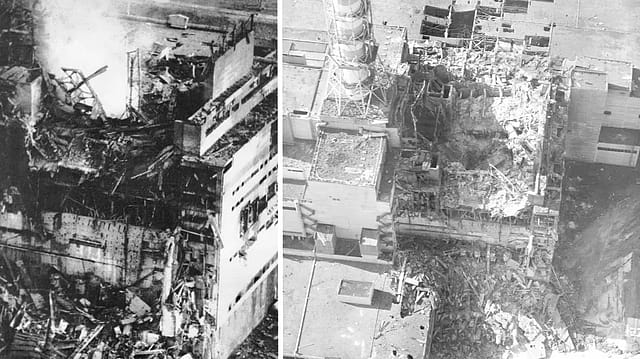
On April 26, 1986, reactor number four at the Chernobyl nuclear power plant exploded, triggering the worst civilian nuclear disaster in history.
Forty years on, the site defies easy categorisation: it is part ghost town, part accidental wildlife sanctuary, part active scientific puzzle, and now, once again, a site of fresh international concern.
Was The Chernobyl Disaster Just an Accident?
According to the International Atomic Energy Agency, the Chernobyl disaster stemmed from severe reactor design deficiencies compounded by violations of operating procedures.
The explosion sent radioactive smoke into the atmosphere for over ten days. Sweden detected the radiation spike two full days before the Soviet Union publicly acknowledged the accident on May 14, 1986.
How Many People Did It Kill?
Numbers are contested.
A 2005 UN report put confirmed and projected deaths at 4,000 across the three worst-affected countries.
Greenpeace, in 2006, estimated the number closer to 100,000. According to the UN, roughly 600,000 liquidators - the clean-up workers - were exposed to dangerously high radiation levels.
Will the Exclusion Zone Ever Be Safe to Live In?
Based on the IAEA, the 2,600-square-kilometre zone will remain uninhabitable for the next 24,000 years, driven by long-lived isotopes including Plutonium-239.

Survival Instinct
22 May 2026 - Vol 04 | Issue 72
India navigates global economic turmoil with austerity and smart diplomacy
Cesium-137 and Strontium-90 continue to persist in soil and the wider food chain.
Has Nature Quietly Taken Chernobyl Back?
According to the BBC, wolf populations inside the exclusion zone are estimated to be seven times higher than in surrounding nature reserves.
Brown bears, absent from the region for over a century, were captured on a camera trap inside the zone in 2014.
The Przewalski's horse was reintroduced in 1998 and has thrived.
Are Animals Near the Plant Evolving?
Researchers sampling over 250 tree frogs found that those inside the exclusion zone were consistently darker than those outside it, potentially due to elevated melanin levels offering protection from radiation.
A black fungus thriving inside the reactor ruins reportedly uses radiation as an energy source - though the scientific community remains sharply divided on this.
Is the Containment Structure Still Holding?
Not fully. The New Safe Confinement, a roughly 2.3-billion-dollar steel arch installed in 2016-2017, was struck by a Russian drone in February 2025.
The structure can no longer function as designed, with radioactive releases now a real possibility. Repairs are expected to take three to four years.
The EU has committed an additional 37 million euros toward restoration, bringing its total contribution toward nuclear safety in Ukraine since 1991 to over one billion euros.
What Does Chernobyl's Story Mean for Nuclear Energy's Future?
Paradoxically, 40 years after Chernobyl accelerated mass anti-nuclear movements across Europe, many nations are now pursuing a nuclear renaissance, viewing atomic energy as an essential low-carbon tool for meeting climate targets.
The site that once made the world fear nuclear power is now, in a strange way, helping the world reconsider it.
(With inputs from yMedia)