Isle of Shadows: Massive Grid Collapse Plunges Two-Thirds of Cuba into Darkness
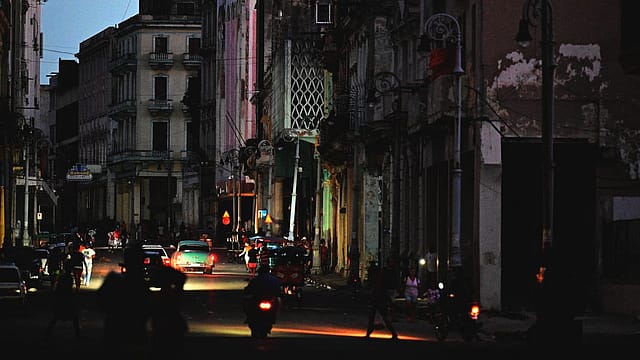
The island of Cuba finds itself in a state of freefall following a catastrophic failure of its national electrical grid on March 4, 2026.
This massive outage has knocked out electricity for approximately two-thirds of the country, plunging the capital city of Havana and various provinces from Pinar del Río to Camagüey into a state of total darkness.
While the immediate silence of the grid is jarring, it serves as the most visible symptom of a deepening fuel crisis that has been years in the making and is now being accelerated by significant geopolitical shifts, a crumbling internal infrastructure, and an unrelenting United States oil embargo.

Zeroing In on ECI
09 Oct 2026 - Vol 05 | Issue 41
Constitutional legitimacy versus political opportunism
The Events of March 4, 2026
At approximately 12:41 p.m. local time, the national electrical grid suffered a complete and sudden disconnection.
The primary trigger for this systemic failure was an unexpected shutdown at the Antonio Guiteras thermoelectric plant, which stands as the most critical power facility for the entire island.
Technical experts suggest that the government may require at least three days of intensive labor to fully restore operations across the affected regions.
A Pattern of Increasing Instability
This March 2026 collapse is not an isolated incident but rather the second major regional outage to strike the western part of the island in just three months.
It follows a significant twelve-hour blackout that occurred in December 2025. In many parts of the island, daily power cuts lasting up to twenty hours have already become the standard reality for residents.
While the fuel crisis has been building for many years, the current situation is defined by the unprecedented scale and the rapid speed of its deterioration.
The Roots of the Fuel Crisis
The current emergency is the result of a perfect storm of internal and external factors. Cuba relies on eight aging oil-fired power plants for its electricity generation, many of which are more than forty years old and suffer from chronic maintenance failures.
Simultaneously, the island and its population of 9.6 million people have been squeezed by decades of a trade embargo and a more recent maximum pressure sanctions campaign.
The United States has reportedly threatened to impose tariffs of up to 100 percent on any nation, including the Mexican state oil company Pemex, that attempts to supply oil to the island.
The Severing of the Venezuelan Lifeline
For years, Venezuela served as the primary energy lifeline for Cuba by supplying approximately 35,000 barrels of oil per day, which accounted for roughly half of the total energy needs of the island.
However, this vital supply was abruptly severed in January 2026 following a United States military operation that led to the ouster of Venezuelan President Nicolás Maduro.
Since that transition, oil shipments from Caracas to Havana have remained in a state of limbo.
President Miguel Díaz-Canel has remained firm in his stance that his government will not negotiate with Washington to secure a replacement arrangement.
The Human Toll on Daily Life
The human cost of this energy paralysis is increasingly severe as the lack of fuel has caused water pumping stations to fail and refrigerated food to spoil in homes and markets.
In the capital, only 40 percent of waste disposal trucks possess enough fuel to operate, which has resulted in rubbish piling up across the streets of Havana.
Schools and universities are periodically forced to close to conserve what little energy remains, while public transport has been drastically reduced, leaving residents increasingly reliant on tricycles and electric bicycles to navigate their daily lives.
Impact on International Connectivity
The shortage of aviation fuel has begun to sever the physical links between Cuba and the outside world.
On March 4, Air France announced the suspension of its flights to Havana, a move that follows similar announcements made by Air Canada and other international carriers over the preceding weeks.
This isolation further complicates the ability of the island to engage with the global community during this period of extreme domestic hardship.
Government Response and Geopolitical Friction
In response to the dwindling reserves, the Cuban government has suspended diesel sales, introduced strict gasoline rationing, and reduced non-emergency hospital services to prioritize fuel for essential medical and water systems.
President Díaz-Canel attributes the current suffering to what he describes as United States energy persecution.
Meanwhile, President Trump and Secretary of State Marco Rubio have made no secret of their stated goal to achieve regime change in Havana by the end of 2026.
Limited International Assistance
While some assistance has arrived, it has been limited in scope and hindered by geopolitical pressure.
Mexico successfully delivered more than 800 tons of humanitarian aid in February 2026 despite the looming threat of U.S. sanctions.
Several Caribbean nations have issued warnings to Washington stating that a total economic collapse in Cuba could destabilize the wider region, a pressure point that briefly led the United States to ease its embargo before those restrictions were ultimately reimposed.
An Uncertain Future
With its primary fuel supplier gone and its aging grid continuing to fail, the Cuban crisis shows no immediate signs of resolution.
The deadlock remains firm as the Cuban government refuses to negotiate with Washington while the Trump administration maintains its stance of maximum pressure.
As the darkness persists, the island remains caught between a crumbling domestic infrastructure and a tightening circle of international sanctions.
(With inputs from yMedia)