Is South Sudan Heading Towards Another Civil War?
South Sudan has been here before.
Two years after independence in 2011, it collapsed into a brutal civil war. A 2018 peace deal promised a new chapter. In early 2026, that promise lies in tatters, and the world's youngest nation is once again staring into the abyss.
Here’s a more detailed insight.
What is happening in South Sudan right now?
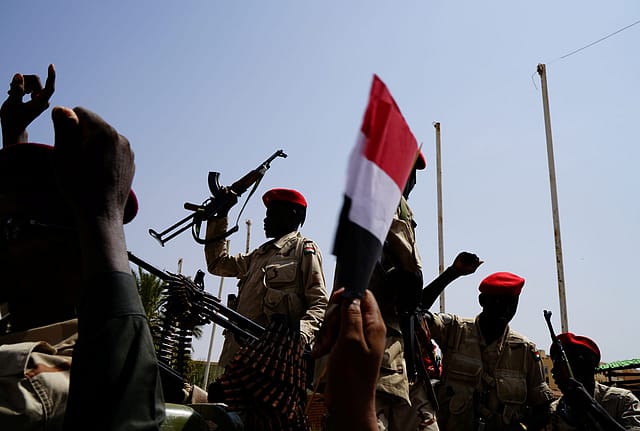
Violence has surged since late 2024, with the fiercest fighting concentrated in Jonglei state - particularly around the town of Akobo. Government forces are battling opposition militias loyal to First Vice-President Riek Machar.
Thousands have been forced to flee Akobo as the army intensifies strikes on its enemies. One survivor, a 30-year-old mother of five, told the BBC she walked two days to safety after an air strike killed both her parents. "Fire came from the sky and burned them," she said.
The Modi Years
02 Oct 2026 - Vol 05 | Issue 40
A Nation Rebuilt
Who are the main players?
The crisis centres on two men: President Salva Kiir, a Dinka, and Riek Machar, a Nuer, who served as his deputy under the 2018 power-sharing deal. Machar has been under house arrest in Juba since 2025, facing charges of murder, treason and crimes against humanity - all of which he denies. His arrest is widely seen as a political move to sideline him ahead of the 2026 elections, not a genuine legal process.
What was the 2018 peace deal, and why has it collapsed?
The Revitalised Agreement on the Resolution of the Conflict in South Sudan (R-ARCSS) ended a civil war that, according to the BBC, killed nearly 400,000 people. It created a power-sharing government. But its central requirement - unifying rival armed forces into a single national army - was never fulfilled. The security sector remains a patchwork of militias loyal to individual leaders, not the state.
What is happening in Akobo specifically?
Akobo is a key stronghold of opposition SPLA-IO forces in Jonglei. According to BBC reports, the government ordered aid agencies and around 50,000 civilians to evacuate ahead of a "second-phase" offensive. South Sudanese armed forces destroyed or contaminated approximately 99 community wells via airstrikes or deliberate poisoning, according to the UN Human Rights Office.
Opposition forces, including the predominantly Nuer White Army, had been seizing government outposts across Jonglei since December 2025, at one point threatening the state capital, Bor.
What does the UN say?
The language from the UN is stark. A February 2026 report by the UN Commission on Human Rights in South Sudan warned of "escalating atrocity risks" and a risk of "return to full-scale war." The report documented systematic sexual violence, arbitrary detentions and deliberate attacks on civilians, including aerial bombardments.
UN rights chief Volker Türk reportedly warned that civilians are "bearing the brunt of a spike in indiscriminate attacks."
How bad is the humanitarian crisis?
An estimated 280,000 people have been displaced since late December 2025, with over 235,000 from Jonglei alone. The World Food Programme reported that 60% of Jonglei's two million residents face hunger, and that 10 million out of 14 million South Sudanese need food aid. Only 400km of the country's roughly 20,000km of roads are paved, and 80% of the country becomes unreachable during the rainy season.
According to recent OCHA Flash Update data on the cholera outbreak, health partners recorded a case fatality rate (CFR) of 5.9% between 4 March and 10 March 2026.
How does the war in Sudan next door make things worse?
Roughly 90% of South Sudan's government revenue comes from oil exports routed through Sudan. Sudan's own civil war has disrupted those pipelines, causing oil exports to fall by around two-thirds. Soldiers and civil servants have gone unpaid. Additionally, more than a million refugees from Sudan have crossed into South Sudan, straining scarce resources further.
What about the December 2026 elections?
Scheduled but deeply uncertain. Reportedly, only 4% of required election funding has been released. As of March 2026, the Political Parties Council has received only about $5 million of the $33 million it requested.
There is no permanent constitution, voter registration is unresolved, and the rainy season will cut off much of the country until October - leaving almost no time. A rushed or manipulated election is more likely to trigger violence than resolve it.
Is any peace effort underway?
Regional bloc IGAD has attempted mediation, but those efforts have largely stalled. Uganda has deployed troops in support of Kiir's government, deepening regional entanglement. The US and EU have called for dialogue, but without meaningful leverage, those calls have been ignored.
What happens next?
The UN has already described the situation as a "relapse into civil war." Air strikes continue, aid agencies struggle to reach the displaced, and political will for a genuine peace process remains absent. As the WFP's acting country director told the BBC: "South Sudanese people are exhausted. They want peace." Whether they get it remains, tragically, an open question.
(With inputs from yMedia)