Why the US Senate Voted to Restrict Donald Trump’s Authority to Attack Iran
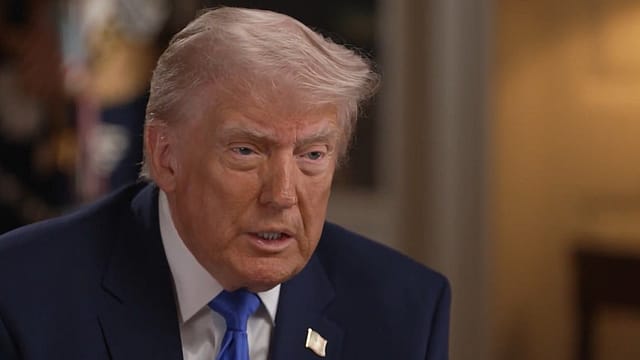
In a significant political development amid rising tensions between the United States and Iran, the US Senate has passed a resolution aimed at limiting President Donald Trump’s authority to engage in military hostilities against Tehran without congressional approval.
The move comes after seven earlier failed attempts by Senate Democrats and follows Trump’s dramatic announcement that he had postponed a planned military strike on Iran while negotiations continue.
The resolution, introduced by Democratic Senator Tim Kaine, was approved on Tuesday in a narrow 50-47 vote, according to CBS News. Four Republican senators crossed party lines to support the measure, marking the first successful Senate effort to advance such a resolution during the current Iran crisis.
What Does the Senate Resolution Actually Say?
The resolution directs the President to “remove the United States Armed Forces from hostilities within or against Iran, unless explicitly authorised by a declaration of war or a specific authorisation for use of military force.”
In essence, the measure seeks to reaffirm Congress’s constitutional authority to declare war, limiting unilateral military action by the President unless lawmakers formally approve it.
According to CBS News, Republican senators Susan Collins, Lisa Murkowski, Rand Paul and Bill Cassidy joined Democrats in voting for the resolution.
While the resolution does not automatically block military action, it increases political pressure on the White House and signals growing bipartisan concern over the possibility of another prolonged conflict in the Middle East.

Exclusive: To the Heavens and Back
19 Jun 2026 - Vol 04 | Issue 76
Shubhanshu Shukla relives the space odyssey that put India into orbit
Why Are Democrats Calling the Conflict “Unconstitutional”?
Following the vote, Democratic Senator Adam Schiff celebrated the outcome and accused the administration of bypassing constitutional checks on war powers.
“Today, Senate Democrats once again forced a vote to demand an end to this unconstitutional war. After seven failed attempts, I am thankful that my Republican colleagues have joined in bringing our War Powers Resolution to the Floor and exercising our constitutional responsibility to declare war,” Schiff wrote on X.
Democrats have argued that any major military operation against Iran requires direct congressional authorisation under the US Constitution and the War Powers Act.
The latest Senate vote reflects growing unease in Washington over the possibility of escalation with Tehran, particularly as negotiations remain underway.
Why Did Bernie Sanders Back the Resolution?
Independent Senator Bernie Sanders also welcomed the Senate’s decision, framing it as a rejection of endless military engagements abroad.
“Finally, Senate Republicans are starting to listen to their constituents. The American people do not want to spend billions on endless wars. They want to address the enormous crises facing our country. We must end this unconstitutional war,” Sanders said in a post on X.
Sanders has long opposed US military interventions in the Middle East and has repeatedly warned against entering another large-scale conflict in the region.
What Triggered the Push to Restrict Trump’s War Powers?
The Senate action comes shortly after President Donald Trump revealed that the United States had prepared a military strike on Iran but ultimately delayed the operation following appeals from Gulf leaders.
In a lengthy Truth Social post, Trump said the Emir of Qatar, Sheikh Tamim bin Hamad Al Thani, Saudi Crown Prince Mohammed bin Salman and UAE President Mohamed bin Zayed Al Nahyan personally requested that Washington pause military action to allow diplomacy to continue.
“I have been asked by the Emir of Qatar, Tamim bin Hamad Al Thani, the Crown Prince of Saudi Arabia, Mohammed bin Salman Al Saud, and the president of the United Arab Emirates, Mohamed bin Zayed Al Nahyan, to hold off on our planned military attack of the Islamic Republic of Iran, which was scheduled for tomorrow, in that serious negotiations are now taking place, and that, in their opinion, as Great Leaders and Allies, a Deal will be made, which will be very acceptable to the United States of America, as well as all Countries in the Middle East, and beyond,” Trump wrote.
He added that any future agreement must ensure that Iran does not acquire nuclear weapons.
“This Deal will include, importantly, NO NUCLEAR WEAPONS FOR IRAN!”
Is the Threat of Military Action Against Iran Still Active?
Despite pausing the planned strike, Trump made clear that the US military remains on high alert and prepared for immediate action if negotiations collapse.
“Based on my respect for the above mentioned Leaders, I have instructed Secretary of War, Pete Hegseth, The Chairman of The Joint Chiefs of Staff, General Daniel Caine, and The United States Military, that we will NOT be doing the scheduled attack of Iran tomorrow, but have further instructed them to be prepared to go forward with a full, large scale assault of Iran, on a moment’s notice, in the event that an acceptable Deal is not reached.”
The statement underscored the fragile nature of ongoing diplomacy and the continuing possibility of military escalation in the region.
What Happens Next?
The Senate resolution represents a symbolic but politically important challenge to the White House’s military authority. It also reflects growing bipartisan concern about entering another conflict in the Middle East without congressional approval.
However, the situation remains fluid. With negotiations between Washington and Tehran continuing, and Trump simultaneously threatening large-scale military action if talks fail, the coming days could prove critical for regional stability.
The vote also signals that opposition to unilateral military action against Iran is no longer confined to Democrats alone, with a small but notable group of Republicans now publicly backing congressional oversight on war powers.
(With inputs from ANI)