Iranian Airstrikes Cause $800 Million Damage to US Bases in Two Weeks: Report
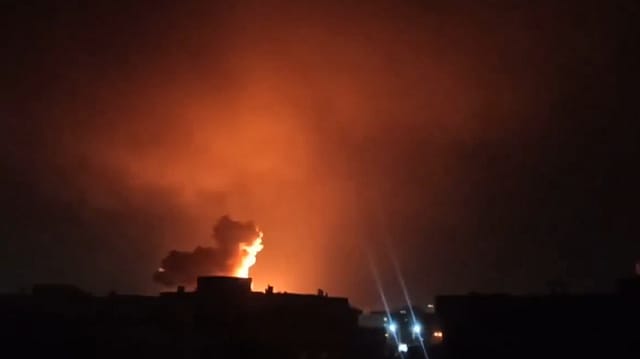
Iranian airstrikes on United States military bases in the Middle East have caused an estimated $800 million (about Rs 75 crore) in damage in the first two weeks of the war, according to an analysis by the BBC based on a report by the Center for Strategic and International Studies (CSIS).
The report found that much of the damage occurred during Tehran’s retaliatory strikes in the week following coordinated airstrikes launched by the US and Israel on February 28.

Zeroing In on ECI
09 Oct 2026 - Vol 05 | Issue 41
Constitutional legitimacy versus political opportunism
While the full extent of the damage to US assets in the Gulf region remains unclear, the estimate offers an early indication of the potential cost of a prolonged conflict.
"The damage to US bases in the region has been underreported," a BBC report quoted Mark Cancian, co-author of the CSIS study, as saying. "Although that appears to be extensive, the full amount won't be known until more information is available."
In a separate incident, a commercial vessel reported an explosion near the Strait of Hormuz after being struck by what British maritime authorities described as an "unknown projectile" off the coast of the United Arab Emirates.
How Did Iranian Airstrikes Impact US Bases Near Key Gulf Shipping Routes?
The UK Maritime Trade Operations said the incident occurred about 15 nautical miles north of Sharjah and involved a bulk carrier navigating a critical Gulf shipping route.
Iran has targeted US air defence and satellite communication systems across the region, including in Jordan and the United Arab Emirates.
A radar system for a Terminal High Altitude Area Defense (THAAD) system at a US air base in Jordan sustained heavy damage.
According to a CSIS review of defence department budget documents, the radar system is valued at approximately $485 million.
Damage to buildings and infrastructure at US air bases across the Middle East has been estimated at an additional $310 million, the study found.
Satellite imagery analysed by the BBC indicates that Iran struck at least three air bases multiple times.
These include Ali Al-Salim base in Kuwait, Al-Udeid in Qatar and Prince Sultan Air Base in Saudi Arabia, all of which showed fresh damage at different stages of the conflict.
How Are Iranian Airstrikes Targeting Radar and Satellite Systems Across US Bases?
The conflict has also resulted in casualties. The United States has lost 13 military service members since the war began, while the US-based Human Rights Activists News Agency estimates the overall death toll has reached nearly 3,200, including about 1,400 civilians.
US President Donald Trump said the country is progressing towards its objective of dismantling Iran’s nuclear programme. "We're doing extremely well in Iran," he said.
Tehran has responded not only with airstrikes but also by blocking the Strait of Hormuz, a key maritime route through which 20 per cent of global oil supplies pass.
The blockade has raised concerns over global energy security and fuelled uncertainty about the duration of the conflict, with speculation growing over whether the US will deploy ground troops to reopen the passage.
Further analysis of targeted installations shows a focus on radar and satellite systems.
Satellite imagery following Iranian strikes on a US naval base in Bahrain revealed the destruction of two radomes, which are protective structures for sensitive equipment.
Why Did Iranian Airstrikes Force US to Redeploy THAAD Components from South Korea?
The BBC report said it is "highly probable" that these systems were damaged, though the assessment was limited by restrictions on US-based satellite imagery providers.
Additional radar sites were hit at Camp Arifjan in Kuwait and at Prince Sultan Air Base in Saudi Arabia, where US aircraft are stationed.
Imagery from Prince Sultan showed smoke rising from a radar component associated with a Thaad system.
The BBC also reported extensive damage to Thaad systems at US bases in the United Arab Emirates and Jordan, though the cost of this damage remains unclear.
The damage forced the US to redeploy Thaad components from South Korea to the Middle East.
The financial cost of the war continues to mount. US Department of Defense officials have briefed Congress that the first six days of the conflict cost $11.3 billion, while the first 12 days cost $16.5 billion, according to CSIS.
The Pentagon has requested an additional $200 billion in war funding. Defence Secretary Pete Hegseth said the figure "could move". "It takes money to kill bad guys," he said.
(With inputs from ANI)