Inside Superfood: Why Has This Become a $202 Billion Industry?
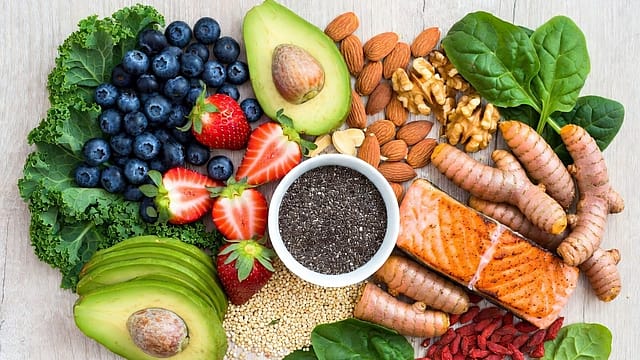
Superfoods now power a billion-dollar global industry. According to Future Market Insights, the superfoods market is expanding at 7.7% annually. From antioxidant-rich berries to protein-packed grains, they promise concentrated nutrition, with superfruits driving the majority of sales. Yet as demand rises, experts continue to question whether real health gains match the scale of the hype.
Here’s a more detailed look.
What Are Superfoods?
Superfoods are nutrient-dense foods that deliver exceptional vitamins, minerals, and antioxidants relative to their caloric content. The category spans berries, leafy greens, fatty fish, nuts, seeds, and ancient grains.
What Makes a Food a True Power Food?
Three properties define a true power food. High nutrient density, antioxidant capacity to neutralize cell-damaging free radicals, and phytochemical richness, including compounds such as polyphenols and flavonoids, which are linked to reduced inflammation.
Which Superfruit Dominates the Market?
According to Precedence Research, superfruits account for approximately 38% of global superfood revenue in 2025. Berries and avocados lead, with acai and dragon fruit gaining ground, largely through social media visibility.
Is There a Supergrain Worth the Hype?
Quinoa and amaranth, both classified as supergrains, have crossed into mainstream retail. Their complete amino acid profiles and high fiber content align with the plant-based protein shift, which reportedly accounts for roughly 15% of the global superfood market share.

Open Minds 2026
26 Jun 2026 - Vol 05 | Issue 26
The power of ideas and arguments in 50 portraits
Why Has This Become a $202 Billion Industry?
Based on Fortune Business Insights, the global superfoods market is estimated at $202.10 billion in 2025, with projections reaching $339.59 billion by 2032. The category grows at roughly 7.7% annually, outpacing most traditional packaged food sectors.
Can Super Foods Actually Prevent Disease?
Research on compounds such as sulforaphane in broccoli has explored its anti-cancer properties. The FDA has issued qualified health claims linking omega-3 fatty acids to cardiovascular health, providing scientific grounding for foods like salmon and flaxseeds.
Why Are Longevity and Preventive Health Driving Interest in These Foods?
As chronic lifestyle diseases rise globally, super ood is increasingly viewed as a first line of defense. According to PepsiCo Partners, over 80% of consumers now prioritize gut health, while Blue Zone research has linked specific dietary staples to significantly longer, disease-resistant lives.
What Does the Future of Super Foods Look Like?
Longevity research tied to Blue Zone populations is shifting focus from exotic imports to affordable, culturally embedded staples. The 50-plus demographic is emerging as a key growth segment, with demand rising for nutrient-dense blends addressing age-related malabsorption.
(With inputs from yMedia)