What Did Iran Mean by a 'New Phase of the War'?
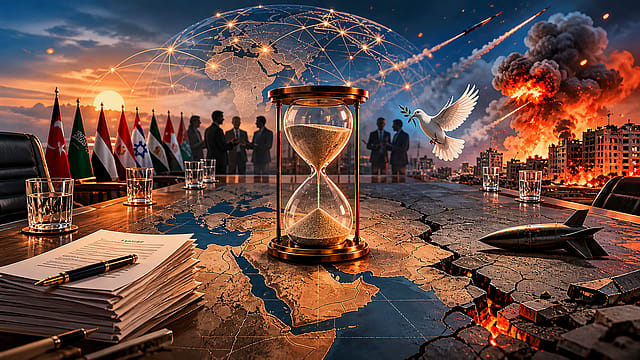
Iran's Parliament Speaker, Mohammad Baqer Ghalibaf, has accused the United States of attempting to weaken Iran through economic pressure and media influence, describing any effort to force Tehran into surrender as a "false dream."
His remarks come amid continued tensions involving Iran, the United States and Israel, with Tehran portraying the current situation as a new stage in a broader confrontation that extends beyond the military arena.
Speaking during the opening session of the third year of Iran's 12th parliament, Ghalibaf argued that Iran is facing a multidimensional challenge that includes political, economic and information warfare.
Why Does Iran Believe It Is Facing a 'New Phase of the War'?
Ghalibaf claimed that Iran's adversaries are now focusing on weakening the country internally after failing to achieve their objectives through military means.
The Vanguard
21 Aug 2026 - Vol 05 | Issue 34
BJP Rearmed for 2029
"In the new phase of the war, the enemy is seeking to create discord and destroy the country's cohesion through economic pressure and media manipulation in order to compensate for its military defeat and force us to surrender; what a false dream!"
Although he did not explicitly name the parties involved in that statement, his comments were widely interpreted as referring to the United States and Israel.
According to Ghalibaf, the objective of these efforts is to create divisions within Iranian society and undermine national unity.
How Is Iran Framing the Current Confrontation?
The Iranian parliament speaker presented the conflict as a historic moment requiring national resistance.
"Today, the great and history-making nation of Iran knows that they are standing at a sensitive and historical point that future generations will regret, and for this reason, they are resisting the executioner and murderer enemy who are bent on destroying Iran and Islam so that Iranians can be proud of their fathers and mothers in the years to come."
His comments reflect the Iranian leadership's broader narrative that the country is defending its sovereignty and national identity against external pressure.
What Are the 'Four Arenas' of Struggle Identified by Iran?
Ghalibaf argued that the confrontation extends beyond military operations and includes several interconnected fronts.
"In this decisive war, the military battlefield, the street battlefield, the diplomacy battlefield, and the service to the people battlefield are four arenas of a full-fledged struggle."
According to his assessment, military strength alone is insufficient. Public support, diplomatic engagement and governance also play critical roles in determining the outcome of the broader conflict.
This framing suggests Iran views economic management, public morale and international diplomacy as equally important components of its strategy.
What Role Does Iran's Missile Programme Play?
Ghalibaf highlighted Iran's military achievements, particularly its missile capabilities, as a product of public backing and national resilience.
"What has been achieved in the military field and with our missiles has been with the support and backing of the people, and the job of diplomacy is to turn these victories into political and legal achievements, and the duty of the service field is to solve the problems of the people with the support of these victories."
The statement reflects Tehran's longstanding position that its military capabilities strengthen its negotiating leverage and national security.
What Is Iran's Message on Future Agreements?
The parliament speaker also delivered a strong message regarding negotiations with external powers.
"In this path, as I have repeatedly stated, the soldiers of the battlefield of diplomacy have no trust in the words and promises of the enemy."
He stressed that Iran would judge negotiations based on tangible outcomes rather than assurances.
"What the criterion is for us is the concrete achievements that we must achieve in order to fulfil our commitments in return, and we will not approve any agreement until we are sure that we have taken the rights of the Iranian people."
The comments indicate that Iranian leaders remain cautious about future diplomatic arrangements and are likely to insist on verifiable benefits before supporting any new agreement.
What Does This Mean Going Forward?
Ghalibaf's remarks underscore Iran's increasingly confrontational rhetoric amid ongoing regional tensions. By describing economic pressure and media influence as tools of conflict, Tehran is signalling that it views the current challenge as extending far beyond conventional military operations.
At the same time, the speech suggests that Iran intends to maintain a firm negotiating position, insisting that any future agreement must deliver what it sees as concrete benefits and protections for the Iranian people before receiving parliamentary approval.
(With inputs from ANI)