India-US Trade Talks Gain Momentum as Washington Signals Deal Is Close
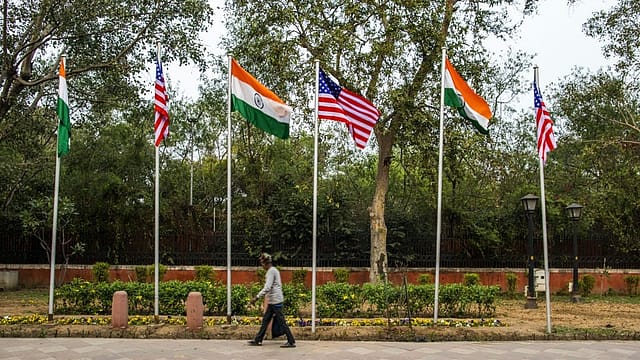
As India and the United States move closer to finalising an interim trade agreement, several American lawmakers have reaffirmed the importance of the bilateral relationship, even as debates continue over tariffs, market access and trade imbalances.
The discussions come at a crucial moment for both countries, with trade negotiations advancing alongside broader cooperation on security, counterterrorism and regional stability.
Trade Differences Remain a Key Challenge
Kansas Senator Roger Marshall acknowledged that significant hurdles remain in the ongoing trade talks, particularly regarding tariffs and trade deficits.
"There are some challenges when it comes to the trade agreement. There's a USD 50 billion imbalance between the two countries... There's some work to be done. I'm optimistic for opportunities like ethanol... For years, India has built up walls and tariffs for American goods coming into India. So if you want us to buy the products you're making, frankly, then we hope that you will return that trade back to us as well," he said.

Look Who's Talking Regime Change
23 Oct 2026 - Vol 05 | Issue 43
Marshall argued that reducing trade barriers could help unlock new economic opportunities for both nations.
Why Lawmakers Still See India as a Crucial Partner
Despite disagreements over trade, Marshall expressed strong confidence in the future of the relationship.
"I couldn't be more excited about the relationship between India and America. We share so many of the same values...Then you throw on top of that that we're both democracies and we want a free world. We have this opportunity to stick together in so many ways. Sure, there's friction. There's always going to be friction, just like a family has friction,” he said.
His remarks reflect a broader consensus in Washington that India remains one of America's most important strategic partners.
Concerns Over the Direction of Bilateral Relations
Congressman Suhas Subramanyam argued that recent policies have strained ties and called for renewed engagement.
"This administration has been very harmful to the US-India relationship. And so now we're trying to re-engage and recommit to that relationship. It's one of the most important relationships in the world,” he said.
He stressed that cooperation should extend beyond trade.
"We need to make sure that the US and India are on the same page when it comes to countering terrorism, when it comes to economic gains and economic trade. We also need to make sure that as we look to counter China, India is a partner in that and try to normalise relationships there,” he added.
Debate Over Tariffs Continues
Several lawmakers criticised the tariff policies pursued by the Trump administration and warned about their economic consequences.
Congressman Brad Sherman called for a return to more predictable trade ties.
"This administration began with the crippling tariffs, and I hope very much that we can restore normal trade relations between the United States and India. It's important for both economies, and it's important for our geostrategic relationship," he said.
Congressman Raja Krishnamoorthi echoed those concerns.
"President Trump has unnecessarily picked trade wars with a number of our friends, partners and allies... The net result is higher prices for Americans. As long as these trade wars and blanket tariffs are in place, we're basically going to be cutting off our nose to spite our face,” he said.
Indian-Americans and Concerns About Xenophobia
The lawmakers also addressed recent incidents involving hostility toward immigrant and minority communities.
Sherman said, "There are certain elements of the MAGA community that are just anti-everybody. That includes Indo Americans. We've dealt with xenophobia in our country, but this is the most welcoming country in the world over the last 250 years, and every immigrant group has faced some degree of discrimination..."
Krishnamoorthi referenced a recent incident in Texas involving anti-India rhetoric.
"We saw that in Texas, where a group of white supremacists got in front of the city hall and tore up an Indian flag and told people who hail from India to go back. They said that there's a Hindu takeover of Texas. They've spouted all kinds of other nonsensical rhetoric. We have to stand up against prejudice toward anybody... We have to make sure that everyone understands that it is un-American, has no place in America," he said.
How Close Is the Trade Deal?
According to US Deputy Assistant Secretary in the Bureau of South and Central Asian Affairs Bethany Poulos Morrison, negotiations are approaching the finish line.
"Looking at trade, in February 2026, we announced the intention to finally conclude the historic trade deal. We are very, very close,” said Morrison.
Morrison said the agreement is expected to provide greater access for American products to India's market while advancing broader economic goals.
"This is going to open India's market of 1.4 billion to America's goods on terms that are reciprocal and mutually beneficial. The administration is driving towards the goal of Mission 500, 500 billion in trade by 2030, with a real sense of urgency," she said.
The Bigger Picture
While trade disputes and tariff disagreements remain unresolved, the comments from lawmakers across party lines highlight a shared belief that India-US relations are too important to be defined by economic friction alone. Strategic cooperation, counterterrorism efforts, regional stability and balancing China's influence continue to drive the partnership, even as negotiators work toward a landmark trade agreement.
(With inputs from ANI)