Is Britain Now at War with Russia? Lavrov’s Warning Over UK Drones Explained
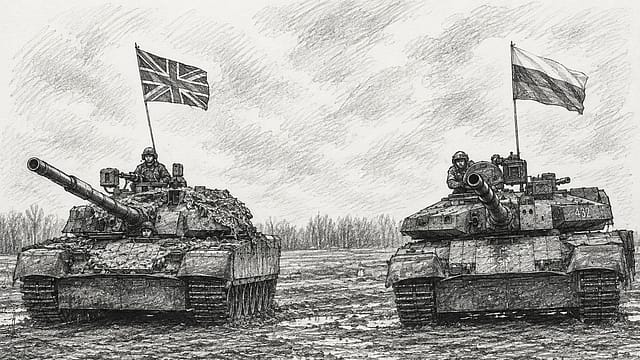
British weapons have been striking Russian targets for years. Moscow has repeatedly threatened retaliation. This time, however, Russia has sharpened the accusation.
Foreign Minister Sergey Lavrov says the “direct involvement of British missile forces” in attacks on Russia can be treated as participation in the war, “with all the consequences that entail”.
The warning followed reports that British-made drones had been used for Ukrainian strikes deep inside Russia. Moscow’s embassy in London accused Britain of becoming an “accomplice and co-perpetrator” and warned that it would have to pay for escalating the conflict.
Britain has refused to retreat. Prime Minister Andy Burnham said London would continue to support Ukraine “100 per cent” and would not become a “fair-weather” friend in Kyiv’s hour of need. Does Lavrov’s warning mean Britain and Russia are now at war? What exactly has the UK supplied, and what “consequences” could Moscow be threatening?
Rise of the Pivotal Power
18 Sep 2026 - Vol 05 | Issue 38
The BRICS declaration is a strategic victory for Modi
What did Sergey Lavrov say?
Lavrov said Russia had the right to regard the proclaimed involvement of British missile forces in strikes against Russian territory as direct participation in the war. “I feel sorry for Britain if it intends to stand with Ukraine to the bitter end,” he said before adding that such participation would carry consequences. The Russian Foreign Ministry published his remarks after he responded to a question from the Russian television programme Vesti. The formulation matters. Lavrov did not merely accuse Britain of supplying arms. He alleged that British forces were directly involved in attacks. Moscow has not, however, publicly produced evidence demonstrating that British military personnel launched a weapon, selected a target or controlled a Ukrainian strike.
Why has Russia issued the warning now?
The immediate trigger was a report that Ukraine had used drones made by British companies to attack targets inside Russia. The Russian embassy in London accused Westminster of deliberately escalating the war and acting as a co-perpetrator in Ukrainian attacks. It warned that Britain’s decisions would carry unspecified consequences. The UK Ministry of Defence did not publicly confirm the details of the reported drone strikes, according to the Financial Times, but reiterated Britain’s commitment to supporting Ukraine. The warning also comes as Ukraine intensifies long-range attacks on Russian oil, industrial and logistics infrastructure. Those strikes are increasing the economic and psychological cost of the war for Moscow and taking the conflict closer to major Russian population centres.
Which British drones has Ukraine reportedly used?
The Guardian reported that two British-made drone models were involved, although only one, the Nyan developed by BAE Systems, had been publicly identified. The Nyan is described as a jet-powered, delta-wing drone costing about £100,000 and capable of carrying out strikes at distances beyond 150 miles. It is considerably cheaper than a Storm Shadow cruise missile, which can cost more than £1 million. The distinction matters because Ukraine is attempting to conduct sustained attacks rather than occasional high-cost missile strikes. Relatively inexpensive drones can be launched in larger numbers, stretch Russian air defences and repeatedly target refineries, depots, factories and logistics centres. Britain has committed to supplying Ukraine with 150,000 drones by the end of 2026 under a £752-million package. The British government says the equipment is intended to help Ukraine defend its sovereignty against Russia’s invasion.
Has Britain supplied long-range weapons before?
Yes. Britain announced the transfer of Storm Shadow cruise missiles to Ukraine in 2023, becoming one of Kyiv’s most important suppliers of long-range precision weapons. Storm Shadow gave Ukraine the ability to strike command centres, ammunition depots, bridges and other targets far behind Russian lines. London later backed Ukraine’s use of the missiles against military targets inside Russia. The UK has also supplied Challenger 2 tanks, air-defence missiles, artillery ammunition, training and intelligence support. British assistance is therefore not new. What has changed is the frequency and reach of Ukrainian attacks, along with Moscow’s more explicit claim that British personnel may be participating directly.
What does Lavrov mean by “British missile forces”?
That remains unclear. The phrase could refer to British personnel allegedly helping with targeting, mission planning, software, intelligence or the technical operation of weapons supplied to Ukraine. Russia has long argued that Kyiv cannot operate some advanced Western systems without assistance from specialists belonging to the supplying country. There is a crucial difference between providing a weapon and directly helping execute a strike. The latter would move closer to active military participation. But Lavrov did not provide verifiable details establishing who these alleged British personnel were, where they operated or what role they played. Britain has not acknowledged that its forces launched attacks on Russian territory. Until evidence emerges, “British missile forces” should be treated as Moscow’s allegation rather than an established fact.
Does supplying weapons make Britain a party to the war?
Not by itself. The International Committee of the Red Cross says a state does not become a party to an armed conflict solely because it supplies weapons or military equipment to one of the belligerents. The legal position becomes more complicated if personnel from the supplying country begin selecting targets, directing operations or taking part in attacks. The ICRC says the assessment can depend on whether a supporting state also coordinates or helps plan military activity to such an extent that it exercises a level of control over the recipient’s operations. Britain argues that it is assisting Ukraine in exercising its right to self-defence under the UN Charter. NATO maintains that supplying equipment and training does not make the alliance a party to the conflict. Its Ukraine assistance mechanism operates on Allied territory for precisely that reason. Lavrov’s declaration is, therefore, a political and strategic warning. It does not, on its own, settle Britain’s legal status.
Can Ukraine legally strike targets inside Russia with British weapons?
Ukraine has the right to defend itself against Russia’s invasion under Article 51 of the UN Charter. That right is not necessarily confined to Ukrainian territory. Military targets inside Russia that support attacks on Ukraine can, in principle, be struck as part of self-defence. But every attack must still comply with international humanitarian law, including the requirements of distinction, proportionality and precautions to protect civilians. That means the legality of a strike depends on its target, expected military advantage and likely civilian harm. The country that manufactured the weapon does not determine whether a specific attack is lawful. Russia argues that many Ukrainian attacks constitute terrorism because they hit economic infrastructure or harm civilians. Ukraine says it is targeting facilities that finance, supply or sustain Moscow’s war machine. Each incident requires a separate factual and legal assessment.
What has Ukraine been striking inside Russia?
Ukraine has expanded attacks against oil refineries, fuel terminals, military factories, air bases, ammunition depots, railways and logistics facilities. President Volodymyr Zelenskyy said Ukrainian forces recently struck an oil facility at Ust-Luga near the Estonian border and Russia’s Progress rocket and space centre. Ukrainian drones reportedly also set fire to a major logistics centre near Moscow as Kyiv sought to stretch Russian air defences, disrupt economic activity and make the effects of the war more visible to the Russian public. Ukraine presents the campaign as a way to weaken Russia’s military resources and force Moscow towards negotiations. Russia views it as evidence that Western weapons and support are taking the war deeper into its territory.
What “consequences” could Russia impose on Britain?
Lavrov did not specify them, which may be deliberate. Ambiguity allows Russia to threaten escalation without committing itself to a particular response. The options range from diplomatic and covert pressure to far more dangerous military action. Russia could intensify cyberattacks, disinformation, espionage, sabotage allegations or harassment of British military assets. It could target British-made equipment and foreign personnel inside Ukraine. It may also increase naval or air activity near Britain and other NATO countries. A direct Russian military strike on British territory would mark a dramatic escalation. Britain is a NATO member, and an armed attack could bring Article 5 of the North Atlantic Treaty into play. Article 5 treats an armed attack on one member as an attack on all. It does not prescribe one automatic military response, but it obliges every ally to assist with whatever action it considers necessary, potentially including armed force. That risk makes a deliberate Russian strike on Britain far more consequential than retaliation against a weapons system inside Ukraine.
Why is Britain refusing to back down?
Burnham has framed British support as a defence of Ukraine against an illegal invasion rather than participation in a war against Russia. “This is the UK doing what it has long said it would do, which is to support Ukraine 100 per cent,” the British prime minister said. “We are providing support so that Ukraine can defend itself.” London also knows that yielding after a Russian threat could encourage Moscow to issue similar warnings whenever a Western country supplies a new weapon. Britain’s position is that Russia can end the conflict by withdrawing its forces, while Ukraine should not be denied the means to defend itself merely because Moscow threatens the country providing them.
Is Lavrov’s warning mainly military or political?
It is both, but the immediate purpose appears heavily political. Russia wants to raise the perceived cost of British support, frighten the public, sharpen arguments over escalation and weaken Western willingness to arm Ukraine. The Guardian noted that Britain has previously supplied more militarily significant systems, including Storm Shadow missiles. The new drones are cheaper and useful, but they do not by themselves transform the battlefield. What has changed is Ukraine’s ability to conduct sustained strikes deep inside Russia. By highlighting British involvement, Moscow can portray those attacks as a widening Western war rather than a Ukrainian campaign. Lavrov’s language also gives Russia room to justify future retaliatory measures as a response to British “participation”.
So, are Britain and Russia now at war?
No formal state of war exists between them, and Britain does not accept that it has become a party to the Russia-Ukraine conflict. Arms supplies alone do not make that claim true under international humanitarian law. There is also no publicly verified evidence that British forces directly carried out the reported strikes. But the danger should not be dismissed as empty theatre. The more Western intelligence, weapons and technical expertise become integrated into Ukrainian long-range operations, the more room Russia has to allege direct participation. Every attack deep inside Russia increases the risk of miscalculation, covert retaliation or an incident involving NATO forces. Lavrov has not declared war on Britain. He has drawn another deliberately blurred red line and left Moscow to decide when it believes that line has been crossed.
(With inputs from ANI)