Eat the Same, Weigh Less? The Low-Fat Vegan Diet’s 357-Calorie Trick Explained
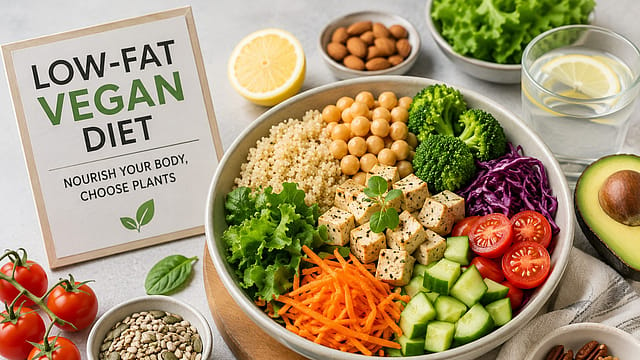
The plate did not shrink. The calories did. In a 16-week trial, adults following a low-fat vegan diet continued eating approximately the same amount of food by weight. But replacing meat, dairy, eggs and calorie-dense fats with vegetables, fruits, grains and legumes reduced the energy packed into that food by about 30%.
The result was an unplanned calorie deficit and substantial weight loss, even though participants were never given calorie targets or asked to cut their portions. That sounds suspiciously like the diet fantasy sold in late-night advertisements: eat until satisfied and still lose weight. The science is less miraculous but more interesting. Participants did not cheat the calorie equation. They changed what occupied the plate, allowing its weight and volume to remain similar while the calories inside it tumbled.
Rise of the Pivotal Power
18 Sep 2026 - Vol 05 | Issue 38
The BRICS declaration is a strategic victory for Modi
What exactly did the new study find?
The study, published in JAMA Network Open, analysed dietary data from a randomised clinical trial involving 244 adults with overweight. Of them, 223 completed the study. Half were assigned to a low-fat vegan diet built around fruits, vegetables, grains and legumes. The control group was asked to continue its usual diet. Neither group received a calorie limit. After 16 weeks, the calorie density of the vegan group’s food had fallen by approximately 30%. The total weight of food participants ate did not change significantly, but their reported calorie intake dropped sharply. The reduction in calorie intake was 357 calories per day greater in the vegan group than in the control group.
Did participants really cut 357 calories without noticing?
The headline number requires a little unpacking. Those following the vegan diet reported reducing their daily intake by approximately 491 calories. The control group also reported a decline of about 134 calories. The difference between those changes was approximately 357 calories a day. So, 357 was the estimated additional reduction associated with the vegan intervention compared with continuing the usual diet. It was not the vegan group’s total calorie reduction. The participants knew they were changing their diet, but they were not instructed to count calories, pursue a daily deficit or stop eating after reaching a prescribed limit. The lower intake emerged from the foods they chose.
How much weight did they lose?
The original trial results, published in JAMA Network Open in 2020, found that participants assigned to the low-fat vegan diet lost an average of 6.4 kg over 16 weeks. The control group lost approximately 0.5 kg. That produced an average difference of 5.9 kg between the groups. The vegan group also recorded a reduction in fat mass and improvements in insulin sensitivity. The 2026 paper does not report a fresh clinical trial. It is a secondary analysis of that earlier experiment, using the participants’ food records to investigate why the weight loss may have occurred. Its answer is dietary energy density.
What is energy density?
Energy density measures how many calories are packed into each gram of food. One hundred grams of leafy vegetables contains relatively few calories because much of the weight comes from water and fibre. One hundred grams of oil, butter, cheese, fried snacks or chocolate contains far more because fat carries a large quantity of energy in a small physical volume. In the trial, the vegan group’s average dietary energy density fell from approximately 1.1 calories per gram to 0.7 calories per gram. That meant a similarly heavy plate delivered substantially less energy. Lead researcher Hana Kahleova described the mechanism simply: water- and fibre-rich plant foods allow people to fill their plates and feel satisfied while consuming fewer calories.
How can someone eat the same amount but consume fewer calories?
Imagine replacing a portion of cheese, butter and meat with beans, vegetables, fruit and a whole grain. The replacement food may occupy as much space and weigh just as much, or even more. But water and fibre add bulk without adding calories at the rate delivered by fat. The stomach responds partly to physical volume. A larger quantity of low-energy-density food can therefore generate fullness before calorie intake climbs as high as it would with a smaller portion of energy-dense food. Participants in the vegan group increased their consumption of vegetables, fruit and legumes while almost entirely eliminating meat, dairy and eggs. They also substantially reduced nuts and added fats, which are vegan but calorie-dense. That last detail is important. The result did not come merely from removing animal products. It came from adopting a specifically low-fat, predominantly whole-food vegan diet.
Does this mean calories no longer matter?
No. Calories remain central to weight change. The participants lost weight because they consumed less energy than before. They simply created that deficit without deliberately counting every calorie or shrinking the physical amount of food they ate. The diet altered the route to the deficit. Traditional dieting often begins with a fixed calorie target and asks people to police their portions. The energy-density approach begins with food composition and allows the lower calorie intake to follow more naturally. The study challenges calorie counting as the only practical method. It does not repeal the underlying energy equation.
Does “eat freely” mean unlimited food?
No. The study used the term ad libitum, meaning participants could eat until satisfied without a prescribed calorie ceiling. It did not mean that every vegan food could be consumed without consequence. French fries, chips, vegan desserts, refined bread, sugary drinks, coconut products and large quantities of oil or nut butter can all be vegan and highly energy-dense. Eating them freely may not reproduce the study’s result. The intervention emphasised fruits, vegetables, grains and legumes while keeping fat intake low. The composition of the plate did the work. “Vegan” was therefore only one part of the formula. Low fat, high fibre and high water content were equally important.
Which foods drove the calorie reduction?
Removing animal foods accounted for a substantial part of the shift. By week 16, calories from meat, poultry, fish and shellfish had fallen by about 195 a day in the vegan group. Calories from dairy dropped by approximately 166, while those from eggs virtually disappeared. The group also consumed around 145 fewer daily calories from nuts and fats and approximately 116 fewer from sweets and desserts. At the same time, participants increased vegetables by about 143 grams a day, fruit by roughly 80 grams and legumes by around 74 grams. The important swap was therefore broader than steak for salad. The participants cut several concentrated sources of calories and replaced much of that space with high-volume plant foods.
Is this effect unique to vegan diets?
Probably not. A vegan diet offers a direct way to reduce energy density because fruits, vegetables and legumes naturally occupy a central role, while meat, cheese and other animal foods disappear. But the mechanism itself is not exclusively vegan. An omnivorous diet can also lower its energy density by increasing vegetables, fruit, pulses, whole grains and broth-based dishes while reducing fried food, added fats, sweets and heavily processed snacks. Conversely, a poorly designed vegan diet can remain extremely calorie-dense. The larger lesson is not simply “animal products make people fat”. It is that food volume, water, fibre and fat content can alter calorie intake even when the eater is not performing arithmetic at every meal.
Why did energy density matter even after calorie intake was considered?
Researchers found that larger reductions in energy density were associated with greater weight loss. That relationship remained statistically significant after they adjusted for the reported change in calories. They argue this suggests energy density may influence weight through appetite regulation and the way people respond to food volume, rather than acting solely as another label for calorie restriction. But this part of the analysis shows an association within the trial. It does not prove that energy density possesses a calorie-independent weight-loss power. Self-reported intake is imprecise, and statistical adjustment cannot capture every metabolic or behavioural change.
How strong is the evidence?
The randomised design is a major strength. Participants were assigned to groups, reducing the likelihood that pre-existing lifestyle differences entirely explained the result. The study also retained 91% of participants, a strong completion rate for a dietary intervention. There are important limitations. The experiment lasted only 16 weeks, so it cannot reveal whether people will follow the diet or maintain the weight loss for several years. Participants were research volunteers and may have been more motivated than the wider population. Food intake was calculated from three-day diaries completed at the beginning and end of the study. Participants were not housed in a research facility where every meal could be weighed and observed. People frequently forget or underreport what they eat. The new paper was also an ad hoc secondary analysis. Energy density was not the original trial’s principal question and was calculated years later from previously collected data.
Who funded the research?
The Physicians Committee for Responsible Medicine funded the study, and most authors were affiliated with the organisation. PCRM promotes plant-based nutrition and operates educational and clinical programmes built around that approach. JAMA’s disclosures state that statistician Richard Holubkov received consulting fees from PCRM. Co-author Neal Barnard serves without financial compensation as president of PCRM and the Barnard Medical Center and earns royalties and honoraria from nutrition-related books and lectures. The journal states that the funder had no role in the study’s design, data collection, analysis, interpretation or publication decision. The affiliation does not invalidate the findings, which underwent journal review. But it is relevant context, particularly when the organisation’s press release uses stronger promotional language than the scientific paper.
Is a low-fat vegan diet healthy for everyone?
A carefully planned vegan diet can provide adequate nutrition, but removing every animal product requires attention to nutrients that may otherwise become difficult to obtain. The UK’s National Health Service advises vegans to ensure sufficient vitamin B12, calcium, vitamin D, iron, iodine and omega-3 fats. Vitamin B12 sources are particularly limited in an unfortified vegan diet, and supplementation may be required. “Low fat” should also not become “no fat”. The body requires essential fatty acids, and foods such as seeds, walnuts and other plant sources can remain nutritionally valuable even though they are calorie-dense. Children, pregnant or breastfeeding women, older adults and people with diabetes, kidney disease, eating disorders or other medical conditions should seek professional guidance before making a restrictive dietary change.
What is the real takeaway?
The study does not offer permission to eat unlimited vegan pizza and wait for the weighing scale to surrender. It points to a different way of building a calorie deficit. Instead of placing three leaves on a plate and calling it dinner, people can fill more of that plate with vegetables, fruit, beans, lentils and minimally processed grains. Those foods carry water, fibre and physical bulk, allowing the meal to remain substantial while reducing calories per bite. The participants did not lose weight while eating the same foods. They lost weight while eating a similar weight of food. That missing word is where the entire 357-calorie trick lives.
(With inputs from ANI)