India, New Zealand elevate ties to Strategic Partnership; target doubling trade by 2030
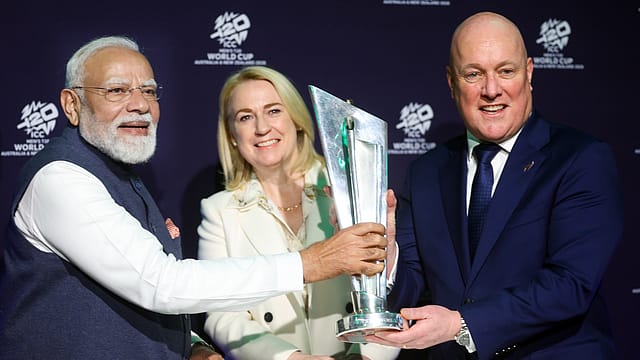
India and New Zealand have elevated their relationship to a Strategic Partnership, setting an ambitious goal of doubling bilateral trade by 2030 while expanding cooperation across education, research, technology, innovation, agriculture, climate action and disaster management. During Prime Minister Narendra Modi's historic visit to Auckland—the first by an Indian Prime Minister in four decades—both sides underscored that geographical distance would not impede deeper economic and strategic collaboration.
How will the Strategic Partnership reshape India-New Zealand ties?
PM Modi and his New Zealand counterpart Christopher Luxon reaffirmed their commitment to significantly expanding bilateral engagement through the recently concluded Free Trade Agreement (FTA), which both leaders described as a catalyst for stronger economic growth and people-to-people ties.
At a special event hosted by Luxon, attended by leaders from business, academia, technology, sports and the arts, the two Prime Ministers welcomed the elevation of bilateral ties to a Strategic Partnership. Modi highlighted that the FTA would create new opportunities for businesses, young people and farmers while helping both countries achieve their target of doubling bilateral trade by 2030.
Rise of the Pivotal Power
18 Sep 2026 - Vol 05 | Issue 38
The BRICS declaration is a strategic victory for Modi
In a post on X, MEA spokesperson Randhir Jaiswal said, "India-New Zealand: A Winning Partnership. Prime Minister Narendra Modi attended a special event hosted by Prime Minister Christopher Luxon, bringing together leaders from business, academia, technology, sports and the arts. The two leaders welcomed the elevation of India-New Zealand ties to a Strategic Partnership. PM highlighted the opportunities created by the recently concluded FTA including for the businesses, the youth and farmers and help achieve the target of doubling bilateral trade by 2030."
Modi and Luxon also met leading CEOs from both countries to explore new avenues of collaboration in trade, investment, innovation, sustainable agriculture and technology.
Jaiswal said, "PM Narendra Modi met with leading CEOs from New Zealand and India alongside PM Christopher Luxon. The discussions underscored the India-New Zealand FTA as a landmark milestone and set an ambitious target of doubling bilateral trade by 2030. The leaders emphasised leveraging each other's strengths and complementarities while deepening cooperation in trade, investment, innovation, sustainable agriculture, and technology."
Luxon stressed that the free trade pact would provide immediate benefits to New Zealand exporters while opening greater access to India's vast consumer market.
He said, "New Zealand and India bookend the Indo-Pacific, but distance is no barrier to us working together to grow our economies. That's what we're doing through our free trade agreement, which will eliminate tariffs on 57% of everything we sell to India on day one."
The two leaders also directed ministers and senior officials to ensure timely implementation of the Roadmap to 2030 and agreed to regularly review progress. Modi thanked the Government and people of New Zealand for their hospitality, while both sides pledged to sustain the momentum of high-level exchanges.
Which new areas of cooperation will drive the partnership?
Beyond trade, India and New Zealand agreed to significantly broaden cooperation in education, research, science, technology and innovation, describing these sectors as central pillars of the bilateral relationship.
The two Prime Ministers encouraged governments, academic institutions and industry to develop partnerships in agriculture, climate action, digital transformation, emerging technologies and scientific research. They also welcomed progress under the 2025 Education Cooperation Arrangement and committed to strengthening student mobility, institutional partnerships and research collaboration.
Climate cooperation also featured prominently in the discussions. Both sides agreed to deepen collaboration through the International Solar Alliance and the Coalition for Disaster Resilient Infrastructure, while Prime Minister Modi welcomed New Zealand's decision to join the Global Biofuels Alliance.
The leaders further welcomed the signing of a Memorandum of Cooperation between India's National Disaster Management Authority and New Zealand's National Emergency Management Agency to strengthen disaster preparedness, response, recovery and resilience. They also expressed their intention to advance joint research and practical solutions for more sustainable, productive and climate-resilient agriculture and food systems.
What did India say on New Zealand's visa policy?
Responding to questions during a media briefing, MEA Secretary (East) Rudrendra Tandon clarified that visa policies remain a sovereign matter for New Zealand and refrained from commenting on the issue.
He said, "On visas, this is actually a question you need to address to the New Zealand side. That's a sovereign decision. In the sense that as long as our businesses can work, our students get to study, they get the exchanges as planned by the two sides are taking place. Visa decision and conferring visas is a sovereign decision that we can't really comment upon at this juncture."
Modi's visit, the first by an Indian Prime Minister to New Zealand in 40 years, marks a significant milestone in bilateral relations, with both countries aiming to translate their upgraded Strategic Partnership into tangible gains across trade, education, technology, climate action and innovation.
(With inputs from ANI)