How Greenland Became the New Battleground in US-Europe Relations
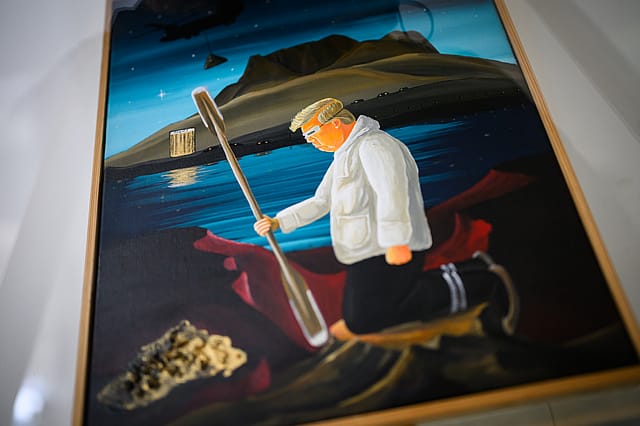
Greenland has become the latest flashpoint in transatlantic ties, with Donald Trump’s tariff threats triggering rare European unity and drawing NATO directly into the dispute.
Tensions over Greenland escalated sharply this week as European leaders closed ranks against US President Donald Trump’s renewed push to acquire the Arctic territory, a move that has triggered tariff threats, diplomatic backlash, and direct intervention by NATO.
German Chancellor Friedrich Merz said Europe stands “united and coordinated” with Denmark and the people of Greenland, warning that tariff threats linked to the issue risk pushing transatlantic relations into a “dangerous downward spiral.”
In a post on X, Merz stressed that Arctic security remains a shared transatlantic interest and reiterated NATO’s commitment to the region. His remarks came as Trump doubled down on demands that European countries agree to sell Greenland, framing the move as essential to US national security amid growing Chinese and Russian interest in the Arctic.
The dispute has prompted an unusually broad show of European solidarity. In a joint statement shared by Denmark’s Ministry of Foreign Affairs, Denmark, Finland, France, Germany, the Netherlands, Norway, Sweden, and the United Kingdom expressed full support for Denmark and Greenland. The statement also rejected claims that NATO’s military exercise Arctic Endurance posed a threat, while cautioning that tariff coercion undermines trust among allies.
Trump, however, has remained defiant. In a series of posts, he threatened to impose 10% tariffs from February 1, 2026, rising to 25% from June 1, 2026, on goods from eight European countries unless a deal is reached for the “complete and total purchase of Greenland.” He argued that Denmark should “give back” Greenland after years of US support, and warned that tariffs would remain in place until an agreement is secured.
The Abandoned Kejriwal
01 May 2026 - Vol 04 | Issue 69
Brain drain from AAP leaves Arvind Kejriwal politically isolated
The escalating rhetoric has raised alarms about broader implications for NATO. Several European leaders have privately warned that any attempt by the US to force control over Greenland could fracture the alliance itself, given Denmark’s sovereignty over the semi-autonomous territory and Greenland’s insistence on its right to self-determination.
Amid the standoff, NATO Secretary General Mark Rutte confirmed that he has spoken directly with Trump about the security situation in Greenland and the wider Arctic. While Rutte did not disclose details of the conversation, he said discussions would continue and confirmed that he will meet Trump later this week in Davos, where the issue is expected to feature prominently on the sidelines of the World Economic Forum.
For Washington, Greenland’s strategic location and mineral resources remain central to its security calculus. For Europe, the dispute has become a test of alliance unity, sovereignty, and the limits of economic pressure among long-standing partners.
As diplomacy shifts from public statements to closed-door meetings in Davos, the Greenland question is shaping the future tone of transatlantic relations.
(ANI and yMedia are the content partners for this story)