How Did Alexey Navalny Die? European Report and Widow’s Claims Explained
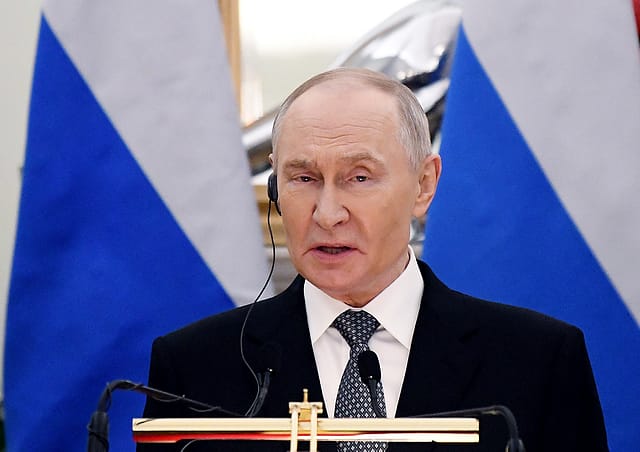
European governments have accused Russia of killing opposition leader Alexey Navalny with a rare toxin derived from poison dart frogs, as his widow renewed allegations of a Kremlin-led cover-up on the anniversary of his death.
Five countries have accused Russian authorities of poisoning and killing Navalny with a rare and lethal toxin extracted from South American dart frogs, marking a sharp escalation in international criticism of Moscow’s treatment of its most prominent critic.
In a joint statement, the foreign ministries of the United Kingdom, France, Germany, Sweden and the Netherlands said laboratory tests on samples taken from Navalny’s body had “conclusively confirmed the presence of epibatidine,” a substance naturally found in poison dart frogs and otherwise absent from Russia.
The governments said the findings left no “innocent explanation” for the toxin’s presence.
The Modi Years
02 Oct 2026 - Vol 05 | Issue 40
A Nation Rebuilt
"The UK, Sweden, France, Germany and the Netherlands are confident that Alexey Navalny was poisoned with a lethal toxin," the statement said, asserting that Moscow had the "means, motive and opportunity to administer this poison".
The allegations were reported by Al Jazeera and coincided with renewed diplomatic pressure on Moscow.
Did Russia Reject the Allegations as Propaganda?
Russian authorities have strongly denied the claims, describing them as Western misinformation.
Maria Zakharova, spokesperson for the Russian Foreign Ministry, said she would respond once the laboratory results were publicly released, a step that has not yet taken place.
Officials have continued to maintain that Navalny’s death was caused by natural factors and not external interference.
Did Alexei Navalny’s Die in Arctic Prison?
Navalny, a fierce critic of President Vladimir Putin, died on February 16, 2024, in an Arctic penal colony where he was serving a 19-year sentence that he described as politically motivated.
He had built his political career by campaigning against corruption and authoritarianism and had survived multiple previous attacks. Russian authorities initially said he fell ill after a walk and died of natural causes.
European governments, however, now say their findings show his death was the result of deliberate poisoning with epibatidine, which causes rapid respiratory failure, convulsions, and cardiac arrest.
British Foreign Secretary Yvette Cooper, who met Navalny’s widow during a major international conference, said the evidence shed light on “the Kremlin's barbaric plot to silence his voice.”
French Foreign Minister Jean-Noel Barrot wrote on X that the alleged poisoning showed that “Vladimir Putin is prepared to use biological weapons against his own people in order to remain in power.”
The five European nations announced they would report Russia to the Organisation for the Prohibition of Chemical Weapons for violating the Chemical Weapons Convention, a move that could intensify diplomatic tensions and lead to formal investigations.
What did Yulia Navalnaya’s Widow Accuse Kremlin of?
On the first anniversary of Navalny’s death, his widow Yulia Navalnaya accused Russian authorities of trying to erase his legacy and conceal the truth.
In a video message, she thanked supporters for standing by her throughout the year.
"I am grateful to everyone who remembers Alexei, who talks about him, writes about him, who comes to the cemetery. I am grateful to those who have been supporting me this whole year. Your letters, your hugs when we meet, this is what does not let me forget why Alexei did this and why I'm doing this. If so many good people are on one side, we cannot help but win", she said.
She also accused President Putin of attempting to suppress memories of her husband.
"Even now a year after his death he (Russian President Vladimir Putin) is trying to erase Alexei's name from our memory to hide the truth about the murder, to make us come to terms, but he will not succeed."
Reflecting on her personal struggle, she added: "The pain we feel makes us stronger and this year has shown that we are stronger than we thought ourselves."
Navalny had been serving multiple sentences, including an 11-and-a-half-year term for fraud and a later 19-year sentence on extremism-related charges. He consistently denied the accusations and described them as politically driven.
According to CNN, his death came just weeks before Russia’s presidential elections, raising further questions about political motives. The European Union issued a statement on the anniversary of Navalny’s death, placing responsibility on Russian authorities.
"President Putin and the Russian authorities bear ultimate responsibility" for the death of Alexei Navalny.
The EU said Russia continues internal repression alongside its war in Ukraine and called for the release of political prisoners.
"Alexei Navalny gave his life for a free and democratic Russia. Today, his lawyers remain unjustly imprisoned, together with hundreds of political prisoners."
The bloc also noted that it has imposed sanctions since 2020 on individuals linked to Navalny’s poisoning, arrest, and sentencing, and urged Russia to end its repression of civil society and opposition voices.
As international leaders continue to debate security, human rights, and Ukraine, the renewed dispute over Navalny’s death threatens to further strain already fragile relations between Moscow and Western capitals.
With fresh allegations, diplomatic complaints, and renewed calls for accountability, the case has once again become a focal point of global scrutiny of Russia’s human rights record.
(With inputs from ANI)