‘Globalisation Has Failed’: US Commerce Secretary’s Blunt Message at Davos
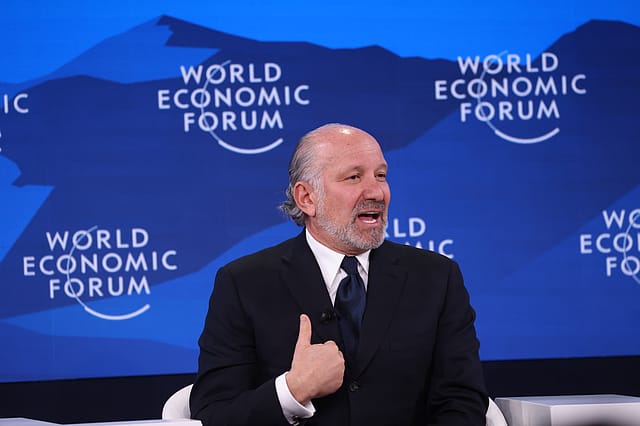
At the World Economic Forum in Davos, a place long associated with the virtues of open markets and global integration, US Commerce Secretary Howard Lutnick offered a starkly different diagnosis: globalisation, he said, has failed.
Speaking on the sidelines of the summit, Lutnick argued that the economic model embraced by Western nations for decades—one built on offshoring, export-led growth and the relentless pursuit of cheap labour—has hollowed out domestic industries and left workers behind, particularly in the United States.
“We are here to make a very clear point,” Lutnick said. “Globalisation has failed the West and the United States of America. It’s a failed policy.”
According to Lutnick, what was once sold as a strategy to make the world more prosperous instead weakened national economies by pushing production far from home. The outcome, he said, was fragile supply chains, lost manufacturing capacity and diminished economic security—costs that became painfully visible during global shocks in recent years.
The Trump administration, Lutnick made clear, intends to reverse that logic. Under its “America First” framework, economic policy is no longer about maximising efficiency at any cost, but about prioritising domestic workers, industries and national resilience.
“Our workers come first,” he said, describing America First not as an isolationist retreat, but as an alternative model—one he suggested other countries should also consider.

Youth Issue 2026
24 Apr 2026 - Vol 04 | Issue 68
50 Portraits of Icons and Achievers
Central to this shift, Lutnick argued, is the idea of sovereignty. Nations, he said, should not outsource industries critical to their independence. Medicines, semiconductors and strategic manufacturing cannot be left to distant supply chains without consequences.
“You should not be dependent on that which is fundamental to your sovereignty on any other nation,” Lutnick warned, adding that if dependence is unavoidable, it should be limited to trusted allies.
Lutnick also took aim at what he described as contradictions in Western policy-making, particularly in Europe. Pointing to the European Union’s net-zero ambitions, he questioned why Europe would commit to aggressive climate targets while lacking domestic battery manufacturing capacity—effectively increasing dependence on China, which dominates the sector.
The broader critique was unmistakable: economic openness without industrial strategy weakens autonomy.
At a forum traditionally dominated by calls for cooperation, integration and free trade, Lutnick’s message stood out for its clarity and confrontation. It reflected a deeper shift in global thinking—away from unrestricted globalisation and toward models that place resilience, control and domestic capacity at the centre of economic planning.
As Davos 2026 unfolds amid geopolitical tension, economic uncertainty and technological disruption, the US position signals a decisive break with the assumptions that once defined the global economic order.
(With inputs from ANI and yMedia)