From Presidency to Prison: The Fall of South Korea’s Yoon Suk Yeol
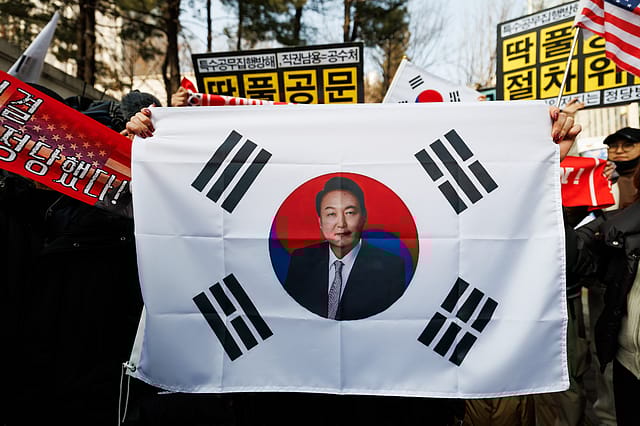
South Korea has crossed a historic line. A former president has been sentenced to prison while still facing a possible death penalty. The fall of Yoon Suk Yeol is not just about one man. It’s a stress test of South Korea’s democracy, rule of law, and limits of executive power.
What happened to former President Yoon Suk Yeol?
On January 16, 2026, South Korea’s Seoul Central District Court sentenced former President Yoon Suk Yeol to five years in prison for obstructing justice, marking the first verdict in a series of criminal cases arising from his controversial martial law declaration.
What crimes led to this five-year sentence?
The court convicted Yoon of blocking investigators during a January 2025 arrest attempt, violating the rights of Cabinet members, and fabricating official documents. The judge said Yoon showed no remorse, warranting a custodial sentence, though prosecutors had sought 10 years.
What was the martial law incident that triggered everything?
On December 3, 2024, Yoon declared martial law at 10:27 pm, accusing the opposition Democratic Party of “anti-state activities.” Troops were ordered to the National Assembly, but within six hours, 190 of 300 lawmakers unanimously voted to overturn the decree, ending the first attempt at civilian rule suspension in over 40 years.

India's Action Hero
27 Mar 2026 - Vol 04 | Issue 64
Riding the Dhurandhar Wave
How unprecedented was Yoon’s arrest?
Extraordinary. Yoon allegedly barricaded himself inside his residence and deployed security forces to block investigators. Authorities eventually sent over 3,000 police officers in a second predawn operation on January 15, 2025, marking the first-ever detention of a sitting South Korean president.
Why is Yoon facing a possible death penalty?
Prosecutors have charged Yoon with insurrection, arguing the martial law declaration was an attempt to seize long-term power. They have sought the death penalty, with the court set to rule on February 19, 2026. However, experts note South Korea has not carried out executions since 1997, making the death penalty largely symbolic.
How many cases does Yoon still face?
Yoon is facing eight separate criminal trials, including cases involving his wife’s alleged corruption, the 2023 death of a Marine, and abuse of presidential authority. He lost presidential immunity after being removed from office by the Constitutional Court in April 2025.
What is Yoon’s defence?
Yoon argues that declaring martial law was within his constitutional emergency powers, aimed at protecting “freedom and sovereignty.” His legal team claims the prosecutions are politically motivated and that presidential authority cannot be equated with insurrection.
Why is this case historically significant?
This is only the third time a former South Korean president’s trial has been broadcast live, after Park Geun-hye and Lee Myung-bak in 2018. Yoon now joins a long list of disgraced ex-presidents, reinforcing South Korea’s reputation for relentless accountability at the highest level.
What happens next?
Yoon is expected to appeal the five-year sentence. Legal experts believe that if convicted in the insurrection case, he is more likely to face life imprisonment or decades-long sentencing rather than execution.
(yMedia is the content partner for this story)