From Luna's Boredom to a Booming Industry: The Rise of DogTV Designed Exclusively for Your Dog
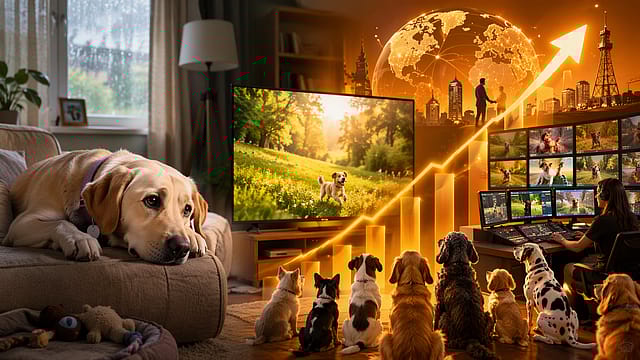
Dogs have never been just pets. They are family members with their own screen time.
As separation anxiety becomes a growing concern among pet owners worldwide, a new category of entertainment has quietly exploded: television made specifically for dogs.
The market is expanding fast, and the science is only just catching up.
How Did TV for Dogs Begin?
Reportedly, Luca Carano, a pilot based in Bologna, Italy, created the YouTube channel Siesta Dog TV after worrying about his dog Luna being bored alone at home.
His channel features illustrated dogs in animated cityscapes and duck pond loops, calibrated to colours dogs perceive most clearly.

The Modi Years
02 Oct 2026 - Vol 05 | Issue 40
A Nation Rebuilt
One video has reportedly attracted around 3.5 million views.
Why Are So Many Pet Owners Turning to Dog Entertainment?
According to Nicholas Dodman, director of the Center for Canine Behaviour Studies in Connecticut, people now treat dogs like children, and growing awareness around separation anxiety is directly fuelling demand.
Channels like Four Paws TV, Cartoon Dog Music, and Puppy Dreamscape have all emerged to serve this audience.
What Do Dogs Watch on These Channels?
Content ranges widely, from puppies frolicking and squirrel close-ups to looping squishy toy videos.
Carano's channel leans on blue hues, which dogs reportedly perceive most vividly.
AI is increasingly being used to generate this content at scale and lower production costs significantly.
Does the Research Support Dog TV?
The evidence is mixed. A 2023 study from Queen's University Belfast, observing 50 shelter dogs, found they spent only 10.8% of available viewing time looking at screens.
Researchers stressed social contact remained the most essential enrichment.
However, an Auburn University study of 453 dogs concluded television engagement could provide genuine, meaningful enrichment for dogs.
Who Is Leading the Commercialisation of This Space?
Arizona-based DogTV, which launched in 2012, is the most established player.
According to CEO Beke Lubeach, DogTV content is designed to lower stress, citing a Purdue University study where kennel dogs watching videos spent significantly less time pacing and more time resting.
How Is AI Changing the Dog Entertainment Market?
AI has made producing dog-friendly content dramatically cheaper and faster.
However, Lubeach remains cautious, stating that shortcuts have no place in pet wellness and that DogTV uses AI only with strict oversight.
Is Dog TV Useful for Every Dog?
Lubeach stresses every breed responds differently. Where dog entertainment delivers the most consistent value is with senior and less active dogs.
What began as one man's worry about a bored puppy has grown into a commercially viable industry at the intersection of pet care, streaming, and AI, and its most significant growth may still lie ahead.
(With inputs from yMedia)