From Economics to Geopolitics: The New Trade Reality Explained
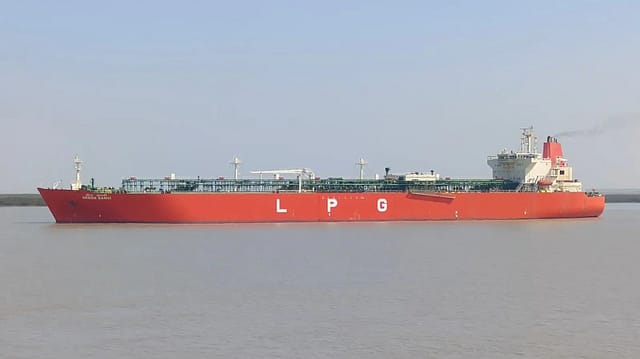
The balance of global trade is undergoing a profound shift. What was once dictated largely by economic fundamentals is now increasingly shaped by geopolitical tensions, particularly across critical regions such as West Asia.
Flashpoints around key maritime corridors such as the Strait of Hormuz and the Red Sea have exposed the fragility of global supply chains. With nearly 80 per cent of trade by volume dependent on sea routes, disruptions in these chokepoints are sending shockwaves across industries.
Freight rates on major routes have surged by 30–50 per cent, while shipment delays of up to two weeks are becoming increasingly common, raising serious concerns over reliability and costs.
How Are Businesses Coping With Rising Uncertainty?
As risks evolve, so do the tools to manage them. Traditional insurance mechanisms are no longer sufficient in a world where threats extend beyond commercial losses to geopolitical disruptions.
Flood and Fury
04 Sep 2026 - Vol 05 | Issue 36
Devighat, Nepal, August 29, 2026
Tejas Jain, Founder and CEO of BimaKavach, said, “Marine insurance has always been a business essential, but its role today goes far beyond covering goods in transit... Businesses run on cash flow. And cash flow depends on goods arriving on time and invoices clearing on schedule.”
The growing instability has exposed companies to sovereign-driven risks such as political violence, sanctions, and currency restrictions: factors that conventional coverage does not fully address.
Is Political Risk Insurance the New Normal?
Experts believe the answer is increasingly yes. Political risk insurance is quickly shifting from an optional safeguard to a critical necessity for global trade.
Vishwajeet Kadam of EDME Insurance Brokers explained, “The defining risk in global trade today is not credit -- it is uncertainty driven by geopolitical actions. Political risk insurance is what enables businesses to operate despite that uncertainty. We are seeing companies that once considered this coverage optional now treating it as non-negotiable.”
Echoing this sentiment, Rajesh Kumar Singh of Howden India noted, “The world's trade routes are under pressure like never before... Standard shipping policies were never written with missiles and drone strikes in mind--that gap is exactly what War Risk and Hull cover was built to fill.”
For Indian companies expanding into geopolitically sensitive regions, the stakes are even higher. With West Asia remaining central to energy supplies and infrastructure investments, managing political risk has become a strategic imperative.
“In today's environment, if you are moving goods or capital across borders without political risk cover, you are essentially trading blind,” Kadam added.
As tensions show little sign of easing, experts believe the demand for structured risk solutions will only grow, fundamentally reshaping how global trade is financed and protected.
(With inputs from ANI)