From Binoculars to Social Media: Is Birdwatching the Hobby Gen Z Didn't Know It Needed?
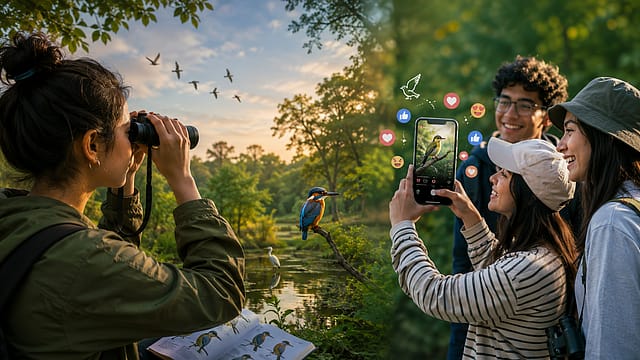
Birdwatching has long carried an unfair reputation as a niche, old-fashioned hobby. That image is now outdated.
Across Britain, a quiet but remarkable shift is underway, with younger generations picking up binoculars in record numbers. The data behind this trend is striking enough to demand attention.
What Does the Research Say About Birdwatching's Growth?
According to research by Fifty5Blue published by the RSPB, regular birdwatching has increased by 47% overall since 2018, across a multiyear study of more than 24,000 people.

The Vanguard
21 Aug 2026 - Vol 05 | Issue 34
BJP Rearmed for 2029
The hobby is growing across every generation, but the numbers among younger demographics are in a different league.
Is Birdwatching the Fastest Growing Hobby for Gen Z?
It is the second fastest growing hobby for Gen Z, after jewellery making. Reportedly, almost 750,000 Gen Zers between 16 and 29 in Britain now regularly watch birds, representing a staggering 1,088% increase since 2018, as per The Guardian.
Are Other Generations Also Picking Up This Growing Hobby?
Yes, though at considerably lower rates. According to the RSPB research, birdwatching among millennials has risen by 216% since 2018, while Gen X has seen a 66% increase.
Gen Z's surge, however, dwarfs every other demographic by a significant margin.
What Is Drawing Young People to Birdwatching?
The appeal appears rooted in stillness and mental reset. Jess Painter, 24, a member of the RSPB's Youth Council, reportedly described birdwatching as offering a moment of peace and a way to reconnect with nature, as per The Guardian.
In an era defined by screen fatigue, the ability to simply slow down carries genuine appeal.
Does Birdwatching Have Any Proven Health Benefits?
According to Amir Khan, doctor and president of the RSPB, hearing birdsong can produce serotonin and improve mood, based on The Guardian.
He referenced the biophilia hypothesis, which suggests humans are inherently drawn to nature. A recent study also found that watching birds may slow age-related cognitive decline.
What Is the Dawn Chorus?
The dawn chorus is the burst of birdsong that occurs roughly 45 minutes before dawn each spring. International Dawn Chorus Day falls on the first Sunday in May.
The RSPB encourages people to experience it from wherever they are, no expertise required.
So Is Birdwatching Finally Having Its Cultural Moment?
All evidence suggests yes. What was once dismissed as a retiree's pastime is now a growing hobby embedded in the routines of hundreds of thousands of young Britons, driven by mental health awareness, nature connection, and a collective desire to slow down.
(With inputs from yMedia)