Flights Cancelled, Fares Soaring: How the West Asia Conflict Has Turned Global Travel Upside Down
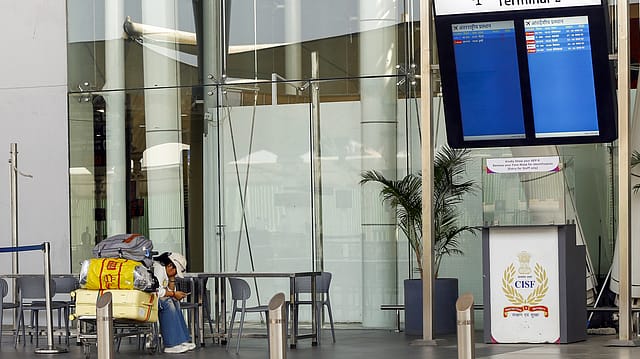
When coordinated U.S. and Israeli strikes on Iran escalated the West Asia conflict on 28 February 2026, the fallout was felt not just in diplomatic corridors but at airport check-in counters worldwide.
Within days, over 21,000 flights were cancelled, Gulf hubs went dark, and passengers from Mumbai to Manchester found themselves stranded.
What triggered the global travel crisis?
The West Asia conflict escalated sharply on 28 February 2026, following coordinated U.S. and Israeli strikes on Iran.
Countries including Iran, Iraq, Israel, Syria, Kuwait, Qatar, and the UAE imposed full or partial airspace closures almost immediately, severing one of the world's most critical intercontinental air corridors and forcing airlines into emergency rerouting decisions overnight.

Greening the Future
23 Jul 2026 - Vol 05 | Issue 30
Securing a sustainable India
How many flights were cancelled?
The scale of the disruption was staggering as over 21,000 flights were cancelled globally within the first few days of the hostilities.
Major transit hubs including Dubai International (DXB), Hamad International (DOH) in Doha, and Zayed International (AUH) in Abu Dhabi were forced to either suspend or severely restrict their operations, which paralyzed the essential network that bridges Asia, Europe, Africa, and the Americas.
How hard was India hit?
India emerged as one of the hardest hit nations during this crisis as domestic carriers were forced to cancel more than 1,000 flights in the initial wave of the conflict.
Gulf bound routes and long haul connections to Europe and North America bore the brunt of the chaos, leaving millions of Indian workers, tourists, and business travelers without their primary transit lifelines as the key corridors between Asia and Europe were choked off.
The Logistical Burden of Rerouting
In a desperate bid to keep fleets moving, airlines have shifted their paths toward longer corridors over Egypt, Saudi Arabia, and Oman.
This necessary detour has added anywhere from 30 to 120 minutes to standard flight times on long haul routes, which has driven fuel costs and crew expenses to unsustainable levels.
Furthermore, war risk insurance premiums have surged to the point where industry experts describe the combined pressure of oil prices and overflight restrictions as a structural turning point for the entire aviation sector.
The Inevitable Rise in Airfares
Travelers should prepare for an almost certain spike in ticket prices as airlines struggle to absorb the costs of higher fuel consumption and operational uncertainty.
These price hikes are expected to be most visible on India to Europe, India to North America, and Southeast Asia to Europe corridors, meaning that those who booked their travel before the escalation now hold a significant financial advantage over those attempting to book in the current climate.
Market Volatility and Investor Anxiety
Financial markets reacted with swift pessimism as airline stocks across Asia plummeted between 4% and 6% following the military escalation.
Major players like InterGlobe Aviation (IndiGo) and Singapore Airlines registered notable declines, reflecting a deep seated investor concern regarding the potential for prolonged disruption and the reality of rising operational overheads.
A Shift in Tourism Trends
The leisure travel sector has been hit by a wave of uncertainty as tour operators report a 20% to 25% spike in cancellations on routes linked to the Gulf.
Travelers appear to be pivoting toward domestic destinations or Southeast Asian alternatives while travel insurance claims rise sharply, though the full economic impact on Gulf destination tourism will likely take weeks to fully quantify.
The Blow to Medical Tourism
India’s burgeoning medical tourism industry is facing a significant setback because West Asia traditionally accounts for nearly 18% of inbound patients.
With Gulf connectivity severely disrupted, hospitals across India are reporting a sharp slowdown in bookings and have been forced to postpone several scheduled procedures indefinitely.
Redefining the Future of Flight
This conflict has exposed the heavy reliance on the Gulf as a critical concentration risk in the global aviation landscape.
While there is a fresh and growing interest in exploring polar and Central Asian routing alternatives, any meaningful strategic shift away from traditional Gulf hubs would require years of planning and enormous investment.
For the time being, both airlines and passengers are left to absorb the mounting costs and the heavy weight of a crisis that currently offers no clear end in sight.
(With inputs from yMedia)