EXPLAINED | Why Joshua Wong Was Jailed Again, Months Before His Expected Release
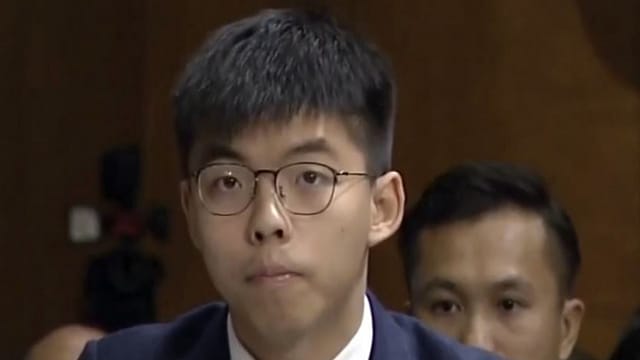
January 2027 was supposed to bring Joshua Wong out of prison. He had spent almost six years behind bars, moving through prosecutions arising from Hong Kong’s protests and its democracy movement. His existing national-security sentence was approaching its end.
Then, on November 5, a Hong Kong court sentenced him to another 10 years.
Wong turned 30 in October. At 14, he helped establish a student campaign group. At 17, he became one of the faces of a movement whose umbrellas appeared on television screens around the world. His political life has since passed through street protests, a political party, election campaigns and appeals to foreign governments.

The Era of Forever Wars
30 Oct 2026 - Vol 05 | Issue 44
Coping with an explosive Middle East
Understanding his new sentence means following those different activities into different court cases. It also means understanding the political arrangement that allowed Hong Kong to retain a separate system within China, and the national-security legislation that changed the risks of challenging its government.
Why has Joshua Wong been sentenced again?
Wong pleaded guilty in September to conspiracy to collude with foreign forces under Hong Kong’s National Security Law. The latest case concerned efforts to obtain sanctions, blockades or other hostile measures against Hong Kong or China. Judge William Tam imposed the 10-year sentence on November 5.
The prosecution said Wong conspired with fellow activist Nathan Law and others between July 1 and November 23, 2020. Law subsequently continued his advocacy abroad; Wong remained in Hong Kong.
According to the prosecution’s account, Wong supported the lobbying effort through foreign media and social media after the security law took effect. The court heard about a campaign to enlist pressure from governments and institutions outside China.
The international campaign and the earlier election case resulted in separate national-security convictions.
Wasn’t he already in jail? How do the sentences overlap?
Yes. Wong was serving four years and eight months for conspiracy to commit subversion in the prosecution known as the Hong Kong 47 case. He had been expected to be released in January 2027.
The latest sentencing report specifies that two months and two days of the new term overlap with the ongoing sentence. Lawyers call overlapping terms “concurrent”: those portions run at the same time. Consecutive portions follow one another.
It would therefore be misleading to add six years already spent in custody to 10 years and describe the result as one 16-year sentence. His detention includes different proceedings and sentences. Equally, the years he has already spent imprisoned do not wipe out the new term.
The practical consequence is that the anticipated January release has disappeared. The sentence does not, by itself, supply a reliable release date after accounting for every applicable custody rule.
How did a schoolboy become so prominent?
Wong co-founded Scholarism in 2011, when he was 14. The following year, the group became a driving force against plans to introduce moral and national education in schools. Opponents feared the curriculum would promote loyalty to the Communist Party. The government eventually retreated from the mandatory rollout.
That campaign gave Wong an early experience of organised public pressure producing a concession. His appeal also came from his age: here was a school student arguing over who should shape the political education of his generation.
He became internationally recognisable during the 2014 Umbrella Movement. Protesters used umbrellas as protection against police pepper spray, turning an everyday object into the movement’s emblem. Wong was one prominent organiser within a much broader mobilisation, rather than the commander of everyone on the streets.
In 2016, he co-founded Demosisto with Nathan Law and Agnes Chow. The student activist was trying to build a political organisation.
What were the Umbrella protesters asking for?
The central dispute concerned how Hong Kong would choose its chief executive, the city’s leader.
Hong Kong’s Basic Law sets universal suffrage as an ultimate aim, while also providing for nomination by a committee. The political fight concerned whether voters would get a meaningful choice of candidates or be limited to contenders who had already passed a restrictive screening process.
Imagine being offered a vote, but discovering that another body has decided which candidates may appear on the ballot. The significance of the vote depends partly on how that earlier selection works. That was the question behind much of the confrontation in 2014.
The movement failed to secure the electoral changes it sought. Wong’s visibility endured, while the route from mass protest to political reform remained blocked. The much larger protests of 2019 began over proposed extradition legislation and expanded into wider demands about policing and democratic accountability.
Why did Hong Kong have a different political system from mainland China?
Hong Kong returned from British to Chinese sovereignty on July 1, 1997, under the framework known as “one country, two systems”. Wong, born the previous October, was still a baby.
The arrangement placed Hong Kong within China while allowing it to retain its capitalist economy, common-law legal system and a high degree of autonomy. The Basic Law protects rights and freedoms and says the previous capitalist system and way of life shall remain unchanged for 50 years.
Hong Kong was therefore a part of China with institutions and protections different from those on the mainland. Its courts, commercial rules and public life developed within that distinction.
The recurring dispute concerns the boundary between the autonomy promised to Hong Kong and the authority exercised by Beijing. The same phrase, “one country, two systems”, is invoked by authorities defending national-security enforcement and by critics arguing that the city’s freedoms have been eroded.
What changed with the National Security Law?
Beijing imposed the law in June 2020 after the upheaval of 2019. It established offences covering secession, subversion, terrorism and collusion with foreign or external elements.
Article 29 includes requesting or conspiring with outside actors to impose sanctions, a blockade or other hostile activities against Hong Kong or China. It provides three to 10 years for the offence, and at least 10 years or life imprisonment for an offence of a grave nature.
An international lobbying campaign can therefore trigger the provision without an accusation of handing over classified documents.
Demosisto dissolved on June 30, 2020. Law left Hong Kong; Wong stayed. Those choices placed former colleagues in sharply different circumstances as the law began to operate.
Were activities from before the law introduced being punished retrospectively?
Article 39 makes the law applicable to acts committed after its entry into force. Wong’s charged conspiracy covered July 1 to November 23, 2020.
Prosecutors described earlier lobbying to explain the relationship between the campaigners and the development of their strategy. Their case also alleged that Wong continued supporting the effort after the law took effect.
The earlier lobbying was background to the prosecution’s account; the charged period began after the law took effect.
Hong Kong also enacted its own Safeguarding National Security Ordinance, effective March 23, 2024, to fulfil Article 23 of the Basic Law. It supplements the security framework. Wong’s latest conviction comes under the Beijing-imposed 2020 law.
What was the Hong Kong 47 case about?
In July 2020, the pro-democracy camp organised an unofficial primary to identify its strongest candidates for the Legislative Council election. A primary is an internal selection contest: it decides whom a political camp will back, rather than electing the legislature itself.
The strategy was to win a legislative majority and use its powers over government budgets to force political concessions. Prosecutors said the plan envisaged indiscriminate vetoes that would paralyse the government and create a constitutional crisis.
The case became known as the Hong Kong 47 because 47 people were charged. Forty-five were ultimately convicted; sentences were handed down in November 2024. Wong received 56 months.
The Basic Law gives the legislature budgetary powers and contains mechanisms involving dissolution and resignation when budgets are repeatedly rejected. The prosecution concerned the alleged conspiracy to use those mechanisms to subvert the government. Explaining that allegation is essential to understanding how an election-organising exercise became a national-security case.
How much has the electoral system changed since then?
The legislature that the democracy camp hoped to contest in 2020 was subsequently redesigned.
Under the system introduced in 2021, the Legislative Council has 90 seats: 40 chosen by the Election Committee, 30 through functional constituencies representing sectors and interests, and 20 through direct geographical elections. Candidates also face eligibility scrutiny under the revised arrangements.
Ordinary voters therefore do not directly elect all 90 lawmakers. Counting the total number of seats without explaining how they are filled would miss how the system operates.
Wong’s imprisonment sits within that broader transformation. The political environment in which he organised student campaigns and sought electoral office has changed through both prosecutions and institutional redesign.
What do the authorities and rights groups say?
Hong Kong’s government says national-security enforcement protects stability and that prosecutions are based on evidence and law. In its response to the 2024 subversion sentences, it defended the trials as fair and described the alleged plan as an effort to bring government to a standstill.
Amnesty International takes the opposite view of Wong’s prosecution. When the collusion charge was brought in June 2025, its China director, Sarah Brooks, said it demonstrated the authorities’ determination to keep prominent dissidents imprisoned. She warned of a chilling effect on civic activism.
The disagreement concerns the scope of legitimate political action. Authorities classify the conduct as a threat to national security. Rights groups argue that the legislation criminalises activities protected by freedoms of expression and association. A guilty plea establishes the outcome of Wong’s criminal case; the dispute over the law’s compatibility with those freedoms continues.
What has become of the movement Wong helped build?
Demosisto, the party Wong co-founded, dissolved when the National Security Law arrived in June 2020. Nathan Law continued his advocacy abroad. Wong stayed in Hong Kong, where his court cases accumulated.
The electoral route changed too. Under the system introduced in 2021, just 20 of the Legislative Council’s 90 seats are filled through direct geographical elections. Candidates face eligibility screening. The movement’s ambition to turn public support into a legislative majority now confronts a substantially different political system.
Authorities describe these changes and national-security prosecutions as safeguards against destabilisation. Rights groups say they have dismantled the space for organised opposition.
For Wong, the consequences extend to the ordinary milestones of adulthood. He turned 30 in prison. His expected January release would have brought the possibility of rebuilding a life after almost six years in custody.
In a message on his 25th birthday, he described how he maintained his closest relationships: “Even in solitary confinement, I was able to experience how loved ones and I supported each other through letters.”
Another 10-year sentence now stretches the time those relationships must survive through prison visits and correspondence.