Eisenkot Pledges Stronger US Ties as Netanyahu Fights to Retain Power, Iran Issues Warning
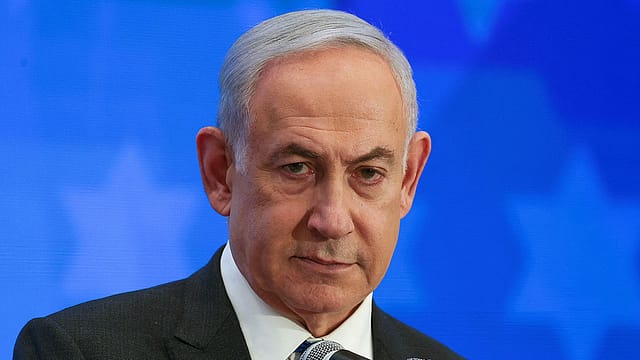
Gadi Eisenkot has pledged to deepen Israel’s partnership with the United States as opposition parties move to form a government, while Prime Minister Benjamin Netanyahu has called for a broad coalition under his own leadership and demanded an investigation into alleged foreign interference in the election.
The competing appeals come amid tensions with Iran, whose Quds Force commander, Brigadier General Esmaeil Ghaani, warned Washington against continuing what he called its “gambling behaviour” in the conflict. His remarks invoked both the Strait of Hormuz and Bab el-Mandeb, raising the prospect of pressure across two strategically important waterways.
Diplomatic efforts are continuing alongside the warnings, with Qatar and Pakistan mediating exchanges aimed at preventing renewed direct hostilities between Iran and the United States.
Eisenkot Seeks Government, Promises Cooperation With Trump
Eisenkot, the Yashar party chairman, said Israel’s voters had chosen political change and that work was underway to form a national emergency government as soon as possible.

The Era of Forever Wars
30 Oct 2026 - Vol 05 | Issue 44
Coping with an explosive Middle East
In a message addressed to Israel’s friends in the United States and elsewhere, he promised to strengthen the relationship’s bipartisan foundations.
“The bond between Israel and the United States is more than an alliance between governments. It is a partnership between peoples, built over generations, sustained by shared democratic values,” he said.
Eisenkot also explicitly reached out to President Donald Trump, saying he looked forward to working “closely and constructively” with his administration on shared security interests, regional stability and economic opportunities.
His remarks followed a November 3 meeting in Herzliya at which opposition leaders agreed to recommend him to President Isaac Herzog as their candidate for prime minister. Those backing him included Naftali Bennett, Yair Lapid, Avigdor Liberman and Democrats chairman Yair Golan.
The alliance said it intended to use its parliamentary majority in the 26th Knesset to replace Netanyahu’s government without another election.
Herzog is expected to consult party leaders before deciding whom to task with forming the government. The Central Elections Committee has approved the election results.
Netanyahu Challenges Opposition’s Coalition Plans
Netanyahu, meanwhile, argued that Israel needed a broad national government led by Likud to confront threats from Iran and its allies.
In a post on X, he accused opposition leaders of seeking a minority government dependent on Islamist parties. He alleged that those parties supported terrorism and would prevent Israel from defending itself. These were Netanyahu’s accusations.
Calling for Zionist parties to join a Likud-led administration, he accused his opponents of placing political interests above national considerations.
Netanyahu also demanded a thorough investigation into suspected foreign efforts to influence the election.
According to The Times of Israel, Shin Bet told the Central Elections Committee that intelligence indicated foreign funding and influence operations during the campaign. The agency reportedly said further investigation was needed to establish the scale of that activity with greater certainty.
The allegations drew objections from opposition leaders. Lapid criticised the Shin Bet chief’s statements, while Golan accused the agency of being used as a political tool. Eisenkot said the opposition was committed to protecting the election results.
Iran Warns of Pressure Beyond Hormuz
As Israel’s coalition negotiations unfolded, Ghaani warned that forces aligned with Iran could act together across the region against the United States and Israel.
In an interview with Sepahnews, reported by Iran’s state news agency IRNA, he said Washington should assess the reach of the “Resistance Front” beyond the range of its weapons.
His warning referred to possible action involving Bab el-Mandeb, which connects the Red Sea with the Gulf of Aden, alongside the confrontation over the Strait of Hormuz.
Ghaani also accused Netanyahu of drawing Trump into war with Iran and claimed the conflict had damaged Washington’s standing. Those assertions were not independently substantiated in the report.
Mediation Continues Despite Threats
The warnings came as intermediaries pursued a diplomatic framework.
Al Arabiya reported on November 3 that senior Iranian leaders, including President Masoud Pezeshkian, Parliament Speaker Mohammad Bagher Ghalibaf and Foreign Minister Abbas Araghchi, had urged the military leadership to consider a Qatari-mediated proposal to halt the conflict.
Qatari envoys reportedly travelled to Tehran to obtain an official response. Araghchi described consultations mediated by Qatar and Pakistan as “extremely intensive”, with delegations exchanging visits and messages.
The developments also coincide with a shift in Washington, where Democrats have been projected to capture both chambers of Congress, giving them greater scope to scrutinise Trump’s administration during the remainder of his term.
With inputs from ANI