US Midterms: What went wrong for Vivek Ramaswamy in Ohio?
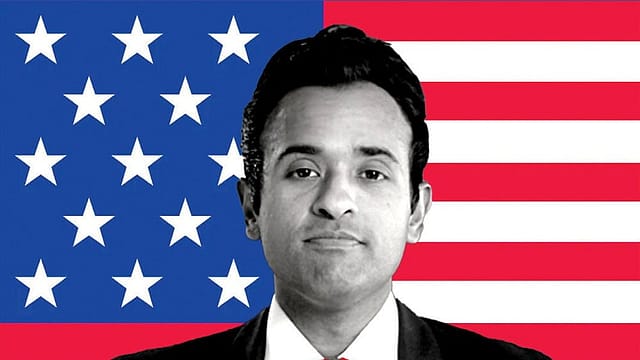
Vivek Ramaswamy had the money, Donald Trump’s backing and a state the president had carried comfortably two years earlier. In the closing weeks of Ohio’s governor’s race, he chose to put his opponent’s estranged mother on television.
The advertisement questioned Amy Acton’s honesty through a deeply personal family attack. Instead of keeping attention on the Democrat’s fitness for office, it opened an argument about Ramaswamy’s own judgment. Republican Governor Mike DeWine condemned it. Nikki Haley criticised it. Trump and Vice-President JD Vance defended it.
Acton won.
The advertisement is the most striking episode in Ramaswamy’s defeat. Explaining the result, however, requires looking beyond the controversy. Acton was already leading. Voters were anxious about their finances. And Ramaswamy’s considerable resources had failed to establish a convincing advantage over a physician campaigning on affordability and her experience of hardship.

The Era of Forever Wars
30 Oct 2026 - Vol 05 | Issue 44
Coping with an explosive Middle East
His defeat exposes several weaknesses that reinforced one another: an unpopular political environment, an opponent with a persuasive personal story and a campaign decision that gave even fellow Republicans reason to recoil.
Acton was ahead before the advertisement
The clearest problem with blaming everything on the advertisement is the polling timeline.
A Bowling Green State University/YouGov survey conducted from September 29 to October 9 put Acton ahead by 50% to 44%. Ramaswamy’s difficulties were visible before the late-campaign uproar over the attack on her family.
That matters because it changes the question. The advertisement was a decision made by a candidate who already needed to recover ground.
Ramaswamy had entered the contest with national recognition from his presidential campaign and a close association with Trump’s political movement. Those assets gave him visibility. They did not guarantee that Ohio voters would choose him to run their state.
Acton, meanwhile, had established a lead without matching his spending. The Republican campaign needed to explain why voters should trust Ramaswamy with the governorship. Its most controversial intervention instead invited them to examine how he treated his opponent.
The attack made Ramaswamy’s judgment an issue
The advertisement featured Acton’s estranged mother, Donna Arthur, accusing her daughter of dishonesty. As the BBC reported, it omitted the fact that Arthur’s husband had been charged with raping Acton when she was a child.
That omission was central to the backlash. A campaign seeking to undermine Acton’s account of her childhood had entered deeply sensitive territory while leaving out essential context.
DeWine called the advertisement deeply troubling, although he maintained his endorsement of Ramaswamy. His position illustrated the Republican dilemma: support the nominee while publicly objecting to one of his campaign’s most consequential decisions.
Trump and Vance’s defence prolonged the argument. Their intervention gave Ramaswamy backing from the party’s national leadership, but it could not resolve the disagreement over whether the attack was acceptable.
There is also an important spending distinction. Ramaswamy announced plans to put $4 million behind the advertisement. By the time it was withdrawn, AdImpact figures cited by the Associated Press showed roughly $1 million in spending. The announced commitment should not be presented as the amount actually spent.
The available evidence cannot establish how many votes the advertisement cost him. Its political effect was nevertheless visible: it divided Republicans and consumed precious closing-campaign attention.
Acton had a message that fitted the moment
Acton’s campaign linked her childhood experience of homelessness to the financial pressures facing Ohio families. As a physician and former public health official, she could also speak about healthcare through professional experience.
That combination gave her campaign a clear organising idea: she understood vulnerability and wanted government to make everyday life more manageable.
Her background did not make her immune to attack. But it gave voters a way to understand her candidacy beyond party affiliation. Ramaswamy’s personal attack risked strengthening the relevance of the very biography he was challenging.
Her victory speech maintained that emphasis. “The healing begins today,” she said, promising to work for people who had voted against her as well as those who supported her.
The language fitted the campaign she had run. It also allowed her to end a bitter contest speaking about the responsibilities of governing.
Household finances weakened Trump’s advantage
Ramaswamy’s association with Trump became harder to translate into electoral advantage as voters grew dissatisfied with the president and their own circumstances.
An October Marist survey found that 44% of Ohio likely voters said their family finances had worsened over the previous year. Only 18% said they had improved. Trump’s approval stood at 43%, against 55% disapproval.
The same poll put Acton ahead by 50% to 43%. Among independents, her advantage was substantially larger: 53% to 34%.
These figures suggest a broader problem than an advertisement controversy. Ramaswamy needed to win voters who were uneasy about the economy and unconvinced by the administration he supported.
Trump’s earlier success in Ohio remained relevant, but a presidential result could not settle a different election two years later. A gubernatorial candidate still had to offer answers to voters assessing current household pressures and the next state government.
For Acton, affordability was an opening. For Ramaswamy, defending Trump’s agenda carried the additional burden of defending a political direction many voters were questioning.
Money bought reach without securing support
Campaign finance reports underline how substantial Ramaswamy’s resource advantage was.
The final pre-election filing covered more than four months of spending. Ramaswamy’s campaign reported expenditure of $51.1 million, compared with Acton’s $26.2 million. In the separate, much shorter fundraising window, Acton raised $3.9 million against his $1.5 million.
Ramaswamy also reported another $5 million loan to his campaign, bringing its outstanding debt to $41.3 million.
Those figures measure different reporting periods and should not be conflated. Together, however, they show a candidate spending heavily and relying on substantial financing while his opponent remained competitive.
Money could ensure that Ohio voters heard Ramaswamy’s message repeatedly. It could not ensure that they found it persuasive. The advertisement controversy demonstrated the additional risk: greater spending could amplify a decision that distracted from his case for office.
Ohio’s Senate result points to a wider Republican problem
Sherrod Brown’s victory over Republican Jon Husted in Ohio’s Senate race is another reason to resist an explanation built entirely around Ramaswamy’s campaign.
Republicans lost two prominent statewide contests. Brown’s return to the Senate indicates that the conditions favouring Democrats extended beyond Acton’s particular opponent.
The candidates and offices were different, so the Senate result cannot measure the advertisement’s effect. It does show that Ramaswamy was campaigning in a difficult environment for his party.
His concession acknowledged the bitterness of the contest and expressed support for Acton’s success. The larger lesson of his defeat is that national prominence and financial strength left important political work unfinished.
Acton had established a credible lead before the closing controversy. Economic dissatisfaction gave her room to grow. Ramaswamy’s response produced a public argument over his judgment when he needed voters to focus on his qualifications.
The advertisement did not create every weakness in his campaign. It became the clearest expression of a campaign struggling to overcome them.