Breaking the American Political Ceiling: The Historic Firsts of the 2026 Midterms
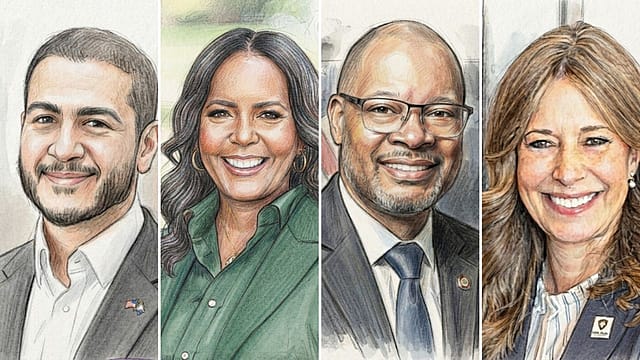
The 2026 US midterm elections will be remembered not merely for the Democrats' sweeping victory over Donald Trump and the Republicans, but also for the barriers they broke across American politics. From the first Muslim elected to the US Senate and the first Black woman governor to the first Native American woman senator, voters ushered in a new generation of political representation.
Across states that have long been dominated by one party, candidates from historically underrepresented communities made electoral history. Women, Black Americans, Native Americans, Muslims, Latinos and LGBTQ politicians registered landmark victories, changing the composition of America's political leadership.
Some victories broke barriers that had stood for generations. Others overturned decades of Republican dominance in states once considered difficult territory for Democrats. Here are the political firsts that made the 2026 midterms an election for the history books.

The Era of Forever Wars
30 Oct 2026 - Vol 05 | Issue 44
Coping with an explosive Middle East
ABDUL EL-SAYED: AMERICA'S FIRST MUSLIM SENATOR

Michigan Democrat Abdul El-Sayed has become the first Muslim American elected to the US Senate, breaking a significant barrier in a chamber that has historically had little religious diversity.
A physician and public health advocate, El-Sayed defeated Republican Mike Rogers in a closely watched contest. His victory comes amid a politically charged climate in which Muslim Americans have often found themselves at the centre of debates over identity, immigration and foreign policy.
His election marks a milestone not only for Michigan but also for Muslim representation in American national politics.
AMY ACTON: OHIO ELECTS ITS FIRST WOMAN GOVERNOR
Amy Acton has become the first woman elected governor of Ohio, breaking a political ceiling in a state that has never before elected a woman to its highest executive office.
A former director of the Ohio Department of Health, Acton defeated Republican Vivek Ramaswamy in a closely watched gubernatorial contest.
Her victory is also significant for Democrats, who have struggled to make electoral inroads in Ohio in recent years. Acton's win demonstrates how a candidate with a background in public health and government administration could emerge as a formidable challenger in a traditionally competitive political landscape.
GINA HINOJOSA: TEXAS GETS ITS FIRST LATINA GOVERNOR
Gina Hinojosa has made history as Texas's first Latina governor while also ending the Republican hold on the state's governor's mansion that began in 1994.
The Democratic victory over incumbent Republican Greg Abbott marks one of the biggest political upsets of the election. Texas, long regarded as a Republican stronghold, has now delivered a major breakthrough for Democrats.
Hinojosa's victory is particularly significant in a state with one of the largest Hispanic populations in the country. Her election places a Latina at the helm of a state whose political identity has been closely associated with conservative Republican leadership for decades.
KEISHA LANCE BOTTOMS: THE FIRST BLACK WOMAN GOVERNOR
Former Atlanta mayor Keisha Lance Bottoms has become the first Black woman elected governor in American history.
Her victory in Georgia is doubly historic: she is also the first Black person and the first woman to become governor of the state.
Bottoms defeated Republican Rick Jackson, flipping Georgia's governor's mansion for Democrats for the first time since 1998. Her political journey, from leading Atlanta to winning one of the country's most closely watched gubernatorial contests, represents a landmark moment for Black women in American public life.
The victory also places Georgia at the centre of a wider political transformation unfolding across the country.
JAMES TALARICO: A DEMOCRAT BREAKS THROUGH IN TEXAS
James Talarico's Senate victory marks a historic breakthrough for Democrats in Texas. He is the first Democrat elected to represent the state in the US Senate since Lloyd Bentsen won re-election in 1988.
The result ends a nearly four-decade drought for the party in a state that has become one of the strongest pillars of Republican electoral politics.
Talarico's victory is part of a larger Democratic resurgence in Texas, which has also elected Gina Hinojosa as its first Latina governor. Together, the results suggest that the state's political landscape may be undergoing a significant realignment.
DEB HAALAND: FIRST NATIVE AMERICAN WOMAN GOVERNOR
Deb Haaland has become the first Native American woman elected governor in the United States, adding another landmark to an already historic election.
A member of the Laguna Pueblo tribe, Haaland previously served as US interior secretary under President Joe Biden. Her appointment to that position in 2021 had already made her the first Native American to lead a Cabinet department.
Her gubernatorial victory in New Mexico takes that milestone further, placing an Indigenous woman in charge of a state government for the first time in American history.
ANNIE ANDREWS: SOUTH CAROLINA ELECTS ITS FIRST WOMAN SENATOR
Democrat Annie Andrews has become the first woman elected to represent South Carolina in the US Senate, breaking a political barrier in a state that has traditionally sent men to the upper chamber.
Her victory is particularly significant in a state where Republicans have enjoyed a long-standing electoral advantage. Andrews defeated Republican incumbent Darline Graham, helping Democrats make another breakthrough in the traditionally conservative South.
Her election adds to the growing number of women entering the US Senate and reshapes the political representation of a state that has never previously elected a woman to the chamber.
BYRON DONALDS: FLORIDA'S FIRST BLACK GOVERNOR
Republican Byron Donalds has become Florida's first Black governor, making history in a state that has remained a Republican stronghold in recent elections.
A three-term congressman and a prominent conservative voice, Donalds won the gubernatorial contest with the backing of President Donald Trump. His victory also ensures that Republicans retain control of the governor's mansion after Ron DeSantis reached his term limit.
Donalds's election is a significant milestone for Black political representation within the Republican Party, particularly in a state that has long been at the centre of America's partisan battles.
HAKEEM JEFFRIES: ON THE CUSP OF BECOMING THE FIRST BLACK HOUSE SPEAKER
The Democratic takeover of the House of Representatives has placed Hakeem Jeffries in a position to make American political history. The House Democratic leader is poised to become the first Black Speaker of the US House of Representatives.
Jeffries, who represents New York, has emerged as one of the most influential figures in the Democratic Party and has led the party's opposition in the House. With Republicans losing control of the chamber in the midterms, he is now positioned to take over the speakership.
The position is among the most powerful in American politics, placing its occupant second in the presidential line of succession after the vice-president. Jeffries's elevation would mark a historic moment for Black representation in the country's legislative leadership.
XAVIER BECERRA: CALIFORNIA'S FIRST ELECTED LATINO GOVERNOR
Xavier Becerra has become California's first elected Latino governor, marking a significant moment in a state where Latinos constitute one of the largest demographic groups.
The former US health and human services secretary and California attorney general won the gubernatorial race, succeeding Gavin Newsom.
The son of Mexican immigrants, Becerra's victory carries particular significance in a state whose social and cultural landscape has been shaped by generations of Latino communities. His election brings a historic change to California's highest elected office, even as the state remains a Democratic stronghold.
PEGGY FLANAGAN: THE FIRST NATIVE AMERICAN WOMAN IN THE SENATE
Peggy Flanagan has become the first Native American woman elected to the US Senate, marking another breakthrough for Indigenous representation in American politics.
A member of the White Earth Band of Ojibwe, Flanagan previously served as Minnesota's lieutenant governor. Her election places an Indigenous woman in a chamber that has historically had very limited Native American representation.
Her victory is also significant against the backdrop of her political journey as an Indigenous leader, with a career centred on public service and issues affecting Native American communities.
CHRIS PAPPAS: THE FIRST OPENLY GAY MAN ELECTED TO THE SENATE
New Hampshire Democrat Chris Pappas has become the first openly gay man elected to the US Senate, breaking another barrier in the country's national political establishment.
Pappas won the state's Senate race, becoming a prominent addition to a chamber that has gradually become more representative of America's LGBTQ community.
Wisconsin Democrat Tammy Baldwin had earlier made history as the first openly gay person elected to the Senate in 2012. Pappas's victory marks a distinct milestone as the first openly gay man to win a seat in the upper chamber.
His election adds to the growing visibility of LGBTQ politicians in American national politics.
DAVID CROWLEY: WISCONSIN ELECTS ITS FIRST BLACK GOVERNOR
David Crowley has become Wisconsin's first Black governor, breaking a longstanding racial barrier in the state's political leadership.
The Milwaukee County executive's victory is particularly notable given the twists in his campaign. Crowley had withdrawn from the gubernatorial race before returning to the contest following encouragement from outgoing Democratic governor Tony Evers.
His eventual victory represents a significant moment for Wisconsin, a politically competitive state that has frequently found itself at the centre of America's electoral battles.
AARON FORD: NEVADA'S FIRST BLACK GOVERNOR
Nevada has elected Aaron Ford as its first Black governor, adding another historic gubernatorial victory to the 2026 midterm results.
Ford, who previously served as the state's attorney general, has made history by becoming the first Black person to occupy Nevada's highest executive office.
His victory is part of a wider pattern across the country, where voters have elected Black candidates to governorships in states with very different political histories and demographic profiles.
Alongside the victories of Keisha Lance Bottoms and David Crowley, Ford's election marks a significant expansion of Black representation in state leadership.
MELAT KIROS: COLORADO'S FIRST BLACK WOMAN IN CONGRESS
Melat Kiros has become the first Black woman elected to represent Colorado in the US Congress, adding another milestone to the changing composition of the House of Representatives.
The 29-year-old Democrat won Colorado's 1st Congressional District, making her one of the younger members of the incoming Congress.
Her victory is significant for both racial and generational representation. Kiros's election comes as voters across the country have sent a more diverse group of lawmakers to Washington, challenging the traditional composition of the country's political establishment.
ADAM HAMAWY: NEW JERSEY'S FIRST MUSLIM CONGRESSMAN
Adam Hamawy has become New Jersey's first Muslim member of Congress, marking a breakthrough for Muslim representation in the state's political history.
A physician and former US Army combat surgeon, Hamawy won the 12th Congressional District, bringing a professional background in medicine and military service to his new political role.
His victory comes in an election that has also produced the first Muslim American senator in the country. Together, the wins represent an important moment for Muslim Americans seeking greater representation in the highest levels of US government.
CLAIRE VALDEZ: NEW YORK'S FIRST NATIVE AMERICAN CONGRESSWOMAN
Claire Valdez has become New York's first Native American woman elected to Congress, marking another historic victory for Indigenous representation.
A member of the Ysleta del Sur Pueblo tribe, Valdez won the state's 7th Congressional District, becoming the first Native American woman from New York to enter the House of Representatives.
Her victory adds to a series of breakthroughs for Indigenous candidates in the 2026 elections, including Deb Haaland's election as the first Native American woman governor and Peggy Flanagan's Senate victory.
The results point to a broader shift in American politics, with Indigenous candidates gaining ground in institutions where their communities have historically remained underrepresented.
A CHANGING FACE OF AMERICAN POLITICS
Taken together, these victories represent more than a collection of electoral milestones. They point to a changing political landscape in which communities that have historically remained on the margins of American political power are increasingly finding representation at the highest levels of government.
The results also cut across party lines. While Democrats made history with victories by El-Sayed, Bottoms, Haaland and Hinojosa, Republican Byron Donalds's election in Florida demonstrated that the changing face of American politics is not confined to one party.
For Trump, the midterms have brought a congressional setback. For American politics, however, they have delivered something larger: a new generation of political leaders who have broken barriers that once appeared almost impossible to cross.