André Janones’ online campaign strategy that helped Lula win can be replicated elsewhere, says analyst
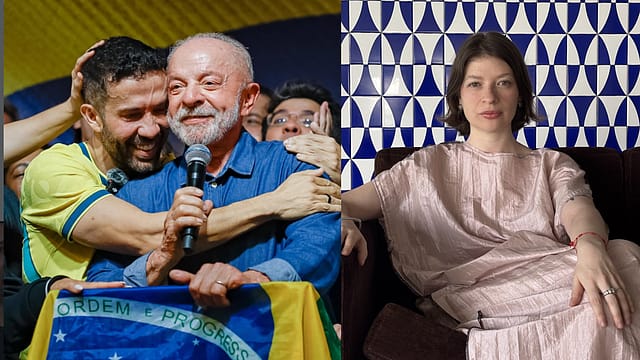
No election in recent memory, perhaps since the triumph of Narendra Modi in 2014, has attracted as much global attention for the use of social media and messaging platforms as the presidential elections in Brazil did this time around. The triumphant Luiz Inácio Lula da Silva, who won his fourth term as president as the spearhead of his Workers Party, described the man behind the highly successful online campaign as “General Janones”. He was referring to his ally and lawyer-politician André Janones, 42, who created Exército do Lula (Portuguese for “Lula’s Army”), an aggressive digital mobilisation campaign on WhatsApp and Instagram and so on to seal Lula’s victory in merely three weeks in the run-up to the polls, covering at least 11 million voters, a majority of them young and restless, by battering the dominance of conservatives and far-right politicians on social media. Janones’ manifesto or doctrine to fight the polls, now known as Janonism elsewhere and Janonismo (in Brazil) -- which had a manifesto that has since then leaked -- laid out several rules for digital activism, one of which is not to engage directly with the enemy and expand his or her reach. Brazilian political scientist Hannah Maruci, who is currently a postdoctoral researcher at CEBRAP (Brazilian Center for Analysis and Planning) and holds a PhD in Political Science from the University of São Paulo (USP), speaks to Open about the influence of Janonism in the election that saw Lula defeat his far-right rival in a landmark electoral win. Maruci, whose research interests include digital politics, AI, gender and political participation, with a particular focus on the intersections between technology, power and democracy, avers, “I think one of the most important things Janones did was to create a very clear sense of purpose and collective belonging.” The São Paulo-born scholar, who is also the co-founder of Tenda das Candidatas, a Brazilian non-profit organisation that has trained more than 1,000 women across the country, working to strengthen women’s political participation and representation, notes that these election strategies can be replicated elsewhere. “I see them as a political tool rather than something exclusive to Brazil,” she says in an interview. Edited excerpts:
How do you think André Janones influenced the outcome of the Brazilian presidential elections this time?
I think Janones played a very important role, particularly after the first round of the elections. The results of the first round, which showed Bolsonaro performing much better than expected, came as a real shock to the progressive camp. But they were also important. They revealed that the campaign had failed to do several things that were necessary: there had been insufficient mobilisation, a lack of connection with younger voters, a lack of clear proposals, and very little organisation on the ground. The campaign had focused heavily on Lula’s political legacy, but had struggled to connect with people’s everyday concerns and was somewhat disconnected from the digital environment.

The Era of Forever Wars
30 Oct 2026 - Vol 05 | Issue 44
Coping with an explosive Middle East
This created a political vacuum on mobilisation. There was a lack of coordination, a lack of a unified message, and no clear sense of collective action within the progressive camp. Janones understood this very well and stepped into that space.
However, I think it is important to emphasise that Janones did not win the elections on his own. What made the difference was the mobilisation of approximately 10 million people. The so-called Lula Army became a network of people who actively participated in changing the course of the elections.
It is also important to understand that this mobilisation was not exclusively digital. It was happening in the streets, among students, in universities, and through young people and grassroots organisations. The digital campaign fed on these existing movements, while also helping to organise different demands around one common objective: electing Lula and defeating the far-right candidate.
What do you think are the specific strategies of Janones that worked to the advantage of Lula?
I think one of the most important things Janones did was to create a very clear sense of purpose and collective belonging.
The name “Lula Army” was not accidental. An army has a clear objective, clear instructions, and a sense that everyone is working together towards the same goal. And that was precisely what was missing in the progressive camp at that moment. Different groups were often fragmented, arguing among themselves, and there was no clear direction for collective action.
Janones provided that direction. He created simple, direct messages and daily mobilisation tasks that people could follow. This gave people a sense that they were actually doing something, that their participation mattered, and that they were part of something bigger than themselves.
I think this also created hope at a moment of great despair. It transformed a fragmented and sometimes demobilised progressive camp into a collective force. In this sense, the campaign was not simply about communicating political messages, but about creating a feeling of belonging and shared responsibility.
I would also stress that this sense of collectivity was perhaps even more powerful than simply mobilising people against the other side. The far right often mobilises through hatred and fear of the opponent. What we saw with the Lula Army was the growth of a positive sense of collective action, of people feeling that they were fighting together for something.
Finally, we need to recognise the role of young, Black and LGBTQ+ political leaders in this process. Janones was an important figure, but he was far from the only one. Leaders such as Ana Elisa, Guilherme Cortez, Rosa from the MST, and Erika Hilton played crucial roles in mobilising people and expanding the reach of the campaign. These contributions are often overlooked when we focus too much on a single political figure.
Can Janones’ political strategies be replicated elsewhere in the world, particularly while campaigning on social media? Or are the strategies meant to work exclusively in Brazil?
I definitely think these strategies can be replicated elsewhere. I see them as a political tool rather than something exclusive to Brazil. The use of digital platforms to coordinate supporters, create a common identity, and organise collective action is something that can be adapted to different political contexts.
However, there is one important condition: digital mobilisation needs to remain connected to people’s everyday lives and to grassroots organisation. It cannot be reduced to social media activity.
The Lula Army worked because it was made up of real people. It was not simply a digital campaign or a strategy to increase engagement. It was a mobilisation of millions of people who were also active in universities, in their communities, in the streets, and in different social movements.
Digital platforms helped connect these people, coordinate their actions, and give them a common objective. But the people and their existing networks were the foundation of the whole process.
I think this is a particularly important lesson for progressive movements around the world. Digital tools can be extremely powerful, but they cannot replace political organisation, grassroots movements, or direct contact with people. The digital and the offline are no longer separate political spaces; they constantly feed into and reinforce one another.
There is also a challenge that goes beyond electoral campaigning. The Lula Army worked particularly well because there was one clear and urgent objective: elect Lula and defeat the far right. Now, the challenge is to deal with the different interests that were brought together around that common objective. There are negotiations, disagreements, and political disputes.
The challenge, therefore, is to preserve this capacity for digital mobilisation while learning how to deal with more complex and diverse political demands. The strategy needs to adapt to political contexts in which there is no longer just one common objective.
Everyone these days campaigns on WhatsApp groups. It used to be Facebook earlier. How did Janones’ strategy and tactics produce better results than those of the rivals? Did Janones borrow right-wing strategies? How did they manage to overcome the alleged suppression of their campaigns by Meta and other big technology companies?
I think Janones understood something very important about how social media platforms work: it is not enough to simply produce content. You need to understand how algorithms operate and how to mobilise people to interact with and circulate that content.
Through his communication channels, particularly WhatsApp, Janones sent daily audio messages with specific mobilisation tasks. People were encouraged to share content, circulate information, engage with posts, and act simultaneously across Instagram, X and WhatsApp.
This created a kind of digital guerrilla: thousands of people acting at the same time, in a coordinated way. In a sense, we were learning how to use the algorithm to our advantage.
There was also a very interesting learning process. Once people realised that these coordinated actions were actually making a difference, they became more willing to follow Janones’ instructions, or what we could call his orders as the “general” of this army. They could see the results of their actions, and this reinforced their engagement.
Regarding the strategies of the far right, I would be careful about saying that Janones simply copied them. There were certainly lessons to be learned from how the right organises its supporters, particularly its ability to maintain unity around a common objective despite internal disagreements. The progressive camp has often struggled with this, allowing internal disputes to undermine collective action.
But there was a fundamental difference: Janones did not rely on fake news and disinformation as a mobilisation strategy. In fact, he actively rejected this type of political communication. What we saw was the appropriation of certain organisational and communication techniques, but with a different political logic.
As for Meta and the alleged suppression of progressive campaigns, I think the important point is that we learned to operate within the platforms’ own rules and dynamics, using coordinated mobilisation to increase the circulation and visibility of our content, despite the structural biases and difficulties we faced. Rather than simply trying to bypass the platforms, we learned how to use their own mechanisms to our advantage.
There was also another important consequence: a process of digital literacy. I saw people in their sixties, including my own parents, learning to use all these digital tools and becoming politically active online. This is something we should not underestimate. Today, political participation happens simultaneously online and offline. The boundary between these two spaces has become increasingly fluid. Understanding how to participate in digital environments is now an essential part of political participation itself.
Could you please elaborate on the Lula Army campaign launched by Janones?
I think the most important thing about the Lula Army was that it created a sense of belonging and collective purpose at a moment when the progressive camp was quite fragmented. The basic idea was very simple: we had one objective, which was to elect Lula and defeat the far-right candidate, and everyone could contribute to achieving it.
Janones used his communication channels to send daily audio messages, share information, and give people specific mobilisation tasks. These tasks included sharing content, engaging with posts, participating in discussions, and circulating information through WhatsApp groups and other social media platforms. This created a coordinated network of people acting simultaneously. It was a form of collective action that allowed thousands of individuals to participate in the campaign, even without being formally connected to a political party or organisation.
But, again, I think it is important not to understand the Lula Army as merely a digital phenomenon. It involved approximately 10 million people, and its strength came precisely from the connection between digital mobilisation and existing political and social networks. Students, young people, activists, social movements, and political leaders were all part of this process. I also think the military metaphor was politically effective. It gave people a sense of direction, discipline, and collective responsibility. At a moment when many people felt desperate about the possibility of a far-right victory, it created hope and the feeling that there was something concrete they could do. Perhaps the most important outcome was that people stopped feeling isolated in their political positions. They realised that there were millions of others working towards the same objective. This sense of collective strength was particularly important in a progressive camp that had often been characterised by fragmentation and internal disputes.
Finally, I would emphasise that Janones was one of the central figures, but the campaign was much bigger than him. Young, Black and LGBTQ+ leaders and grassroots activists were essential to making this mobilisation happen. We should be careful not to erase their contributions by attributing the entire process to one person.
Brazil is a highly polarised society along ideological lines and is hugely influenced by religion. How did a left-winger manage to win the elections in a country where the fall of the Soviet Union had a huge impact?
I think we need to be careful not to reduce the Brazilian left to the historical image of communism or to the legacy of the Soviet Union. Lula’s political project is not a Soviet-style project. It is a democratic, popular and pluralistic political project, built around social inclusion, poverty reduction, workers’ rights, and the expansion of social policies.
I also think Lula’s victory had a lot to do with the fact that the election became about something bigger than traditional left-versus-right ideological divisions. It became a choice about democracy, social rights, and the future of the country.
Of course, religion played a very important role in the election, particularly because the far right was very successful in using religious discourse to mobilise voters. But Brazil is not a politically homogeneous country, and religious voters do not necessarily share the same political positions. There are also progressive religious communities and leaders who played an important role in defending democracy and supporting Lula.
Another crucial factor was the construction of a broad coalition. Lula was not supported only by the traditional left. His campaign brought together different political parties, social movements, intellectuals, artists, religious groups, and people from different ideological backgrounds who understood the importance of defeating the far right.
I think this is perhaps the most important point: Lula’s victory was not simply a victory of the left over the right. It was also the result of a broad democratic coalition that managed to unite different groups around a common objective.
This also helps explain why the historical legacy of the Cold War and the fall of the Soviet Union did not prevent Lula from winning. The election was not framed primarily around a debate about socialism or communism. Instead, it was centred on concrete questions about people’s lives, democratic institutions, social inequality, and the country’s future.
And this brings us back to the importance of mobilisation. People were not just voting for Lula because of his political identity or his historical legacy. Millions of people actively engaged in the campaign because they understood what was at stake and felt that they had a role to play in determining the outcome. In that sense, I think the election showed that even in a highly polarised society, it is possible to build a collective political project that goes beyond traditional ideological divisions.