Iran population crisis: Mojtaba Khamenei says more babies are needed to make country stronger, repel enemies
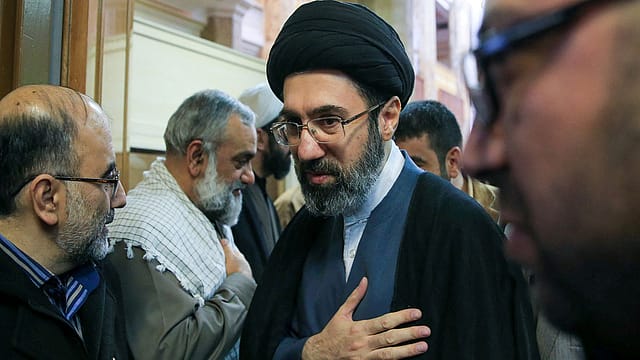
Can a country’s population become a matter of national security? Iran’s Supreme Leader Mojtaba Khamenei believes it can. In a message issued on Tuesday, he described the expansion of the country’s young population as essential to national strength, scientific progress and the ability to counter external threats.
The statement, released for the Fourth National Event on Population Rejuvenation, goes beyond an appeal for larger families. It places Iran’s demographic future alongside its economic, cultural and strategic ambitions at a time when the country is facing serious demographic challenges.
Mojtaba Khamenei links population growth to Iran’s national security
Khamenei argued that a larger young population would help Iran unlock its potential across science, culture, the economy and society. He also made an explicit connection between demographic growth and national defence, saying it could help the country resist the “threats and malicious intentions of the enemy”.

The Wealth Issue 2026
06 Nov 2026 - Vol 05 | Issue 45
Portraits of Dreamers and Doers under 35
The reference carries particular weight given Iran’s confrontation with the United States and Israel. Khamenei’s message did not, however, announce a new wartime population programme. Instead, it presented demographic expansion as a long-term national priority.
According to Iran’s state-linked Tasnim news agency, the message also acknowledged that earlier population policies had shortcomings that needed to be corrected.
Iran’s Supreme Leader wants earlier marriages and more children
Khamenei called for a broad effort to encourage marriage at a younger age, support childbearing, improve individual health and promote a family-centred culture.
He also urged officials to explain the importance of population growth to the public, particularly young people. Strengthening family-related infrastructure, he said, should become a permanent part of national planning.
The emphasis on families reflects a policy direction pursued by his father and predecessor, Ali Khamenei, who had repeatedly argued that Iran needed to reverse its declining birth rate and increase its population.
Falling fertility rate exposes Iran’s demographic challenge
The appeal comes against a striking demographic backdrop. Iran’s fertility rate has fallen far below the level needed to maintain a stable population without migration.
IranWire, citing figures presented by officials from the country’s National Population Headquarters, reported that the total fertility rate had dropped to 1.34 children per woman in the Iranian year ending March 2026. The replacement rate is generally estimated at around 2.1.
The same report said registered marriages had fallen from approximately 890,000 in 2010 to 431,000 in the year ending March 2026. Annual births have also declined sharply over the past decade.
The figures underline the gap between the government's ambition and the choices and circumstances facing Iranian households. Encouraging people to marry and have children is one challenge; making it financially and socially possible is another.
Iran’s family policy faces questions beyond official appeals
Iran has spent years trying to reverse its demographic slowdown. The 2021 Law on Support of the Family and Youth Population introduced incentives to encourage marriage and childbirth, alongside restrictions affecting access to contraception and certain reproductive healthcare services.
But economic pressures, including inflation, housing costs and job insecurity, have made family formation difficult for many young Iranians, as IranWire has noted.
Khamenei’s latest message offers no detailed new economic package to address those obstacles. Instead, it calls for past policy failures to be corrected and for population growth to remain a central national objective.
For Tehran, the debate is no longer simply about how many children Iranian families have. It is increasingly about what the country’s future population will mean for its economy, society and place in a region marked by conflict and uncertainty.
(With inputs from ANI)