EXPLAINED | Why Is Europe Rehearsing a Ukraine Mission Before there is Peace?
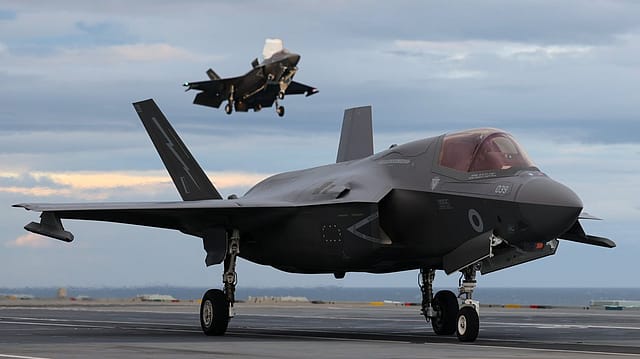
Britain announced on November 3 that it and France would lead Exercise Koalicja, a military rehearsal in Poland involving approximately 2,800 personnel. Scheduled for November 9–22, it will test preparations for a possible multinational mission in Ukraine after hostilities cease.
The exercise is not an announcement that those troops are entering Ukraine. An actual deployment would require fighting to stop and an invitation from Ukraine’s government. It tests whether participating countries could move, protect and supply a force if the political conditions for deployment were met.
That distinction matters. Preparing equipment and personnel can begin before governments know the terms of a ceasefire, the final mission or its deployment date.
What is this proposed force?
It is called the Multinational Force Ukraine, or MNF-U. Britain describes it as the military arm of the Coalition of the Willing, the group of countries developing plans to support Ukraine’s security.
The Era of Forever Wars
30 Oct 2026 - Vol 05 | Issue 44
Coping with an explosive Middle East
Britain and France have led that planning. A January 2026 declaration with Ukraine set out a proposed role in deterrence, training and rebuilding Ukrainian military capabilities. Deterrence means making another attack less attractive by increasing the costs an aggressor would expect to face.
The proposed force would therefore have a longer-term security purpose. Its success could not be measured simply by counting how many foreign troops arrived.
What will the rehearsal actually test?
The practical work behind a promise to deploy.
A multinational force needs transport, fuel, food, medical support, functioning communications and protection. Units must understand who gives orders and how to work with personnel using different equipment and procedures.
Koalicja is intended to test movement, protection and supply. Britain says its aircraft will also rehearse support for reopening commercial air travel. Turkey will test arrangements for maritime mine clearance, intended to help shipping safely reach Ukrainian ports.
These are preparations. They do not mean Ukraine’s airports or shipping routes will reopen because the exercise takes place.
Why prepare before a ceasefire exists?
Because military readiness takes time, while the aftermath of an agreement could demand quick decisions.
Vehicles need to reach the right locations. Supplies must follow. Governments need to know whether their proposed contributions can operate together. A rehearsal can expose difficulties before a real mission depends on those arrangements.
But an exercise cannot settle the political questions. Governments would still have to agree the deployment’s purpose, conditions and responsibilities.
In January, Britain told Parliament that any decision to deploy under its agreement with Ukraine and France would be brought to the Commons for debate and a vote.
Would these troops police a ceasefire?
That is not the role described in Britain’s new announcement. It says the proposed force would not carry out peacekeeping or ceasefire-monitoring duties.
Monitoring means checking whether parties are observing agreed terms and documenting violations. Rebuilding an army means helping it maintain equipment, organise forces and prepare to defend itself. Those are different tasks.
Britain’s January statement also discussed participation in a separate, US-led monitoring and verification arrangement. That shows why a potential settlement may involve several mechanisms with different responsibilities. It does not establish that all those arrangements have now been finalised.
Is this the same as NATO entering Ukraine?
No. An operation involving countries that belong to NATO is not automatically an operation commanded by NATO. Reporting on the November exercise describes a coalition mission rather than a NATO deployment.
NATO is the North Atlantic Treaty Organization, a military alliance with collective-defence commitments. Its own account describes Ukraine as a partner seeking membership.
The distinction affects who makes decisions and what commitments apply. Readers should not assume that every promise made by individual European governments is an alliance-wide guarantee.
What happens if Russian forces attack the mission?
That is the most consequential question.
November 3 reporting says Western officials envisage troops being able to defend themselves if attacked. However, that broad principle does not disclose a complete operational plan.
Governments would still need clear arrangements for identifying an attack, authorising a response, protecting personnel and providing reinforcements.
The Commons Library’s August briefing identified the force’s response to renewed hostilities and its ability to defend itself as unresolved questions. It also recorded Russia’s opposition to a European deployment.
The dilemma is straightforward: a force intended to discourage another war must convince others that it can protect itself without making promises its governments will not sustain.
How could this affect India?
Through trade and the durability of any eventual settlement.
India’s embassy in Kyiv identifies sunflower oil among the main Ukrainian exports to India. The proposed maritime work therefore concerns a region with a concrete connection to Indian supply chains.
Safer routes could improve conditions for commerce. But the exercise itself changes neither shipping insurance nor the price of cooking oil in India. Any benefit would depend on actual security conditions, commercial decisions and sustained access to ports.
What happens next?
The immediate milestone is the November 9–22 exercise. Beyond that, governments need to specify the eventual force’s contributions, deployment conditions, duration and response arrangements.
The number taking part in a rehearsal is not a confirmed deployment strength. Nor does an exercise establish that a peace agreement is near.
The practical test is whether Europe can turn a promise to support Ukraine after the fighting into a force that is supplied, protected and politically backed if that peace is challenged.