Explained: What the 10-day Israel-Lebanon truce means for displaced families
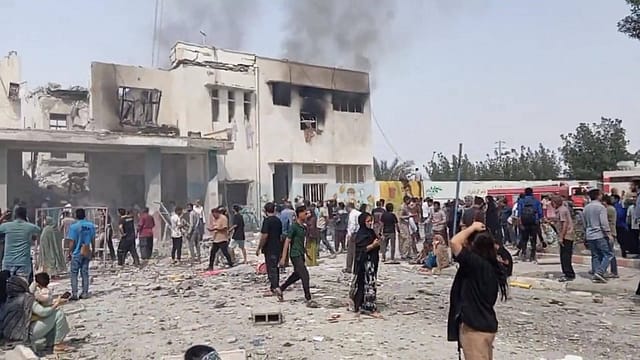
A 10-day ceasefire between Israel and Lebanon came into effect at midnight on Friday, setting off a large-scale return of displaced civilians to southern Lebanon and Beirut’s southern suburbs. The truce, brokered by the United States, follows 46 days of intense conflict that forced thousands to flee their homes.
As the ceasefire began, long lines of vehicles were seen heading back toward towns and villages that had been largely abandoned during the fighting. For many, the return represents cautious relief and a first opportunity to assess the damage left behind.
What is the ground reality in the worst-hit areas?
The scale of devastation is stark, especially in cities like Nabatieh, one of the hardest-hit regions. Entire neighbourhoods have been reduced to rubble, with homes destroyed, shops flattened, and critical infrastructure severely damaged.
Despite the destruction stretching “as far as the eye can see,” residents are returning in significant numbers. Many are driven by the urgency to rebuild their lives, even as they confront the reality of widespread loss.
Why are many civilians hesitant to stay?
While the ceasefire has enabled people to return, it has not eliminated the risks. Authorities have warned that the situation remains volatile, particularly in border areas.

Open Minds 2026
26 Jun 2026 - Vol 05 | Issue 26
The power of ideas and arguments in 50 portraits
The Lebanese Army has urged caution, highlighting dangers such as unexploded ordnance and continued military activity. In a post on X, it said: “In follow-up to the previous statement regarding the call for citizens to adhere to the directives of the deployed military units, the army command renews its call to citizens to exercise caution in returning to the southern villages and towns amid a number of violations of the agreement, with several Israeli attacks recorded, in addition to intermittent shelling targeting a number of villages. The command also emphasises the necessity of adhering to the directives of the deployed military units to ensure their safety, especially during nighttime hours, and to avoid approaching hazardous areas. The army command continues to monitor developments and take the necessary measures to safeguard citizens' safety.”
This warning reflects ongoing ceasefire violations and the fragile nature of the truce, making many residents reluctant to settle back permanently.
How did the ceasefire come about?
The ceasefire was announced by US President Donald Trump after diplomatic efforts involving both sides. He said: “I just had excellent conversations with the highly respected President Joseph Aoun of Lebanon, and Prime Minister Bibi Netanyahu of Israel. These two leaders have agreed that, in order to achieve peace between their countries, they will formally begin a 10-day ceasefire at 5 p.m. EST.”
The agreement follows a sharp escalation along the Israel-Lebanon border, involving Israeli forces and Hezbollah, against the backdrop of broader regional tensions linked to the US-Iran conflict.
What lies ahead for returning civilians?
The ceasefire has created a narrow window for displaced families to return and begin rebuilding. However, sporadic violations and continued shelling underline how fragile the situation remains.
For now, civilians are caught between the urgency to reclaim their homes and the uncertainty of a truce that may not hold, making their return as cautious as it is determined.
(With inputs from ANI)