Europe Is Running Out of Jet Fuel in Six Weeks. Here’s What Happens If the Taps Don't Open Soon
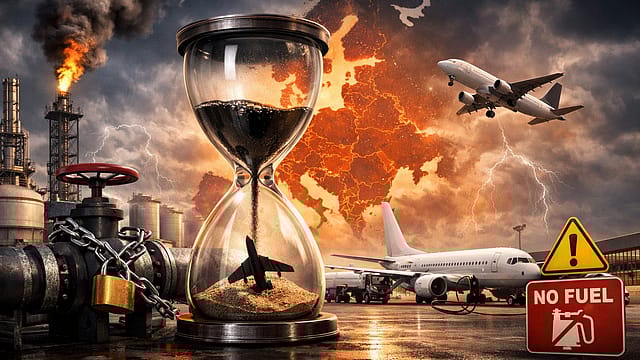
The world's busiest summer travel season is weeks away, and Europe is staring down a jet fuel crisis that could ground flights across the continent.
With the Strait of Hormuz effectively shut since Iran closed it in response to US and Israeli attacks, the supply chain for aviation fuel has been thrown into disarray.
The International Energy Agency (IEA) has placed the crisis in stark terms: Europe may have only six weeks of jet fuel remaining.
Why Is Europe Running Low?
Europe historically sourced around 75 per cent of its jet fuel imports from the Middle East.
Refineries in South Korea, India, and China that produce jet fuel are themselves dependent on Middle Eastern crude. The world is losing 10 to 15 million barrels of oil per day due to the Hormuz closure.
What Did the IEA Say?
IEA Executive Director Fatih Birol told the Associated Press: "In Europe, we have maybe six weeks or so of jet fuel left."
The IEA's monthly report warned that if Europe cannot replace more than 50 per cent of its Middle Eastern imports, physical shortages may emerge at select airports.
Survival Instinct
22 May 2026 - Vol 04 | Issue 72
India navigates global economic turmoil with austerity and smart diplomacy
If 75 per cent is replaced, the crisis could be pushed to August, but not avoided.
Which Countries Are Already Under Pressure?
According to the IEA report, physical shortages typically emerge when national coverage drops below 23 days.
Several European countries now hold less than 20 days of jet fuel coverage, down from a floor of 29 days last seen in 2020.
Can the US and Nigeria Fill the Gap?
Europe is sourcing replacement supplies from the US and Nigeria. However, even if all US jet fuel exports were redirected to Europe, they would cover only slightly over half of the lost Middle Eastern volume.
How Are Airlines Coping?
KLM has announced 160 European flight cancellations due to rising costs.
EasyJet reportedly absorbed an additional £25 million in fuel costs in March alone. The benchmark European jet fuel price reportedly hit an all-time high of $1,838 per tonne in early April, up from $831 before the war began.
Will Larger Airports Be Protected?
Amaar Khan of Argus Media told the BBC that major hubs like Heathrow would likely be prioritised.
Even if Gulf supplies resume, he warned the logistical lag means five to six weeks before those barrels reach European markets.
What Does This Mean for Summer Travel?
Flight cancellations, higher ticket prices, and disruption concentrated at smaller airports first.
June is the hard deadline. If replacement supplies are not secured at scale before the summer peak, the consequences will be visible on departure boards across Europe.
(With inputs from yMedia)