EXPLAINED | US Midterms 2026: What Happens if Trump Loses Congress?
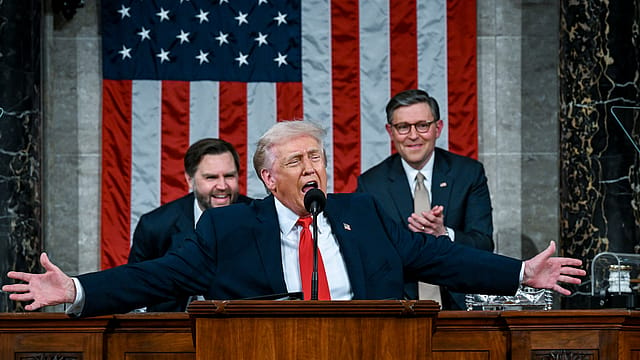
The United States votes on Tuesday, November 3, in elections that will decide whether President Donald Trump's Republicans keep control of Congress, the country's national legislature.
All 435 seats in the House of Representatives and 35 of the Senate's 100 seats are being contested. More than 51 million Americans had already voted by October 31, according to the University of Florida's Election Lab, as reported by Reuters. The final weekend brings tight races, legal battles over ballots and a president campaigning to preserve his party's grip on Washington.
What exactly is a midterm election?
It is an election held halfway through a president's four-year term. Americans elect lawmakers and many state officials, rather than choosing a president.
Congress has two chambers. House members represent districts and serve two-year terms. Each state has two senators, who serve six-year terms, with elections staggered so only part of the Senate is renewed at once. This year's 35 Senate contests include two special elections to fill seats between regular elections.

The Era of Forever Wars
30 Oct 2026 - Vol 05 | Issue 44
Coping with an explosive Middle East
How close is the fight for Congress?
Democrats need 218 seats for a majority in the full House. Republicans currently control it by a narrow margin.
The Senate arithmetic is tougher. Republicans hold 53 seats; Democrats have 45 and work with two independents. That 47-seat bloc needs a net gain of four to reach 51: four more seats won from Republicans than lost to them.
A 50–50 Senate would still favour Republicans because Vice-President JD Vance can break tied votes. Winning the national popular vote for Congress does not decide either chamber; individual district and state results do.
Are the polls predicting a Democratic victory?
They show an advantage, with important limits.
Emerson College's October 24–26 national survey put Democrats ahead 52% to 42% when likely voters were asked which party's congressional candidate they preferred. It surveyed 1,000 likely voters and reported polling uncertainty of about three percentage points in either direction.
That question measures national party preference. It cannot tell us precisely how support falls across 435 House districts or the states voting for senators. Close state races, turnout and polling errors can still change the outcome.
What is making this election so uncomfortable for Republicans?
Voters' concerns extend from household bills to how power is being used.
In the Emerson survey, lowering the cost of living was the most influential candidate position for 34%, followed by fighting government corruption at 28%.
Trump stresses border security and his economic record. Democrats attack his tariffs, taxes on imported goods, and the war with Iran.
Even the AI boom has a political downside. A separate NPR/PBS News/Marist poll, conducted October 19–20, found 66% of likely voters opposed data centres in their communities. These are facilities housing computers that run digital services, including AI. Reuters reports investors are watching the election for possible greater scrutiny of their expansion.
Which races could deliver the biggest surprises?
Texas has become a major Senate battleground. Republican Attorney-General Ken Paxton faces Democratic state lawmaker James Talarico. Paxton defeated incumbent John Cornyn in the Republican primary with Trump's support.
Kansas has not elected a Democratic senator since 1932. Methodist minister Adam Hamilton is challenging Republican Senator Roger Marshall. An October 26–28 Emerson survey put Hamilton at 49% and Marshall at 45%, with polling uncertainty of about 3.5 percentage points either way.
Watch the House, too. NPR reports Kentucky's 6th district, which Trump carried by 15 points in 2024, is now rated a toss-up, meaning neither party has a clear advantage.
Why are two Sullivans causing a storm in Alaska?
Republican Senator Dan S. Sullivan faces Democrat Mary Peltola. Another candidate, retired teacher Daniel J. Sullivan Jr., is also running.
Federal prosecutors are investigating whether Peltola aides helped recruit the second Sullivan to draw votes from the incumbent. Peltola and her campaign deny involvement; the teacher denies coordinating with her campaign. The investigation has not established that the allegations are true.
What are the fights over ballots about?
In California, the Justice Department sought to have mail ballots from more than 20,000 registered voters set aside, alleging they were likely noncitizens. An appeals court rejected its emergency request on October 30. The administration said on October 31 that it would probably seek Supreme Court intervention.
Separately, a federal judge temporarily barred threats or coercion against election officials over the administration's demands concerning allegedly ineligible voters. The government appealed that order on October 31. These are ongoing legal disputes, not proof that the challenged voters committed fraud.
Are Democrats presenting a united front?
Not everywhere. In Michigan, Senate nominee Abdul El-Sayed's campaign asked former primary rival Haley Stevens to stay away from events, AP reported.
Stevens has backed him but demanded that he condemn an outside group's advertisement blaming Israel for high grocery prices and address his previous rhetoric. Democrats must defend this seat while trying to gain others.
Does record early voting tell us who is winning?
No. Early-voting totals show participation before Election Day. Where party registration is available, it identifies the voter's registration, not the candidate chosen.
A party can have more supporters voting early while its opponent's supporters wait until Tuesday. A larger early vote can also reflect people changing when they vote, rather than an increase in final turnout.
What could Democrats actually do if they win?
Control of either chamber would give them leverage over legislation, government funding and investigations into the administration. House Democratic leader Hakeem Jeffries has promised aggressive oversight.
Senate control would also give Democrats power over confirmation of Trump's judicial and senior executive nominees. But passing a law normally requires both chambers and the president's signature. Trump could veto legislation; overriding him requires two-thirds support in each chamber.
He would remain president. Republicans retaining both chambers would preserve an easier path for his agenda, though narrow majorities can still make passing bills difficult.
What is the India connection?
Indian-American entrepreneur Vivek Ramaswamy is the Republican candidate for Ohio governor, facing Democrat Amy Acton and Libertarian Don Kissick. That contest determines state leadership alongside the congressional elections.
For Indian readers following US technology shares, Reuters identifies AI regulation and data-centre development among the issues investors are watching. The result could change congressional scrutiny; it cannot, by itself, tell investors where share prices will go.
What happens next?
Voting concludes on November 3, with results arriving during November 4 in India. Close contests may take longer to resolve.
Alaska's election authority schedules ranked-choice results for November 18. Voters rank candidates; if nobody wins a majority initially, lower-ranked candidates are eliminated and ballots transfer to the next remaining preference.
The new congressional terms begin on January 3, 2027.